🦷 General Care
✨ Treatments
👶 Family Care
💚 Wellness
💡 Resources

🦷 General Care
✨ Treatments
👶 Family Care
💚 Wellness
💡 Resources

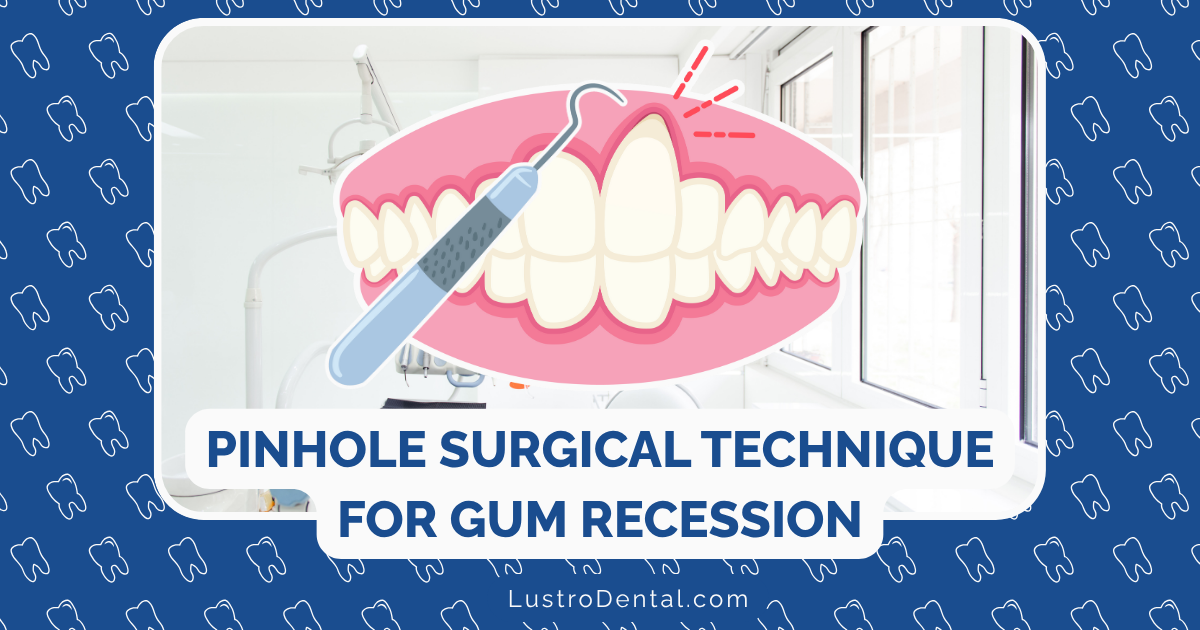
Gum recession—the process where the tissue surrounding your teeth pulls back, exposing more of the tooth or its root—affects millions of Americans. Beyond the cosmetic concerns of having a “toothy” smile, receding gums can lead to increased sensitivity, vulnerability to decay, and eventually, tooth loss if left untreated.
For decades, the gold standard treatment for significant gum recession has been traditional gum grafting, a procedure that, while effective, involves harvesting tissue from the roof of your mouth and surgically attaching it to the receded areas. This approach often results in significant discomfort, extended healing time, and multiple procedures to address recession across the mouth.
Enter the Pinhole Surgical Technique (PST)—an innovative, minimally invasive approach that’s revolutionizing how we treat gum recession. As someone who’s spent years advocating for advancements in dental care, I’m excited to share how this groundbreaking procedure is changing patients’ experiences and outcomes.
The Pinhole Surgical Technique, developed by Dr. John Chao in 2006 and first published in 2012, represents a paradigm shift in treating gum recession. Unlike traditional grafting, PST requires no scalpels, no sutures, and no donor tissue from the palate.
The fundamental principle behind PST is elegantly simple: instead of adding new tissue to cover receded areas, the technique repositions existing gum tissue to cover the exposed tooth roots. This is accomplished through a tiny pinhole made in the gum above the area of recession.
Dr. Michael Chen, a periodontist certified in the Pinhole Surgical Technique, explains: “PST works with your body’s natural healing capabilities. By gently loosening and repositioning the existing gum tissue, we create immediate coverage of the exposed roots while maintaining the blood supply to the tissue. This promotes faster healing and excellent integration.”
Understanding the procedure can help alleviate concerns for those considering this treatment option. Here’s what happens during a typical PST procedure:
Your dentist will thoroughly evaluate your gum recession, taking measurements and determining if you’re a suitable candidate for PST. Digital imaging may be used to create a precise treatment plan.
Local anesthesia is administered to ensure you’re comfortable throughout the procedure. Many practitioners also offer sedation options for anxious patients.
Using a specialized instrument, your dentist creates a small hole (about 2-3mm) in the gum tissue above the area of recession. This tiny entry point is what gives the technique its name.
Through this pinhole, specially designed instruments gently loosen the gum tissue from the underlying bone, creating a flap that can be repositioned to cover the exposed root surface.
The loosened tissue is carefully guided down to cover the exposed root surfaces, instantly improving the gumline’s appearance.
Small collagen strips are inserted through the pinhole and placed under the gums. These strips serve two purposes: they stabilize the newly positioned tissue and promote the formation of new collagen, which helps maintain the results long-term.
No sutures are required to close the pinhole—it heals naturally within 24-48 hours. The entire procedure typically takes about 1-2 hours, depending on how many teeth are being treated.
Dr. Sarah Johnson, who has performed hundreds of PST procedures, notes: “What’s remarkable about PST is that we can treat multiple teeth in a single session. With traditional grafting, we’re often limited to treating just a few teeth at a time due to the need for donor tissue and the extent of surgical trauma.”
While innovative approaches are exciting, what matters most is whether they deliver results. The evidence for PST’s effectiveness is compelling:
A 14.5-year retrospective study published in 2023 followed 28 patients with 68 sites of gum recession treated with PST. The findings were impressive:
These results are comparable to—and in some measures exceed—the long-term outcomes of traditional connective tissue grafting, which shows about 82% complete root coverage over an 11-year period.
A systematic review of 10 studies on pinhole surgery reported in a 2021 analysis found an average root coverage of 89% six months after treatment, with about 80% root coverage maintained after one year.
According to multiple sources, including Precision in Perio, the success rate of PST exceeds 90%, making it comparable to traditional grafting techniques. Four out of five patients who undergo pinhole surgery experience significant gum regrowth and coverage of receding areas after one year.
To truly understand the advantages and potential limitations of PST, it’s helpful to compare it directly with traditional gum grafting.
| Aspect | Traditional Gum Grafting | Pinhole Surgical Technique |
| Incisions | Requires incisions at recipient and donor sites | No scalpel incisions required |
| Donor Tissue | Harvests tissue from palate or uses donor material | Uses existing gum tissue; no donor site |
| Sutures | Multiple sutures required | No sutures needed |
| Treatment Area | Typically limited to 1-2 teeth per session | Can treat multiple teeth in one session |
| Procedure Time | 1-2 hours for 1-2 teeth | 1-2 hours for multiple teeth (up to an entire arch) |
| Aspect | Traditional Gum Grafting | Pinhole Surgical Technique |
| Recovery Time | 1-2 weeks | 1-3 days |
| Post-Op Pain | Moderate, especially at donor site | Minimal |
| Bleeding | Common for several days | Minimal to none |
| Eating Restrictions | Significant for 1-2 weeks | Soft foods for 24-48 hours |
| Return to Normal Activities | 2-7 days | Usually next day |
| Visible Results | Gradual improvement over weeks | Immediate aesthetic improvement |
| Aspect | Traditional Gum Grafting | Pinhole Surgical Technique |
| Complete Root Coverage | ~82% at 11 years | ~78% at 14.5 years |
| Tissue Quality | Excellent, with new tissue integration | Good, with existing tissue repositioned |
| Suitability for Severe Cases | Better for severe recession with minimal keratinized tissue | Better for mild to moderate recession with adequate existing tissue |
| Cost | Generally higher due to complexity | Comparable or slightly lower |
| Number of Visits | Multiple visits for extensive recession | Fewer visits needed |
Dr. Robert Williams, a periodontist who offers both techniques, explains: “I view these approaches as complementary rather than competing. For some patients and clinical situations, PST is clearly superior. For others, traditional grafting may still be the better option. The key is having both tools in our toolbox.”
While PST offers numerous advantages, it’s not the optimal solution for every patient or every case of gum recession.
Dr. Lisa Chen, who specializes in periodontal plastic surgery, advises: “A thorough evaluation by a qualified dentist or periodontist is essential to determine which approach is most appropriate for your specific situation. Sometimes a combination of techniques provides the optimal outcome.”
Understanding what to expect before, during, and after the procedure can help alleviate anxiety and ensure the best possible outcome.
According to South Hill Dental, post-procedure care typically includes:
Sarah M., 42, shares her experience: “After years of being told I needed traditional gum grafting, which I kept putting off due to fear of pain, I finally found a dentist offering the pinhole technique. The difference was night and day—I had multiple teeth treated in one visit, experienced minimal discomfort, and was back at work the next day. The best part was seeing immediate improvement in how my smile looked.”
James T., 58, reports: “I had traditional grafting on one side of my mouth and PST on the other due to different recession patterns. The PST side was significantly more comfortable during recovery, and a year later, both sides look equally good. If I need more work in the future, I’ll definitely choose PST if it’s an option.”
While PST offers numerous advantages, it’s important to understand potential limitations:
The cost of PST is generally comparable to traditional gum grafting, though it may be slightly less expensive due to reduced chair time and the ability to treat multiple teeth in one session.
According to various sources, the cost typically ranges from:
Many dental insurance plans provide some coverage for gum recession treatment, particularly when it’s deemed medically necessary rather than purely cosmetic. Check with your provider for specific coverage details.
The success of PST depends significantly on the skill and experience of the practitioner. Here’s how to find a qualified provider:
The field continues to evolve, with ongoing refinements to the PST procedure and integration with other advanced technologies:
Dr. Jennifer Lee, a researcher in periodontal innovations, predicts: “We’re likely to see continued refinement of minimally invasive techniques like PST, with better integration of digital technologies and biologics to enhance outcomes. The days of extensive surgical interventions for gum recession are increasingly behind us.”
The Pinhole Surgical Technique represents a significant advancement in the treatment of gum recession, offering patients a less invasive, less painful alternative to traditional grafting with comparable long-term results.
With its minimal recovery time, immediate aesthetic improvement, and ability to treat multiple teeth in a single session, PST addresses many of the concerns that have historically led patients to delay or avoid treatment for receding gums.
While not appropriate for every case, PST has earned its place as a valuable option in the modern periodontist’s toolkit. For many patients suffering from the functional and aesthetic consequences of gum recession, it offers a path to restored gum health with significantly less discomfort and downtime than traditional approaches.
If you’re concerned about receding gums, schedule a consultation with a qualified dental professional to determine if the Pinhole Surgical Technique might be right for you. Your smile—and your oral health—will thank you.