🦷 General Care
✨ Treatments
👶 Family Care
💚 Wellness
💡 Resources

🦷 General Care
✨ Treatments
👶 Family Care
💚 Wellness
💡 Resources

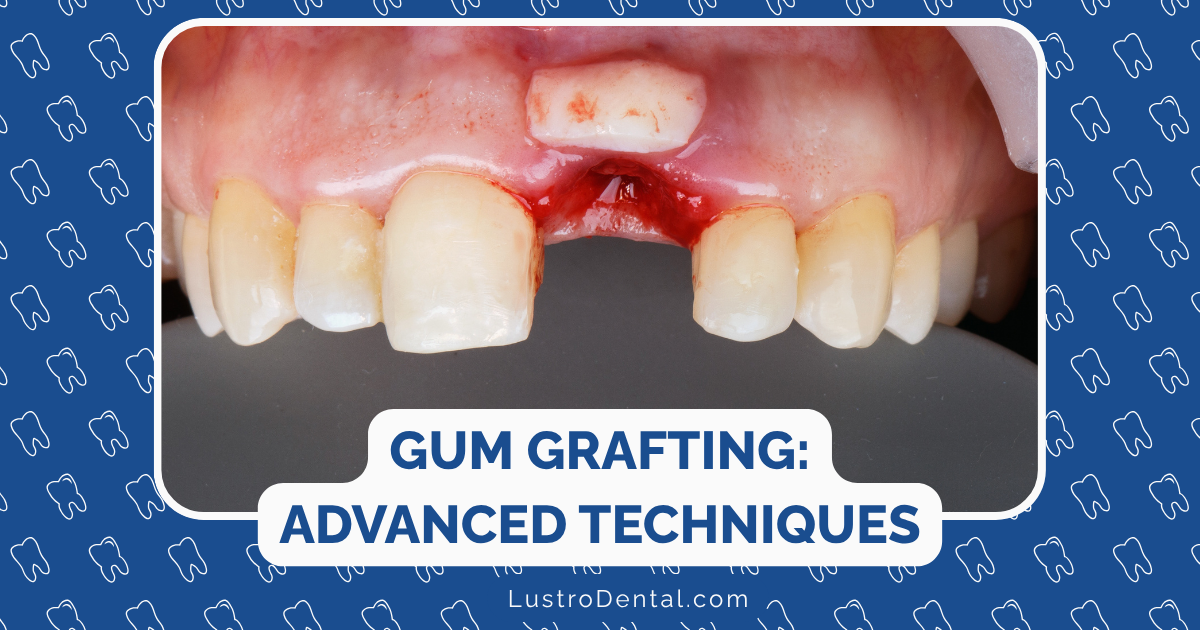
Gum recession—the process where gum tissue pulls back from teeth, exposing more of the tooth or its root—affects millions of people worldwide. Left untreated, it can lead to sensitivity, decay, and even tooth loss. For decades, traditional gum grafting has been the gold standard treatment, but it often came with significant drawbacks: pain, extended recovery times, and multiple surgical sites.
Fast forward to 2025, and the landscape of periodontal surgery has transformed dramatically. Revolutionary techniques and materials have made gum grafting procedures more comfortable, less invasive, and with remarkably faster recovery times. As someone who’s spent years advocating for dental health education, I’m excited to share these game-changing advancements that are making gum recession treatment more accessible and patient-friendly than ever before.
Before diving into the cutting-edge techniques of 2025, let’s briefly understand how far we’ve come:
Traditional connective tissue grafting typically involved:
While effective (with success rates of up to 97% according to North Texas Dental Surgery), the invasive nature and recovery experience often deterred patients from seeking treatment until their recession had become severe.
In 2025, advanced techniques offer:
Dr. Sarah Johnson, Director of Periodontal Innovation at University Dental Center, explains: “The paradigm has completely shifted. We’ve moved from an era where gum grafting was dreaded by patients to one where the procedures are so minimally invasive that many patients return to work the next day. The biological advancements have been nothing short of revolutionary.”
Platelet-Rich Fibrin (PRF) therapy has evolved significantly since its introduction in dentistry. The latest Advanced PRF techniques, like the RejuvaGum Lift™ described by Implant Perio Center, represent a quantum leap in tissue regeneration.
A clinical trial published in 2023 demonstrated that Advanced PRF combined with minimally invasive surgical techniques showed statistically significant improvements in recession depth, width, and mean root coverage percentage compared to conventional approaches.
The Vestibular Incision Subperiosteal Tunnel Access (VISTA) technique represents a major advancement in minimally invasive periodontal surgery.
Dr. Michael Rodriguez, who has performed over 500 VISTA procedures, shares: “The VISTA technique has transformed how we approach gum recession. I’ve had patients text me the evening after surgery saying they barely feel like they had a procedure at all. That was unimaginable with traditional techniques.”
One of the biggest breakthroughs in gum grafting has been the development of advanced xenogenic collagen matrices that eliminate the need for harvesting tissue from the patient’s palate.
According to North Texas Dental Surgery, these matrices provide significant comfort advantages during healing while maintaining excellent long-term stability.
The latest generation of acellular dermal matrices features microsurfaced technology that dramatically improves tissue integration and healing.
Laser technology has revolutionized many aspects of dentistry, and gum grafting is no exception. The latest laser-assisted techniques offer remarkable advantages.
According to Dr. Gowds Dental, laser-assisted gum regeneration results in significantly shorter procedure and healing times while reducing infection risk.
Perhaps the most dramatic change in gum grafting has been the transformation of the recovery experience. Here’s what patients can expect with these advanced techniques:
Beyond the less invasive surgical techniques, pain management for gum grafting has advanced significantly in 2025:
Medications administered before surgery to prevent pain cascades from initiating.
New formulations provide 24-48 hours of localized pain control without affecting other body functions.
Specific anti-inflammatory regimens that reduce swelling without compromising healing.
Advanced intraoral cooling devices that provide precise, controlled cold therapy to reduce swelling and discomfort.
VR systems specifically designed for dental procedures that significantly reduce pain perception and anxiety.
Dr. Jennifer Lee, pain management specialist in periodontics, notes: “The combination of minimally invasive techniques with our advanced pain protocols means that most patients report their discomfort level as a 2 or 3 out of 10, compared to 7 or 8 with traditional methods. It’s a complete transformation of the patient experience.”
Michael, 42, had recession on six upper teeth that was causing sensitivity and aesthetic concerns.
Treatment: VISTA technique with Advanced PRF
Experience: “I had put off treatment for years because I heard horror stories about pain from the roof of the mouth. With this new approach, they didn’t need to take tissue from my palate at all. The procedure took about an hour, and I was back at work the next day. I had some mild soreness for about 48 hours, but nothing that required more than ibuprofen. The sensitivity disappeared within a week, and my smile looks completely natural now.”
Jennifer, 56, had 6mm of recession on a lower canine tooth with minimal attached gingiva remaining.
Treatment: Microsurfaced ADM with laser-assisted regeneration
Experience: “My previous dentist told me my case was too severe and would require multiple surgeries with a significant recovery period each time. I sought a second opinion and found a periodontist using these new techniques. The procedure was completed in one visit, and the recovery was remarkably easy. I had some soreness for about three days but was able to attend a conference just four days after the procedure. Six months later, my recession is completely covered, and you can’t tell I ever had an issue.”
David, 67, had generalized recession throughout his mouth due to years of aggressive brushing and periodontal disease.
Treatment: Xenogenic collagen matrix with Advanced PRF in a phased approach
Experience: “I needed treatment on almost every tooth and was prepared for months of procedures and recovery. Instead, they were able to treat an entire arch in each of two sessions. The recovery after each was surprisingly comfortable—nothing like the gum surgeries I had decades ago. I was able to eat normally within a few days and never needed prescription pain medication. The improvement in both how my smile looks and feels has been life-changing.”
While these new techniques offer significant advantages, they’re not universally applicable to every case. Here are some considerations:
Dr. Robert Williams, periodontist and researcher, explains: “These advanced techniques have dramatically expanded our ability to treat more patients with less invasive approaches. However, there will always be complex cases that benefit from more traditional surgical techniques. The key is having a specialist who is versed in the full spectrum of treatment options to customize the approach to your specific needs.”
The field continues to evolve rapidly, with several promising technologies in development:
Custom-designed tissue constructs created using the patient’s own cells, eliminating the need for donor sites or processed matrices.
Targeted delivery of growth-promoting genes to stimulate natural tissue regeneration without surgery.
Ultra-thin, biocompatible scaffolds that promote precise tissue regeneration with minimal bulk.
Non-surgical injectables that stimulate gum regrowth for early-stage recession.
Artificial intelligence systems that analyze thousands of variables to predict the optimal treatment approach for each individual patient.
The advancements in gum grafting techniques by 2025 have transformed what was once a dreaded procedure into a comfortable, efficient treatment with minimal recovery time. With success rates matching or exceeding traditional approaches and dramatically improved patient experiences, these innovations are making it possible for more people to address gum recession before it leads to serious complications.
If you’ve been putting off treatment for receding gums due to concerns about pain or recovery time, these new approaches offer compelling reasons to reconsider. The combination of minimally invasive surgical techniques, advanced biological materials, and enhanced pain management protocols has created a patient experience that bears little resemblance to gum grafting of the past.
As with any dental procedure, the key to success lies in finding an experienced provider who stays at the forefront of these innovations. A consultation with a periodontist who specializes in these advanced techniques can help you understand which approach is best suited for your specific situation.
Have you experienced any of these modern gum grafting techniques? Share your experience in the comments below to help others who might be considering treatment for their receding gums.