🦷 General Care
✨ Treatments
👶 Family Care
💚 Wellness
💡 Resources

🦷 General Care
✨ Treatments
👶 Family Care
💚 Wellness
💡 Resources

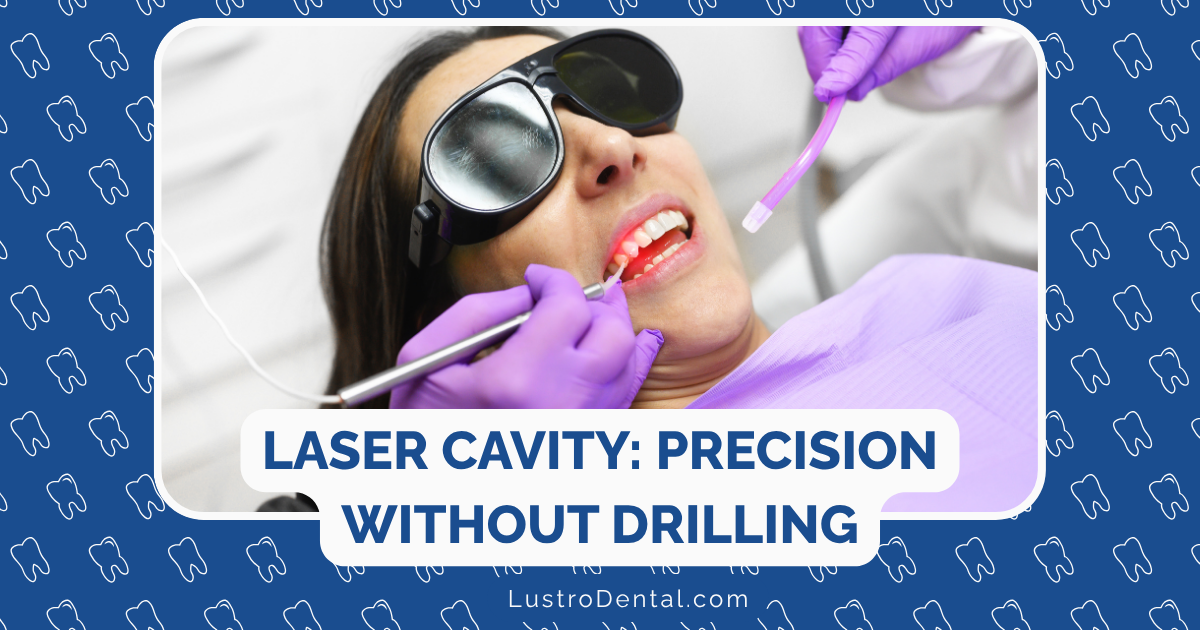
That high-pitched whine. The vibration. The pressure. The smell. For many people, these sensations associated with the dental drill trigger anxiety that keeps them away from necessary dental care. What if there was another way? Thanks to advances in laser dentistry, the dreaded drill may soon become a relic of the past for many cavity treatments.
For over a century, the dental drill has been the primary tool for removing decay from teeth. While modern drills are more efficient than their predecessors, the basic approach hasn’t changed much: mechanically remove decayed tissue, then fill the resulting hole with a restorative material.
This approach works, but it comes with drawbacks:
According to the American Dental Association, dental anxiety affects approximately 36% of the population, with 12% suffering from extreme dental fear. Much of this anxiety centers around the drill and needle.
Dental lasers have been in use since the early 1990s, but recent technological advances have made them increasingly effective for treating cavities. Unlike traditional methods, laser dentistry offers a minimally invasive alternative that preserves more of your natural tooth structure.
When a laser is used to treat a cavity, it emits a concentrated beam of light energy that precisely targets and removes decay. Here’s the typical process:
Dr. Robert Convissar, a pioneer in laser dentistry and author of “Principles and Practice of Laser Dentistry”, explains: “Lasers allow us to be incredibly conservative in our approach. We can remove just the decay while leaving healthy tooth structure intact.”
Different types of lasers are used in dentistry, each with specific wavelengths suited for particular tissues and procedures:
These are the primary lasers used for treating hard tissues like teeth. The Journal of the American Dental Association reports that erbium lasers can effectively remove decay with minimal impact on surrounding healthy tissue.
The Er:YAG laser works by energizing water molecules in the tooth, causing micro-explosions that break apart decayed tissue. The Er,Cr:YSGG (often marketed as Waterlase) combines laser energy with a water spray, creating a hydrokinetic effect that cuts through decay while keeping the tooth cool.
While not typically used for hard tissue procedures, diode lasers play a supporting role in cavity treatment by addressing soft tissue concerns and providing antimicrobial benefits that can help prevent future decay.
The advantages of laser cavity treatment extend far beyond simply avoiding the drill:
Research published in the International Journal of Laser Dentistry shows that laser treatment preserves significantly more healthy tooth structure compared to traditional drilling. This conservation of natural tooth material can extend the life of the tooth and reduce the need for more extensive treatments later.
Perhaps the most appealing aspect for many patients is that laser treatment often requires little to no anesthesia. The laser’s precision minimizes stimulation of nerve endings, making the procedure more comfortable.
A study in the Journal of Pediatric Dentistry found that 80% of children treated with dental lasers required no injected anesthesia.
Lasers don’t just remove decay—they sterilize as they go. According to research from the Journal of Clinical Laser Medicine & Surgery, laser treatment can eliminate up to 99.9% of bacteria in the treatment area, potentially reducing the risk of recurrent decay.
Without the trauma caused by drilling, recovery time is typically shorter. Patients report less post-operative sensitivity and discomfort.
For the millions who experience dental anxiety, laser treatment offers a less intimidating alternative. No drill noise, no pressure, and often no needle mean a more relaxed experience.
While laser dentistry offers impressive benefits, it’s not suitable for every situation. Ideal candidates include:
Limitations exist for:
Laser technology continues to evolve, with newer systems offering greater versatility and effectiveness. Some promising developments include:
Dr. Maria Lopez, director of the Center for Dental Innovation, predicts: “Within the next decade, we’ll likely see laser treatment become the standard of care for most routine cavity procedures, with traditional drilling reserved for specific cases where lasers aren’t optimal.”
If you’re interested in laser cavity treatment, here’s how to find a qualified provider:
The shift toward laser dentistry represents more than just technological advancement—it’s a fundamental change in how we approach oral health care. By making treatment more comfortable and less invasive, lasers are helping to overcome one of the biggest barriers to dental care: fear.
As this technology becomes more widespread, we may finally see a future where the phrase “I need to get a cavity filled” no longer strikes dread in the hearts of patients. And that’s something worth smiling about.
Have you experienced laser dentistry for cavity treatment? Share your experience in the comments below!