🦷 General Care
✨ Treatments
👶 Family Care
💚 Wellness
💡 Resources

🦷 General Care
✨ Treatments
👶 Family Care
💚 Wellness
💡 Resources

In modern dentistry, there’s a growing emphasis on conservation—preserving as much of your natural tooth structure as possible. This philosophy has led many dentists to recommend inlays over crowns when the clinical situation allows. But why is preserving tooth structure so important, and what makes inlays a more conservative option than crowns in many cases?
As someone who’s guided countless patients through these treatment decisions, I can tell you that the choice between an inlay and a crown isn’t just about fixing a problem today—it’s about setting your teeth up for long-term health and function. Let’s explore why dentists are increasingly recommending inlays as a tooth-preserving alternative to crowns when circumstances permit.
To understand why preservation matters, let’s first look at how inlays and crowns differ in their approach to restoring damaged teeth:
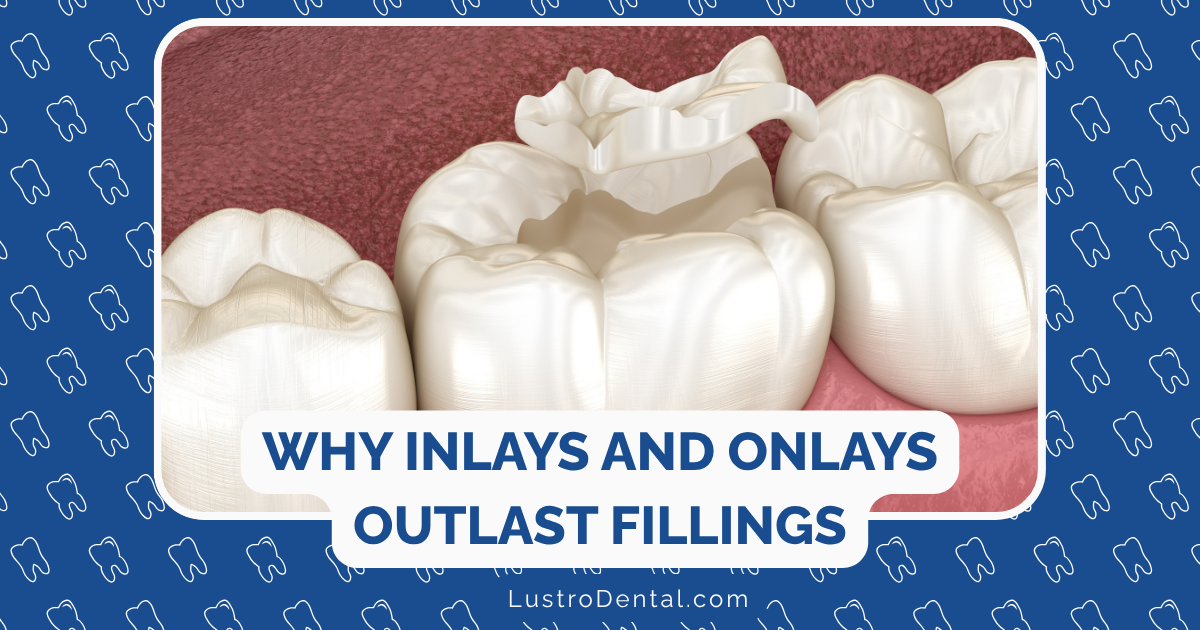
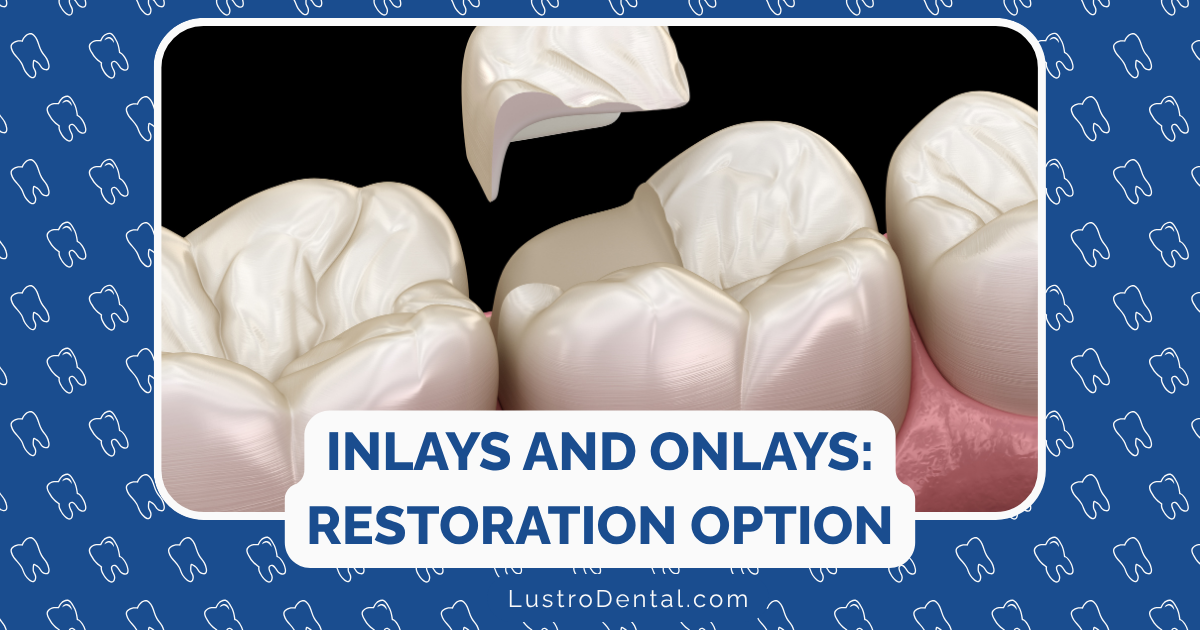
Dental inlays are custom-made restorations that fit precisely within the contours of a prepared tooth, typically used when damage is too extensive for a filling but not severe enough to require a crown. They’re crafted in a dental laboratory or with CAD/CAM technology and then bonded to the tooth.
Key characteristics of inlays include:
Dental crowns, by contrast, are full-coverage restorations that encase the entire visible portion of a tooth above the gumline. They’re used when a tooth is severely damaged, weakened, or aesthetically compromised.
Key characteristics of crowns include:
Dr. Sarah Johnson, a prosthodontist at the American College of Prosthodontists, explains: “The fundamental difference between inlays and crowns is the amount of healthy tooth structure that must be sacrificed. With inlays, we’re often removing only the damaged portions, while crowns require us to reduce healthy tooth structure to create space for the restoration.”
The conservation of natural tooth structure isn’t just a philosophical preference—it offers tangible, evidence-based benefits for long-term oral health:
Natural teeth derive much of their strength from their intact structure. Each time tooth structure is removed, the tooth becomes incrementally weaker.
Research published in the Journal of Prosthetic Dentistry found that teeth restored with inlays retained approximately 70-80% of their original structural strength, while teeth prepared for crowns retained only 30-40%.
“Think of your tooth like a hollowed-out eggshell,” explains Dr. Michael Chen of the Academy of Biomimetic Dentistry. “The more structure you remove, the more fragile it becomes, regardless of what you place over it. No dental material can fully replicate the biomechanical properties of natural tooth structure.”
The dental pulp—the living tissue inside your tooth containing nerves and blood vessels—is better protected when more tooth structure remains.
A 2023 study in the International Endodontic Journal found that teeth restored with inlays had a 5-10% likelihood of requiring root canal treatment within 10 years, compared to 15-25% for teeth restored with crowns. This difference is attributed to:
Teeth that retain more of their natural structure tend to have better long-term outcomes.
According to research from the Journal of Dental Research, the 15-year survival rate for teeth restored with inlays is approximately 85-90%, compared to 75-85% for teeth restored with crowns. This difference becomes even more pronounced when looking at 20+ year outcomes.
Perhaps one of the most important benefits of preserving tooth structure is maintaining options for future treatment.
Dr. Lisa Rodriguez, a conservative dentistry specialist at Minimally Invasive Dental Solutions, notes: “Every dental restoration has a finite lifespan. When that restoration eventually needs replacement, having preserved more tooth structure initially gives us more options for subsequent treatments. A tooth that started with an inlay might still be restorable with another inlay 15 years later, while a tooth that started with a crown might require more aggressive treatment like a post, core, and new crown—or even extraction if insufficient structure remains.”
While crowns remain necessary in certain situations, there are many clinical scenarios where inlays provide adequate restoration while preserving valuable tooth structure:
When decay or damage is too extensive for a direct filling but doesn’t compromise the cusps of the tooth, an inlay is often ideal. This commonly occurs in:
Teeth with substantial healthy structure remaining are perfect candidates for inlays. The preservation approach is particularly valuable for:
Inlays work best in patients who maintain excellent oral hygiene, as the margins (edges) of the restoration are critical to long-term success. Ideal candidates include:
For teeth that are visible when smiling but require more than a simple filling, tooth-colored inlays offer an aesthetic solution that preserves structure:
Despite the benefits of preservation, there are situations where crowns remain the treatment of choice:
When a tooth has lost significant structure due to decay, fracture, or previous restorations, a crown may be necessary to provide adequate protection:
Teeth that have undergone root canal therapy are often more brittle and may require the protection of a full crown:
When a tooth has significant discoloration, shape issues, or other aesthetic concerns that cannot be addressed with more conservative options:
The shift toward more conservative approaches isn’t just philosophical—it’s backed by substantial research:
A 2023 systematic review published in the Journal of Conservative Dentistry analyzed 24 clinical studies comparing inlays and crowns over periods ranging from 5 to 20 years. The findings strongly supported the conservative approach:
Dr. James Wilson of the International Academy of Adhesive Dentistry summarizes: “The research is clear—when the clinical situation allows for either an inlay or a crown, the conservation of tooth structure achieved with an inlay translates to better long-term outcomes for the tooth.”
The material chosen for an inlay can affect both its durability and how much tooth structure can be preserved:
Ceramic materials offer excellent aesthetics and good durability:
Laboratory-processed composite inlays offer a balance of conservation and strength:
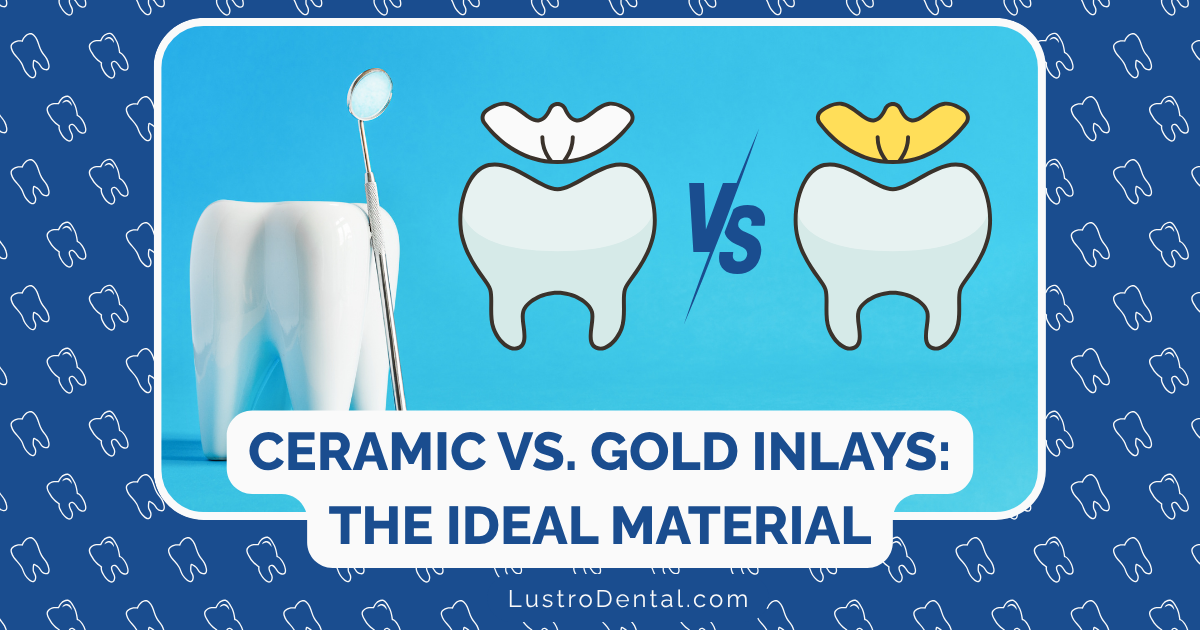
Though less common today due to aesthetics and cost, gold remains an excellent option:
Dr. Jennifer Martinez of the American Academy of Gold Foil Operators notes: “While gold has fallen out of favor aesthetically, it remains one of the most conservative and durable materials available. For posterior teeth where aesthetics aren’t primary, gold inlays offer unmatched longevity while preserving maximum tooth structure.”
Understanding the procedural differences helps illustrate why inlays preserve more tooth structure:
The key difference is evident in the first step—inlays require removal of only damaged tissue, while crowns necessitate significant reduction of healthy structure to create space for the restoration material.
While preserving tooth structure offers clear clinical benefits, practical considerations like cost and insurance coverage often influence treatment decisions:
Many dental insurance plans cover both inlays and crowns, but coverage details can vary:
Dr. Robert Wilson, a dental insurance specialist at Dental Economics Institute, advises: “While insurance considerations are valid, they shouldn’t be the primary factor in choosing between an inlay and a crown. The long-term health benefit of preserving tooth structure often outweighs any short-term financial advantage of choosing a crown based solely on insurance coverage.”
One challenge dentists face is helping patients understand the value of preserving tooth structure, especially when an inlay might cost more than a filling but less than a crown.
Effective communication approaches include:
Dr. Lisa Nguyen of the Academy of Biomimetic Dentistry suggests: “Patients who understand that their natural tooth structure is irreplaceable tend to value conservative approaches more highly. Taking time to educate patients about the long-term benefits of preservation leads to better-informed decisions and greater satisfaction with conservative treatments.”
The trend toward tooth preservation continues to grow, with several emerging technologies making conservative approaches even more effective:
New-generation dental adhesives are creating stronger, more durable bonds between restorations and tooth structure, making conservative restorations more predictable.
Materials that actively promote remineralization and healing of surrounding tooth structure are making conservative approaches more successful for managing decay.
CAD/CAM technology is enabling more precise, conservative preparations and restorations that maximize preservation while ensuring excellent fit.
New preparation designs and techniques are being developed specifically to maximize conservation of tooth structure while ensuring restoration longevity.
The shift toward preserving natural tooth structure represents one of the most significant advances in modern dentistry. When the clinical situation allows, inlays offer a conservative alternative to crowns that maintains more of your natural tooth structure while still providing durable, functional, and aesthetic restorations.
As Dr. Michael Chen summarizes: “The best dental material ever created is the one you’re born with—natural tooth structure. Our job as dentists is to preserve as much of that structure as possible while restoring function and aesthetics. When we can use an inlay instead of a crown, we’re honoring that principle of preservation.”
By understanding the value of tooth structure preservation and the benefits of conservative approaches like inlays, you can make more informed decisions about your dental care and partner with your dentist to maintain the health and integrity of your natural teeth for as long as possible.