Weighing Your Options: Retreatment vs. Extraction and Implant
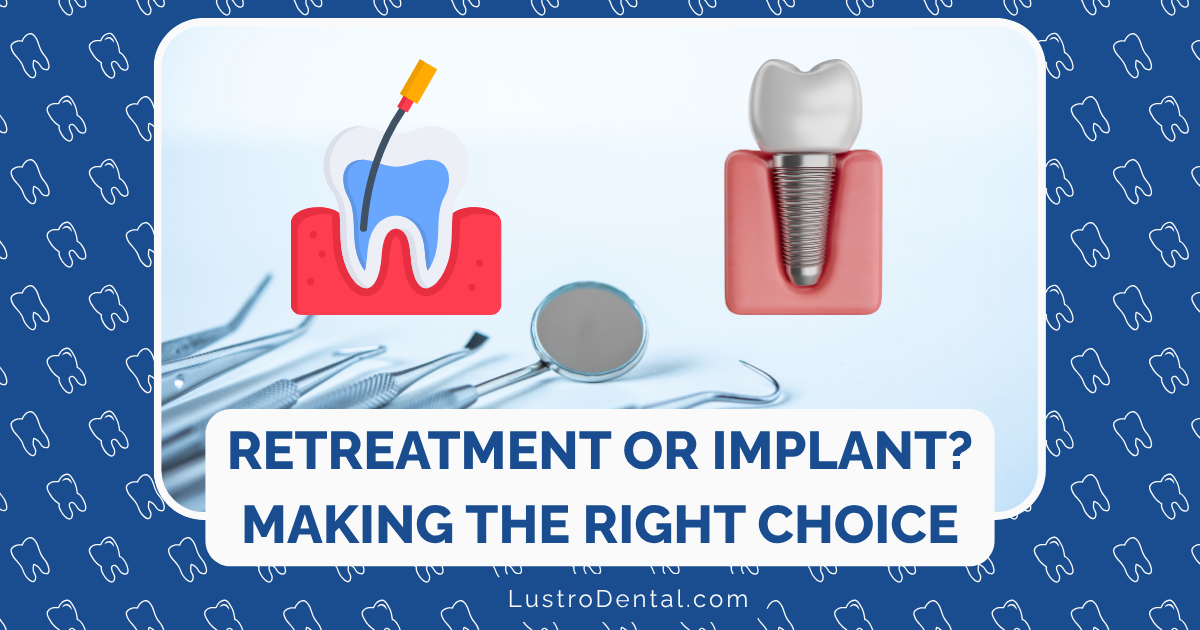
When a root canal treatment fails, patients often find themselves at a crossroads, facing a significant decision: attempt to save the tooth through endodontic retreatment, or extract it and replace it with an implant? This choice can feel overwhelming, especially when you’re dealing with discomfort and uncertainty about the future of your oral health.
As a dental health advocate who has guided many patients through this decision, I understand the complexity of this choice. Both options have their merits, and the “right” decision varies based on numerous factors unique to each situation. In this comprehensive guide, I’ll walk you through the key considerations to help you make an informed choice that aligns with your oral health needs, lifestyle, and personal preferences.
Before diving into comparisons, let’s clearly define what each treatment path entails:
Endodontic Retreatment
Endodontic retreatment involves reopening the tooth, removing the existing root canal filling material, addressing the issues that caused the initial failure (such as missed canals, persistent infection, or inadequate cleaning), and then placing new filling material before restoring the tooth.
Dr. Sarah Johnson, endodontist at Midtown Endodontist NYC, explains: “Retreatment gives your natural tooth a second chance. With advanced techniques and technology like dental operating microscopes, we can often address issues that weren’t detectable or treatable during the initial procedure.”
Extraction and Implant
This approach involves removing the problematic tooth and replacing it with a dental implant—a titanium post surgically placed in the jawbone that serves as an artificial tooth root. After a healing period (typically 3-6 months), a crown is attached to the implant to restore function and appearance.
Success Rates: How the Options Compare
When evaluating treatment options, success rates are a primary consideration. Here’s what current research tells us:
Success rates for implants range from 74.6% to 99%
Factors affecting implant success include bone quality, smoking status, and presence of periodontal disease
It’s important to note that success criteria differ between the two treatments. For retreatment, success typically means absence of symptoms and radiographic evidence of healing. For implants, success means osseointegration (fusion with the bone) and functional restoration.
Dr. Michael Chen, periodontist, notes: “Both treatments have excellent outcomes when performed in appropriate cases by skilled clinicians. The decision shouldn’t be based solely on general success rates but rather on the specific factors of your case.”
Cost Comparison: Financial Considerations
Treatment costs can vary significantly based on location, provider, and specific case details, but general comparisons can help frame the financial aspect of your decision:
According to Healthline, the total cost for extraction and implant can range from $4,000 to $10,500, making it significantly more expensive than retreatment in most cases.
Extraction and implant placement: 1-2 appointments
Initial healing period: 1-2 weeks for soft tissue healing
Osseointegration period: 3-6 months before crown placement
Final restoration: 1-2 appointments for abutment and crown
Total time investment: 4-8 months from start to finish
Dr. Lisa Wong, prosthodontist at Maple Dental Health, explains: “The implant process requires patience. While you’ll have a temporary restoration during healing, the entire process takes months to complete. Retreatment offers a much quicker resolution, which can be a significant factor for many patients.”
Key Decision Factors: When to Choose Each Option
The ideal treatment depends on numerous factors specific to your situation. Here’s a framework for evaluating which option might be best for you:
Factors Favoring Retreatment
Restorable tooth structure: If sufficient healthy tooth structure remains to support a restoration
Strategic tooth importance: Front teeth or teeth crucial for proper bite function
Good periodontal health: Healthy supporting bone and gum tissue
Preference for preserving natural teeth: Strong desire to maintain original dentition
Time constraints: Need for faster treatment completion
Financial limitations: Budget constraints or better insurance coverage for endodontic procedures
Medical contraindications to surgery: Conditions that make implant surgery riskier
Factors Favoring Extraction and Implant
Severely compromised tooth: Extensive decay, fracture, or insufficient remaining structure
Failed previous retreatment: Multiple unsuccessful attempts to save the tooth
Significant structural issues: Vertical root fracture or severe resorption
Advanced periodontal disease: Significant bone loss around the tooth
Anatomical complexities: Unusual root anatomy that complicates retreatment
Long-term perspective: Willingness to invest more upfront for potentially longer-lasting results
Preference for definitive solution: Desire to avoid possible future retreatment
Dr. Robert Wilson, endodontist at Dentistry Today, notes an important statistic: “Most endodontically treated teeth are rarely extracted due to endodontic reasons (less than 8.6%); they’re primarily extracted due to restorative (32.0%) or periodontal (59.4%) failures. This underscores the importance of evaluating the tooth’s overall condition, not just the endodontic status.”
Pros and Cons: A Side-by-Side Comparison
To further clarify your options, let’s examine the advantages and disadvantages of each approach:
Retreatment Pros
Preserves natural tooth: Maintains original dentition and proprioception
Less invasive: No surgical extraction or implantation
Faster completion: Treatment completed in weeks rather than months
Lower initial cost: Typically less expensive than implant treatment
Preserves bone structure: Natural tooth root continues to stimulate jawbone
Simpler procedure: Fewer steps and appointments than implant treatment
Immediate results: No waiting period for osseointegration
Retreatment Cons
Not always possible: Some teeth may be too damaged for successful retreatment
Potential for additional treatment: May require further intervention if issues persist
Weakened tooth structure: Multiple treatments can compromise tooth strength
Variable long-term prognosis: Success depends on many factors
Psychological factor: Anxiety about retreating an already failed procedure
Extraction and Implant Pros
High success rate: Excellent long-term success in appropriate cases
Fresh start: Eliminates existing infection and problematic tooth
Predictable outcome: Not dependent on previous root canal condition
Durability: Implants can last decades with proper care
Aesthetic results: Modern implants closely mimic natural teeth
No risk of root fracture: Implants can’t develop the vertical fractures that sometimes affect endodontically treated teeth
Higher rate of serious complications (15%) in the retreatment group, primarily due to root fractures
Higher incidence of minor prosthetic complications (14%) in the implant group
The Decision-Making Process: Practical Steps
If you’re facing this decision, here’s a step-by-step approach to help you arrive at the best choice for your situation:
1. Get a Comprehensive Evaluation
Seek evaluations from both an endodontist and an implant specialist (periodontist or oral surgeon). This provides balanced perspectives and ensures you understand all viable options.
2. Ask the Right Questions
During your consultations, ask:
What is the specific reason my initial root canal failed?
What is the likelihood of successful retreatment in my case?
What is my bone quality and quantity for implant placement?
What would be the total cost and timeline for each option?
What maintenance will each option require long-term?
What would you recommend if I were your family member?
3. Consider Your Personal Priorities
Reflect on what matters most to you:
Is preserving your natural tooth a priority?
How important is treatment timeline?
What can you realistically afford?
How do you feel about surgical procedures?
What does your insurance cover?
4. Develop a Contingency Plan
Understand what your options would be if your chosen treatment doesn’t succeed:
If retreatment fails, would extraction and implant still be viable?
If an implant fails, what alternatives would remain?
Dr. James Miller, prosthodontist, advises: “The best approach is often to try the more conservative option first, if appropriate. You can always move to extraction and implant if retreatment fails, but you can’t go back once a tooth is extracted.”
Conclusion: Making Your Decision
Both endodontic retreatment and extraction with implant placement can be excellent treatment options with high success rates when performed in appropriate cases by skilled clinicians. The “right” choice depends on your specific clinical situation, personal preferences, financial considerations, and long-term goals.
Remember that this decision doesn’t have to be made alone. Your dental team should serve as partners in your decision-making process, providing the information and guidance you need to make a choice that aligns with your overall oral health objectives.
Whatever you decide, maintaining excellent oral hygiene and attending regular dental check-ups will be essential for the long-term success of either treatment. With proper care, both retreated teeth and dental implants can provide years of comfortable function and aesthetic satisfaction.
Have you faced this decision between retreatment and extraction with implant? What factors influenced your choice? Share your experience in the comments below to help others navigating this decision.