🦷 General Care
✨ Treatments
👶 Family Care
💚 Wellness
💡 Resources

🦷 General Care
✨ Treatments
👶 Family Care
💚 Wellness
💡 Resources

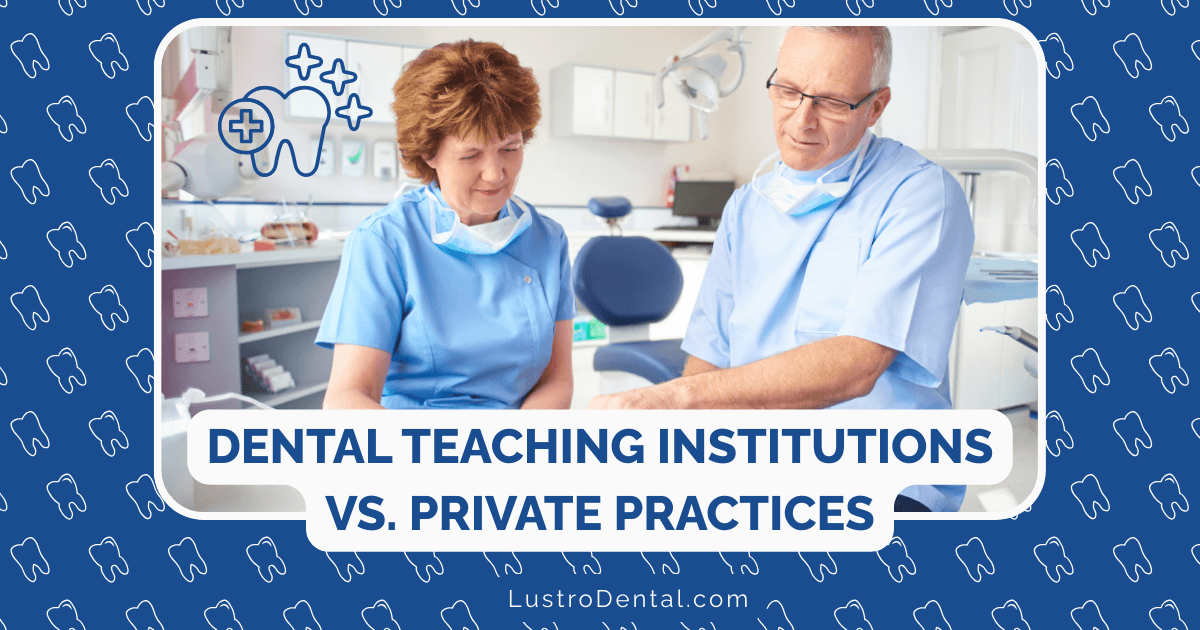
When seeking dental care, patients face a fundamental choice that can significantly impact their experience, treatment outcomes, and finances: receiving care at a dental teaching institution or a private practice. While both settings provide essential dental services, they operate under distinctly different models with unique advantages and limitations.
Understanding these differences empowers you to make an informed decision based on your specific needs, preferences, and circumstances. This comprehensive guide explores the pros and cons of both dental teaching institutions and private practices from the patient’s perspective, helping you navigate this important healthcare choice.
Dental teaching institutions primarily include dental schools affiliated with universities and hospitals with dental residency programs. These facilities serve a dual purpose: educating the next generation of dental professionals while providing care to the public.
In these settings, dental students, residents, or graduate dentists pursuing specialty training deliver care under the supervision of experienced faculty members. The educational mission fundamentally shapes every aspect of the patient experience.
Private dental practices encompass a range of business models, from solo practitioners to group practices and corporate dental chains. These practices focus primarily on delivering dental services to patients as their core business function.
In private practice settings, licensed dentists with varying levels of experience provide direct care, typically assisted by dental hygienists and dental assistants. The business model significantly influences the patient experience.
For many patients, cost represents one of the most significant factors in choosing where to receive dental care.
Significantly Lower Fees: According to data from institutions like Penn Dental Medicine, teaching clinics typically charge 50-70% less than private practices. For example:
Access to Advanced Procedures at Reduced Rates: Complex treatments like implants, orthodontics, and full-mouth rehabilitation may be available at substantially reduced costs compared to private practice.
Sliding Fee Scales: Many teaching institutions offer income-based fee reductions for qualifying patients, making care more accessible to those with financial constraints.
Limited Insurance Acceptance: Some teaching institutions may have restrictions on which insurance plans they accept or how insurance benefits are applied.
Payment Timing: Teaching clinics often require payment at the time of service rather than offering payment plans.
Hidden Costs of Time: While the direct financial costs are lower, the additional time required for appointments (discussed below) represents an indirect cost for patients who must take time off work or arrange childcare.
Insurance Network Participation: Private practices, especially larger group practices, often participate in numerous dental insurance networks, potentially reducing out-of-pocket costs for insured patients.
Financing Options: Many private practices offer third-party financing options like CareCredit or in-house payment plans to make treatment more affordable.
Efficiency Value: The higher efficiency of private practices can translate to fewer appointments and less time off work, representing an indirect cost savings.
Higher Fee Structures: Private practices generally charge market rates for services, which are substantially higher than teaching institutions.
Potential for Overtreatment: The business model of some practices may create incentives for recommending more extensive (and expensive) treatment than necessary.
Variable Transparency: Fee transparency varies widely among private practices, making it difficult for patients to anticipate costs.
The time required for treatment represents another crucial factor for many patients, particularly those with busy schedules.
Comprehensive Care: The educational model emphasizes thorough examination and comprehensive treatment planning, potentially identifying issues that might be overlooked in faster-paced environments.
Unhurried Appointments: Students and residents typically have longer appointment slots, allowing for a more relaxed pace without feeling rushed.
Lengthy Appointments: Procedures typically take 2-3 times longer than in private practice as students learn and faculty check their work.
Multiple Appointments: Treatment that might be completed in one visit at a private practice often requires multiple appointments at teaching institutions.
Extended Wait Times: Initial screening appointments and treatment start dates may involve waits of weeks or months due to high demand and academic schedules.
Academic Calendar Disruptions: Treatment may be delayed during academic breaks or examination periods.
Efficient Treatment: Experienced practitioners can complete procedures more quickly without compromising quality.
Convenient Scheduling: Many private practices offer extended hours, weekend appointments, and same-day emergency care.
Continuity of Care: Treatment plans can be implemented more rapidly without interruptions from academic calendars.
Same-Day Services: Technologies like CAD/CAM (computer-aided design and manufacturing) enable same-day crowns and other restorations in many private practices.
Production Pressure: Some practices may schedule appointments too tightly, creating a rushed atmosphere.
Limited Availability: Popular private practices may have long waiting periods for new patient appointments.
Treatment Phasing for Insurance: Practices may phase treatment across calendar years to maximize insurance benefits, extending the overall treatment timeline.
The quality of dental care received is naturally a paramount concern for patients.
Multiple Levels of Oversight: Faculty specialists review and approve all diagnosis and treatment, providing multiple checks on quality.
Current Techniques: Teaching institutions emphasize evidence-based dentistry and current best practices.
Access to Specialists: Teaching institutions typically have specialists in all dental disciplines under one roof, facilitating comprehensive care.
Cutting-Edge Technology: Many dental schools invest heavily in the latest equipment and technologies for educational purposes.
Dr. Emily Chen, Associate Dean at a major dental school, explains: “In a teaching environment, nothing happens without faculty approval. Students may take longer, but they’re following the most current protocols under expert supervision.”
Variable Student Skill: The technical skill of student providers varies based on their experience level and natural abilities.
Treatment Continuity Challenges: Students graduate or rotate through departments, potentially disrupting continuity of care.
Longer Treatment Time: Extended treatment duration can impact outcomes for some conditions that benefit from expedited care.
Consistent Provider: Treatment from the same experienced dentist ensures continuity of care and accountability.
Technical Proficiency: Experienced practitioners have refined their technical skills through years of practice.
Personalized Approaches: Private dentists can customize approaches based on individual patient needs without adherence to standardized teaching protocols.
Immediate Adaptability: Experienced practitioners can quickly adapt to unexpected findings or complications during procedures.
Variable Practice Standards: Quality can vary significantly between practices with limited external oversight.
Potential Isolation: Solo practitioners may have fewer opportunities for peer review or consultation.
Economic Pressures: Business considerations may influence treatment recommendations in some practices.
Varying Commitment to Continuing Education: Not all private practitioners maintain the same level of currency with advances in the field.
Beyond cost, time, and quality considerations, the overall patient experience significantly impacts satisfaction with dental care.
Thorough Explanations: The educational environment encourages detailed explanations of conditions and treatment options.
Shared Decision-Making: Teaching institutions typically emphasize patient involvement in treatment planning.
Research Opportunities: Patients may have access to clinical trials and cutting-edge treatments not yet widely available.
Multidisciplinary Approach: Complex cases benefit from collaborative approaches involving multiple specialties.
Institutional Environment: Clinical settings often feel more institutional and less comfortable than private offices.
Reduced Privacy: Multiple students, residents, and faculty may be present during appointments.
Administrative Complexity: Navigating the systems of large institutions can be challenging and impersonal.
Treatment Fragmentation: Different aspects of care may be provided by different departments, requiring multiple appointments in different locations.
Relationship-Based Care: Ongoing relationships with the same dental team foster trust and personalized care.
Comfortable Environment: Many private practices invest significantly in creating comfortable, spa-like environments.
Streamlined Processes: Private practices typically offer more efficient administrative processes and personalized service.
Flexibility: Private practitioners can more easily accommodate special requests or adapt protocols to patient preferences.
Dr. James Wilson, who transitioned from academic dentistry to private practice, notes: “In private practice, I can create exactly the kind of patient experience I believe in. From the office environment to treatment approaches, everything can be tailored to enhance patient comfort and satisfaction.”
Variable Communication: Not all private practitioners prioritize patient education and shared decision-making.
Limited Specialist Access: Referrals to specialists require visits to different offices and coordination between providers.
Potential Business Focus: Some practices may emphasize business efficiency over patient experience.
Different patient populations may find particular advantages in one setting over the other:
Teaching Institution Advantages:
Private Practice Considerations:
Teaching Institution Considerations:
Private Practice Advantages:
Teaching Institution Advantages:
Private Practice Considerations:
The ideal choice between a teaching institution and private practice depends on your individual circumstances, priorities, and preferences. Consider these factors in your decision-making process:
Many patients find that a hybrid approach leverages the advantages of both settings:
Consider using teaching institutions for:
While using private practice for:
Some patients start with teaching institutions for comprehensive care when time is less critical (such as during retirement or flexible work periods) and transition to private practice when circumstances change.
Both teaching institutions and private practices offer valuable dental services with distinct advantages and limitations. Your optimal choice depends on your individual circumstances, priorities, and the specific dental care you require.
Many patients find that understanding these differences allows them to strategically utilize both settings throughout their lifetime, maximizing the benefits each has to offer. The most important factor is making an informed decision that aligns with your needs and preferences.
Remember that within each category, significant variation exists—not all teaching institutions or private practices are alike. Research specific providers, ask questions, and consider starting with a consultation appointment to assess your comfort with the environment and providers before committing to extensive treatment.
By weighing these factors thoughtfully, you can make a dental care choice that supports both your oral health and overall wellbeing.