🦷 General Care
✨ Treatments
👶 Family Care
💚 Wellness
💡 Resources

🦷 General Care
✨ Treatments
👶 Family Care
💚 Wellness
💡 Resources

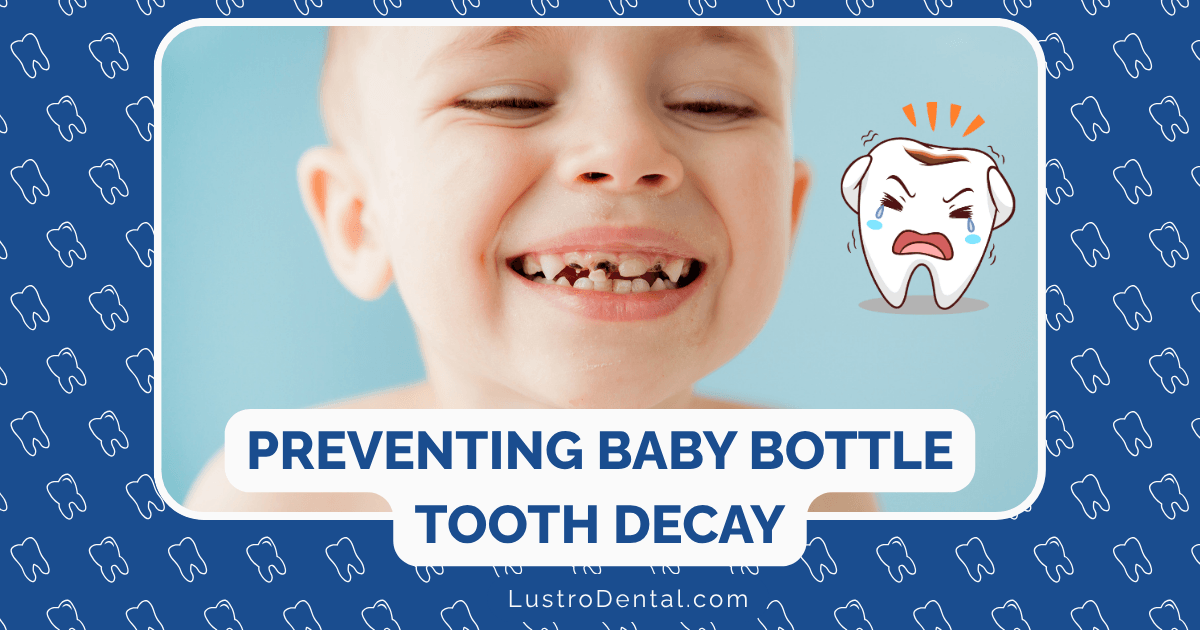
That adorable smile with tiny pearly whites is one of the most precious sights for any parent. But did you know that those baby teeth are vulnerable to a condition called “baby bottle tooth decay” or “early childhood caries”? Despite being preventable, this condition affects a significant number of young children—more than 1 in 10 children aged 2-5 years have at least one untreated cavity in their baby teeth, according to the Centers for Disease Control and Prevention.
The good news? With the right knowledge and practices, you can protect your little one’s smile. Let’s dive into what causes baby bottle tooth decay and, more importantly, how to prevent it.
Baby bottle tooth decay refers to dental caries (cavities) that develop in infants and very young children. It typically affects the upper front teeth first but can spread to other teeth as well. The name comes from its common association with prolonged bottle use, especially when babies are put to bed with bottles containing sugary liquids.
Dr. Sarah Chen, pediatric dentist at Children’s Dental Health Center, explains: “When babies fall asleep with bottles in their mouths, the liquid pools around the teeth. The sugars in milk, formula, fruit juice, or sweetened drinks feed the bacteria in the mouth, which produce acids that attack tooth enamel and cause decay.”
Some parents mistakenly believe that since baby teeth eventually fall out, they don’t require the same level of care as permanent teeth. This couldn’t be further from the truth.
Baby teeth:
Moreover, decay in baby teeth can lead to infections that may damage the developing permanent teeth underneath. According to a 2024 study published in the Journal of Pediatric Dentistry, untreated decay in primary teeth increases the risk of decay in permanent teeth by nearly 300%.
Early detection is crucial. Look out for these signs of potential baby bottle tooth decay:
This is perhaps the most important rule for preventing baby bottle tooth decay. If your baby needs a bottle to fall asleep, fill it with water only—never milk, formula, juice, or sweetened drinks. During sleep, saliva production decreases, leaving teeth more vulnerable to acid attacks from bacteria.
Even before teeth emerge, get into the habit of cleaning your baby’s gums after feedings:
As soon as that first tooth peeks through:
The American Dental Association recommends fluoride toothpaste from the start, but in very small amounts that won’t cause harm if swallowed.
Fruit juices (even 100% juice), flavored milk, and sweetened drinks can contribute to tooth decay:
According to the American Academy of Pediatrics, children under 1 year should have no juice at all, and children 1-3 years should have no more than 4 ounces daily.
Prolonged bottle use increases the risk of tooth decay:
Dr. Michael Rodriguez, pediatrician at Children’s Medical Center, advises: “The transition from bottle to cup is not just about dental health—it’s also an important developmental milestone that helps with oral motor skills.”
Cavity-causing bacteria can be transmitted from caregivers to babies:
Research published in the Journal of the American Dental Association found that mothers with active cavities were more likely to have children who developed early childhood caries due to bacterial transmission.
The American Academy of Pediatric Dentistry recommends:
These early visits are typically short and focused on education rather than treatment, helping establish a positive relationship with dental care.
Talk to your pediatrician or dentist about:
A 2023 study found that children who received fluoride varnish applications twice a year had 43% fewer cavities than those who didn’t receive this preventive treatment.
Diet plays a crucial role in dental health:
Dr. Emily Warren, nutritionist at Healthy Kids Institute, notes: “What your child eats affects not just their overall health but their dental health too. Calcium-rich foods like cheese and yogurt actually help strengthen teeth and neutralize acids.”
Children learn by example:
The effort to prevent baby bottle tooth decay is well worth it. Consider these statistics:
If you spot any warning signs of tooth decay:
Early intervention is key. While mild decay can sometimes be reversed with proper care and fluoride treatments, more advanced decay will require professional treatment.
Beyond the specific tips above, consider these broader strategies:
Baby bottle tooth decay is a serious but entirely preventable condition. By implementing these preventive strategies from birth, you’re setting your child up for a lifetime of healthy smiles. Remember, those baby teeth may be temporary, but the habits you instill now will last a lifetime.
As Dr. James Peterson, pediatric dentist at American Academy of Pediatric Dentistry, puts it: “The most important dental visit is the one that never needs to happen. Preventive care is always better than treatment—for your child’s comfort and your peace of mind.”
Have you implemented any of these strategies with your little one? What challenges have you faced in maintaining good oral hygiene for your baby? Share your experiences in the comments below!