🦷 General Care
✨ Treatments
👶 Family Care
💚 Wellness
💡 Resources

🦷 General Care
✨ Treatments
👶 Family Care
💚 Wellness
💡 Resources

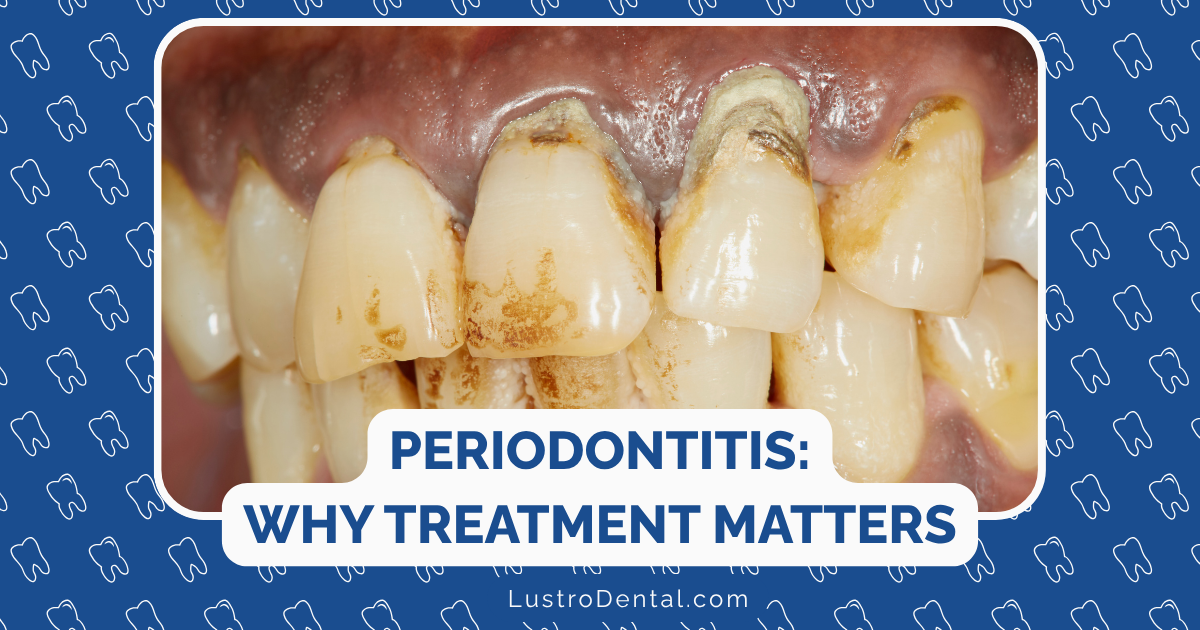
When most people think about gum disease, they envision bleeding gums, bad breath, and eventually, tooth loss. While these local consequences are certainly concerning, mounting evidence suggests that the impact of periodontitis extends far beyond your mouth. In fact, this common inflammatory condition may be silently contributing to or exacerbating serious chronic diseases throughout your body.
As someone dedicated to advancing dental health education, I’ve witnessed a paradigm shift in how we understand the relationship between oral health and overall wellness. The mouth is not an isolated system—it’s intimately connected to your entire body through complex inflammatory pathways and direct bacterial spread.
This comprehensive guide explores the critical connections between periodontitis and systemic diseases, explaining why treating gum disease isn’t just about saving your teeth—it could be saving your life.
Before diving into the systemic connections, let’s clarify what periodontitis actually is. Periodontitis is an advanced form of gum disease characterized by inflammation of the gums and supporting structures of the teeth. It begins with gingivitis (gum inflammation) and, if left untreated, progresses to destroy the periodontal ligaments and alveolar bone that support your teeth.
The condition affects nearly half of adults over 30 in the United States, with severe periodontitis affecting approximately 9% of the population. What makes periodontitis particularly concerning from a systemic health perspective is its chronic inflammatory nature and the potential for oral bacteria to enter the bloodstream.
Dr. Sarah Chen, Professor of Periodontology at Harvard School of Dental Medicine, explains: “Periodontitis creates a perfect storm of health risks. You have chronic inflammation, a disrupted oral microbiome, and a compromised barrier that allows bacteria and inflammatory mediators to enter the circulation. This combination can have far-reaching effects throughout the body.”
The link between periodontitis and systemic diseases operates through several biological mechanisms:
Periodontitis triggers an inflammatory response that isn’t confined to your mouth. Pro-inflammatory cytokines and other mediators enter your bloodstream, contributing to systemic inflammation—a known driver of numerous chronic diseases.
Oral bacteria associated with periodontitis, particularly Porphyromonas gingivalis, can enter the bloodstream during normal activities like chewing and brushing. These bacteria have been detected in distant tissues and organs, including the heart, brain, and arterial plaques.
Chronic exposure to periodontal pathogens can alter immune responses throughout the body, potentially contributing to autoimmune and inflammatory conditions.
Periodontitis shares common risk factors with many chronic diseases, including smoking, poor diet, and stress, which may partially explain their frequent co-occurrence.
The relationship between periodontitis and cardiovascular disease (CVD) is one of the most well-established oral-systemic connections. According to a meta-analysis published in the Journal of Clinical Periodontology, individuals with moderate to severe periodontitis have approximately three times the risk of developing coronary heart disease compared to those without periodontitis.
Multiple studies have found that periodontal bacteria, particularly P. gingivalis, can be detected in atherosclerotic plaques. These bacteria may contribute to plaque formation and instability, increasing the risk of heart attacks.
A groundbreaking 2025 study published in Science Daily revealed that P. gingivalis can infiltrate heart tissue, leading to scarring and increasing the risk of atrial fibrillation (AFib)—the most common type of irregular heartbeat. The research found that:
Research indicates that periodontitis increases stroke risk by approximately 1.5 to 2.5 times. The inflammatory burden and potential for bacteria-induced blood clots are believed to be contributing factors.
Perhaps the most compelling evidence for the periodontitis-CVD connection comes from intervention studies showing that periodontal treatment can improve cardiovascular markers:
Dr. Michael Rodriguez, cardiologist at Mayo Clinic, notes: “We’re increasingly recommending periodontal evaluation for our cardiac patients. The evidence suggests that addressing periodontal inflammation may be an important adjunctive approach to reducing overall cardiovascular risk.”
The relationship between diabetes and periodontitis is bidirectional, meaning each condition can influence the other. This connection is so well-established that periodontitis is often referred to as the “sixth complication” of diabetes.
Diabetes creates an environment that promotes periodontitis through:
Equally important, periodontitis can make diabetes more difficult to control:
According to a 2025 study published in Nature, there is a moderate but significant association between periodontitis and diabetes (Cramer’s V = 0.14), highlighting the interconnected nature of these conditions.
Multiple clinical trials have demonstrated that treating periodontitis can improve glycemic control in people with diabetes:
Dr. Lisa Johnson, endocrinologist and researcher at the University of California, emphasizes: “Periodontal care should be considered an essential component of diabetes management. The improvements in glycemic control we see following periodontal treatment can translate to meaningful reductions in the risk of diabetic complications.”
One of the most concerning recent discoveries is the potential link between periodontitis and Alzheimer’s disease (AD). Research in this area has accelerated dramatically in the past five years, revealing compelling connections.
A systematic literature network analysis published in Science Direct in 2024 examined 328 studies and found a positive correlation between periodontal disease and Alzheimer’s disease. The analysis identified two primary pathways through which periodontitis may contribute to brain inflammation:
The American Academy of Periodontology reports that studies have found a significant connection between bacteria associated with periodontal disease and the progression of Alzheimer’s disease. Specifically:
This emerging connection has led to novel therapeutic approaches:
Dr. James Wong, neurologist and researcher at Johns Hopkins University, notes: “The periodontal-Alzheimer’s connection represents one of the most promising areas of research in neurodegenerative disease. If maintaining oral health can help prevent or slow Alzheimer’s progression, it would be a remarkably simple intervention with enormous public health implications.”
The connection between periodontitis and cancer is gaining increasing attention. According to a 2024 comprehensive analysis published in Military Medical Research, which examined 57 systematic reviews covering 75 diseases, cancer was the most frequently addressed topic showing significant associations with periodontal disease.
The American Academy of Periodontology reports that men with gum disease have:
The highest risk estimate was found for head and neck cancer, with an odds ratio of 3.17, meaning people with periodontitis have more than three times the risk of developing these cancers compared to those without periodontitis.
Several mechanisms may explain the periodontitis-cancer connection:
While more research is needed, maintaining periodontal health may be an important component of cancer prevention strategies, particularly for those with additional risk factors.
The link between periodontitis and respiratory diseases is particularly relevant in the post-COVID era, as more attention focuses on respiratory health.
The mouth can serve as a reservoir for respiratory pathogens. Research indicates that:
Multiple studies have found associations between periodontitis and COPD:
Dr. Robert Chen, pulmonologist at Northwestern Memorial Hospital, explains: “The oral-respiratory connection makes intuitive sense—the mouth is the gateway to the respiratory system. What’s remarkable is how strong the evidence has become showing that oral bacteria and inflammation can significantly impact lung health.”
Periodontitis during pregnancy has been associated with adverse outcomes, including:
The inflammatory burden from periodontitis may interfere with normal pregnancy progression, highlighting the importance of periodontal care as part of prenatal health.
The compelling connections between periodontitis and systemic diseases raise an important question: Can treating periodontitis improve overall health outcomes? The evidence increasingly suggests it can.
Beyond the health benefits, there’s a compelling economic case for addressing periodontitis as part of chronic disease management. According to a 2025 study in Science Direct:
A study by CareQuest Institute for Oral Health found that treating gum disease in people with diabetes or coronary artery disease can save between $1,090 and $5,681 per patient per year in medical costs.
If you have diabetes, cardiovascular disease, respiratory conditions, or are at risk for Alzheimer’s disease, periodontal evaluation and treatment should be considered an essential component of your overall healthcare:
The oral-systemic connection demands a more integrated approach to patient care:
Dr. Jennifer Martinez, Director of Integrative Medicine at University of California, San Francisco, advocates: “We need to break down the artificial barrier between medicine and dentistry. The evidence clearly shows that oral health is integral to overall health, particularly for patients with chronic inflammatory conditions.”
Research in this field continues to evolve rapidly. Several promising areas of investigation include:
Identifying genetic and microbial profiles that may predispose individuals to both periodontitis and specific systemic diseases.
Developing treatments that target common pathways between periodontitis and systemic conditions.
Creating models that incorporate oral health screening and treatment into the management of chronic diseases.
Investigating whether early periodontal intervention can prevent or delay the onset of associated systemic conditions.
The evidence linking periodontitis to major chronic diseases is compelling and continues to strengthen. This connection represents both a challenge and an opportunity—a challenge to change our compartmentalized approach to healthcare, and an opportunity to improve outcomes for millions of patients through relatively simple interventions.
For too long, the mouth has been disconnected from the rest of the body in our healthcare systems and thinking. The science clearly shows this separation is artificial and potentially harmful. Treating periodontitis isn’t just about saving teeth—it’s about protecting the heart, managing diabetes, potentially preserving cognitive function, and possibly even reducing cancer risk.
As Dr. Michael Wilson, Director of the Global Oral Health Institute, succinctly states: “Periodontal health is a window to overall health, and increasingly, it appears to be a lever we can pull to improve outcomes across multiple chronic diseases. The question is no longer whether periodontitis affects systemic health—it’s how quickly we can translate this knowledge into better integrated care models.”
Whether you’re a patient managing a chronic condition or a healthcare provider treating such patients, the message is clear: periodontal health deserves attention as an integral component of overall health management. Your gums may be silently influencing your entire body—it’s time to listen to what they’re telling us.