🦷 General Care
✨ Treatments
👶 Family Care
💚 Wellness
💡 Resources

🦷 General Care
✨ Treatments
👶 Family Care
💚 Wellness
💡 Resources

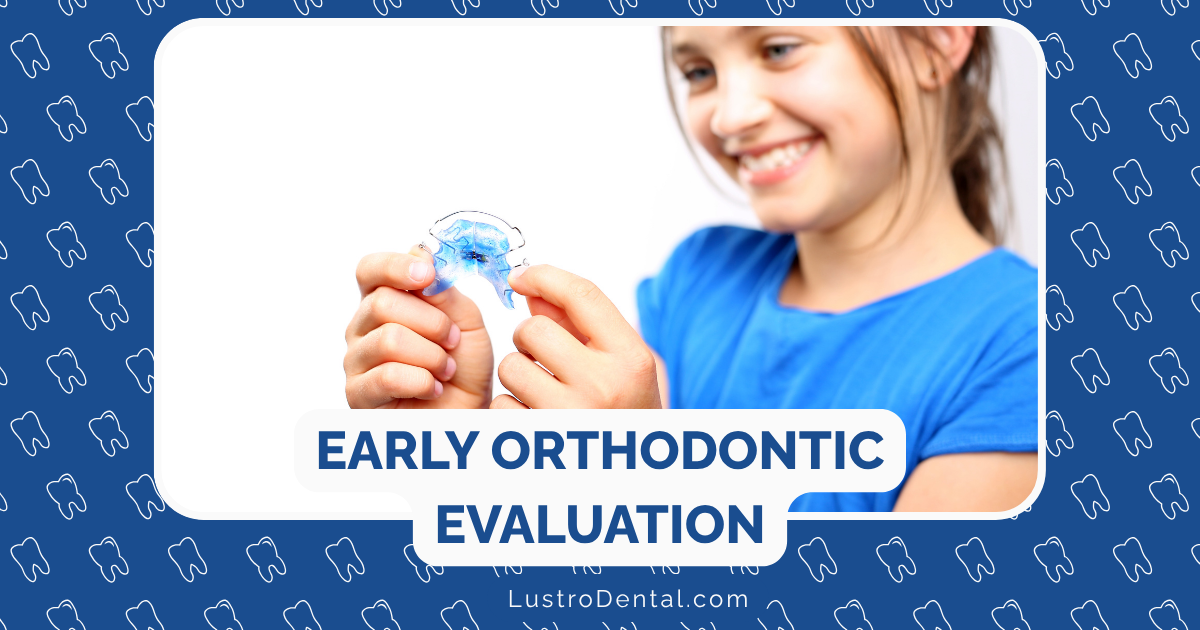
As parents, we’re constantly monitoring our children’s development milestones—first words, first steps, first day of school. But there’s one milestone that often flies under the radar until problems become obvious: their orthodontic development.
Many parents are surprised to learn that the American Association of Orthodontists (AAO) recommends that all children have their first orthodontic check-up no later than age 7. Why so early? By this age, most children have a mix of baby teeth and permanent teeth, creating the perfect opportunity to spot developing issues before they become more serious and potentially more difficult to treat.
As an orthodontist who’s worked with thousands of young patients, I’ve seen firsthand how early intervention can make a tremendous difference in a child’s dental development, potentially saving them from more invasive treatments later in life. In this guide, I’ll share the key signs that indicate your child might benefit from seeing an orthodontist before age 7, along with what you can expect from early orthodontic care.
Before diving into the warning signs, let’s understand why orthodontists focus on this particular age:
By age 7, children typically have:
This combination creates a unique window of opportunity. As Dr. Sarah Johnson of the American Association of Orthodontists explains, “At this stage, we can identify subtle problems with jaw growth and emerging teeth while the child’s face and jaws are still developing. Some conditions are much easier to address at this age, when children’s natural growth can be guided to create the optimal environment for their developing teeth and jaws.”
If you notice any of these signs in your child, it’s worth scheduling an orthodontic evaluation before age 7:
What to watch for: Baby teeth falling out significantly earlier or later than expected. Typically, children begin losing their baby teeth around age 6, starting with the front teeth.
Why it matters: Early loss of baby teeth can allow permanent teeth to drift into the empty space, causing crowding. Late retention of baby teeth might indicate that permanent teeth are impacted (stuck) or developing in the wrong position.
Real example: Seven-year-old Emma had retained all her baby teeth while her classmates were proudly showing off gaps. An orthodontic evaluation revealed that her permanent teeth were developing but couldn’t erupt because her baby teeth weren’t loosening naturally. Strategic removal of a few baby teeth created the pathway her permanent teeth needed.
What to watch for: Your child avoiding certain foods, complaining that it hurts to bite into foods, or chewing in an unusual way.
Why it matters: Difficulty chewing often indicates a misalignment between the upper and lower teeth (malocclusion). This can affect nutrition, speech development, and potentially lead to temporomandibular joint (TMJ) issues later in life.
Early intervention benefit: Guiding jaw growth to improve the relationship between the upper and lower teeth can restore proper function and prevent the problem from worsening as adult teeth come in.
What to watch for: Your child primarily breathing through their mouth instead of their nose, especially while resting or sleeping.
Why it matters: Chronic mouth breathing can lead to altered facial development, including a narrower upper jaw, longer face, recessed chin, and a less defined jawline. It’s often associated with enlarged adenoids or tonsils and can contribute to sleep-disordered breathing.
Research insight: A study published in the Journal of Dental Research found that children who are habitual mouth breathers are more likely to develop long, narrow faces and dental arches, leading to crowding and the need for more extensive orthodontic treatment later.
What to watch for: Some upper teeth sitting inside the lower teeth when your child bites down, rather than the normal position of upper teeth slightly overlapping the lower teeth.
Why it matters: Crossbites can cause asymmetric jaw growth, uneven wear on teeth, and may contribute to TMJ problems. They rarely self-correct and often worsen with time.
Early intervention benefit: Crossbites are one of the conditions most effectively treated with early intervention. Devices like palatal expanders can gently widen the upper jaw while it’s still developing, creating proper alignment with relatively simple treatment.
What to watch for: Permanent teeth coming in crooked, overlapping, or twisted. Front teeth that appear too crowded even as they’re just erupting.
Why it matters: Crowding indicates that there isn’t enough space in the jaw for all the teeth. As more permanent teeth erupt, the problem typically worsens.
Early intervention benefit: Creating space through guided growth can reduce or eliminate the need for tooth extractions later. According to the American Journal of Orthodontics and Dentofacial Orthopedics, early intervention for crowding can reduce the need for extractions by up to 50% in many cases.
What to watch for: Upper front teeth that stick out significantly over the lower teeth, sometimes preventing the lips from closing comfortably.
Why it matters: Protruding front teeth are more vulnerable to injury from falls or sports. They can also create social challenges for children and affect self-esteem.
Real example: Six-year-old Jacob had upper front teeth that protruded significantly, making him a target for teasing. Early intervention with a simple appliance helped guide his jaw growth and reduced the protrusion, minimizing both injury risk and social concerns.
What to watch for: Lower front teeth sitting in front of the upper front teeth when biting down.
Why it matters: Underbites often indicate a skeletal discrepancy between the upper and lower jaws. If left untreated until adolescence, they frequently require surgery to correct.
Early intervention benefit: During growth, the upper jaw can be encouraged to grow forward while restraining excessive lower jaw growth, potentially avoiding the need for surgical correction later. Research shows that early treatment of underbites has a success rate of approximately 70-80% in avoiding surgery when started before age 10.
What to watch for: Continued thumb sucking, finger sucking, or pacifier use past the age of 4.
Why it matters: Prolonged sucking habits can push the front teeth forward and the side teeth inward, potentially creating an “open bite” where the front teeth don’t overlap vertically. They can also affect the shape of the developing palate.
Early intervention benefit: Breaking these habits early, sometimes with the help of a simple appliance, can prevent dental and skeletal changes that would require more complex treatment later.
What to watch for: Visible shifting of the lower jaw when your child opens or closes their mouth, or clicking/popping sounds from the jaw joint.
Why it matters: These signs may indicate a jaw joint disorder or a functional shift to avoid uncomfortable tooth contacts. Left untreated, they can lead to asymmetric growth and TMJ disorders.
Treatment approach: Early evaluation can identify the cause of the shift. Depending on the diagnosis, treatment might include selective reshaping of baby teeth, minor orthodontic movement, or an appliance to guide proper jaw position.
What to watch for: Noticeable differences between the right and left sides of your child’s face, particularly in the jaw area.
Why it matters: Facial asymmetry may indicate uneven jaw growth, which can worsen over time and eventually require surgical correction if not addressed early.
Research insight: A 2023 study in the European Journal of Orthodontics found that addressing growth asymmetries before age 9 resulted in significantly better outcomes than waiting until adolescence.
What to watch for: Audible grinding sounds while your child sleeps, worn tooth surfaces, complaints of morning jaw soreness, or frequent headaches.
Why it matters: While occasional grinding is normal, habitual grinding (bruxism) may indicate an underlying bite problem. It can lead to worn teeth, jaw pain, and headaches.
Early intervention approach: Identifying and addressing the underlying cause—whether it’s stress, airway issues, or bite discrepancies—can prevent damage to both baby and permanent teeth.
What to watch for: Persistent speech issues, particularly with sounds that require proper tongue placement against the teeth (like “s,” “z,” “t,” “d,” “l,” and “n”).
Why it matters: While many speech issues are developmental or require speech therapy, some are related to tooth position or jaw alignment that can be improved with orthodontic intervention.
Collaborative approach: Orthodontists often work with speech pathologists when dental structure contributes to speech difficulties, creating a comprehensive treatment plan that addresses both aspects.
If you’ve noticed any of these signs, you might wonder what an early orthodontic evaluation involves. Here’s what you can expect:
The first visit typically includes:
This appointment is usually brief (30-45 minutes) and completely non-invasive.
After the evaluation, the orthodontist will generally recommend one of three approaches:
If early intervention is recommended, your child might be a candidate for what orthodontists call “Phase 1” or “interceptive” treatment.
Phase 1 treatment typically:
Depending on your child’s specific needs, Phase 1 might include:
Palatal Expanders These appliances gently widen the upper jaw to create space for crowded teeth, correct crossbites, and improve breathing. They work with the natural growth process, which is why they’re most effective before age 10 when the palatal suture hasn’t yet fused.
Partial Braces Sometimes called “limited braces,” these might be placed on just the front teeth to address specific alignment issues while leaving room for remaining baby teeth to fall out naturally.
Habit-Breaking Appliances For children with persistent thumb sucking or tongue thrusting habits, special appliances can help break these habits and allow normal development to resume.
Headgear or Growth Modification Appliances These appliances help guide jaw growth in cases of significant overbites, underbites, or asymmetries.
When appropriate, early orthodontic intervention offers several significant advantages:
Early treatment can harness and direct a child’s natural growth potential. As Dr. Michael Chen of Metropolitan Orthodontics explains, “We can’t create growth, but we can guide it. Once growth is complete in the teenage years, our options become more limited and sometimes more invasive.”
Addressing certain issues early can help avoid:
Early intervention can:
Addressing noticeable orthodontic issues early can:
It’s important to note that not all children need early orthodontic intervention. Many orthodontic issues can be effectively treated during adolescence with a single phase of treatment. An early evaluation simply ensures that if your child is among those who would benefit from early intervention, that opportunity isn’t missed.
Dr. Lisa Patel, a board-certified orthodontist, notes, “The goal isn’t to put braces on every 7-year-old. It’s to identify the specific cases where early intervention makes a significant difference in the outcome. For many children, monitoring is all that’s needed until all their permanent teeth have erupted.”
If you’ve noticed any of the warning signs mentioned above, or if your child is approaching age 7 and hasn’t had an orthodontic evaluation yet, here’s what to do:
The old approach of waiting until all permanent teeth have erupted before seeing an orthodontist has given way to a more proactive philosophy focused on development and prevention. While not every child needs early intervention, an evaluation by age 7 ensures that those who would benefit don’t miss the opportunity.
As parents, we’re always looking out for our children’s future. Early orthodontic screening is a simple step that can potentially save them from more complicated treatment later while giving them the best chance for a healthy, confident smile throughout life.
Have you noticed any of these signs in your child? Or do you have questions about early orthodontic care? Share your thoughts and experiences in the comments below—I’m happy to provide guidance based on your specific situation.