🦷 General Care
✨ Treatments
👶 Family Care
💚 Wellness
💡 Resources

🦷 General Care
✨ Treatments
👶 Family Care
💚 Wellness
💡 Resources

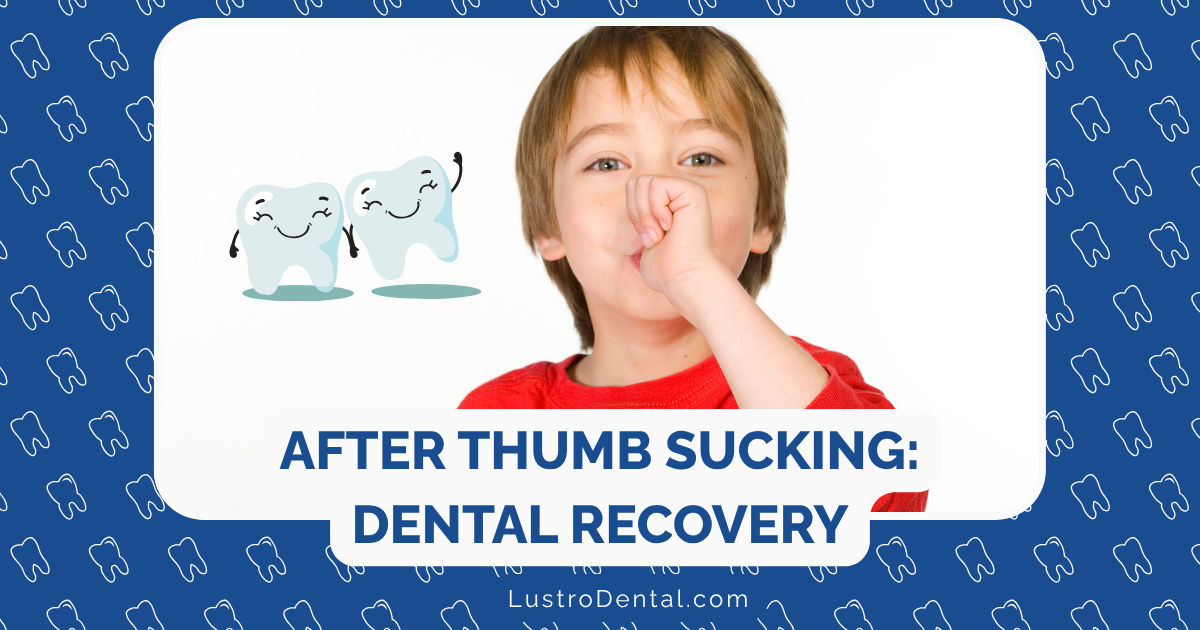
For many parents, watching their baby contentedly suck on a thumb or pacifier brings a sense of relief. These natural soothing behaviors help infants self-regulate, find comfort, and often sleep better. But as children grow, questions arise about how these habits might affect developing teeth and jaws.
If you’re weighing the pros and cons of pacifiers versus thumb sucking, you’re not alone. Research shows that approximately 70-90% of children engage in non-nutritive sucking behaviors during their early years. Both habits serve important developmental functions, but they can also impact dental development if they persist too long.
This comprehensive guide examines the dental implications of both habits, helping you make informed decisions about what’s best for your child’s oral development.
Before comparing pacifiers and thumb sucking, it’s important to understand why these behaviors are so common and developmentally significant:
Sucking is one of the most primitive and powerful reflexes in infants. It begins before birth—ultrasound images often capture fetuses sucking their thumbs in the womb—and continues as a source of nourishment, comfort, and sensory exploration after birth.
Dr. Sarah Johnson, pediatric dentist at Grand Rapids Dentists, explains: “Non-nutritive sucking—sucking that’s not associated with feeding—helps babies regulate their emotions, find comfort, and even develop oral motor skills. It’s a normal, healthy part of infant development.”
Most children naturally outgrow non-nutritive sucking behaviors:
Both thumb sucking and pacifier use exert forces on developing teeth and oral structures. These forces can influence:
Dr. Michael Chen of Sun Valley Pediatric Dentistry notes: “The impact of sucking habits on dental development depends on four key factors: frequency (how often), intensity (how forcefully), duration (how long each session), and longevity (for how many years the habit continues).”
What it is: A gap between the upper and lower front teeth when biting down How it happens: Consistent pressure from thumb or pacifier prevents front teeth from erupting fully Potential impact: Difficulty biting foods, speech issues (especially with “s” and “th” sounds)
What it is: Upper front teeth that protrude significantly forward How it happens: Pressure pushes upper teeth outward while lower teeth may tilt inward Potential impact: Increased risk of dental trauma, self-consciousness about appearance
What it is: Upper back teeth bite inside the lower back teeth (opposite of normal) How it happens: Sucking creates negative pressure that narrows the upper jaw Potential impact: Asymmetrical jaw growth, potential TMJ issues later in life
What it is: Narrowing or heightening of the roof of the mouth How it happens: Tongue position during sucking and pressure from the thumb or pacifier reshape the palate Potential impact: Breathing issues, crowded teeth, speech difficulties
Dr. Emily Rodriguez, orthodontist at Lanik DDS, explains: “Orthodontic pacifiers are designed with a flattened nipple that puts less pressure on developing teeth and better accommodates natural tongue position. While they’re not perfect, they may reduce some dental impacts compared to traditional round pacifiers.”
The short answer: Neither habit is inherently better or worse for dental development if discontinued at an appropriate age. Both can cause similar dental issues if they persist too long.
According to a 2025 study from Gilbert Arizona Dental, the key factors that determine dental impact are:
Dr. James Wilson, pediatric dentist at Morris Dental Clinic, summarizes: “From a purely dental perspective, the ideal scenario is for either habit to naturally fade by age 3-4. If I had to choose between the two, I might slightly favor pacifiers simply because parents have more control over weaning. However, both can be appropriate for young children when managed thoughtfully.”
During infancy, both habits are generally considered beneficial:
Recommendation: Support either habit as needed for comfort.
At this stage, habits continue to provide comfort with minimal dental impact:
Recommendation: Begin gradual reduction of dependency but without pressure.
This is the transition period when habits should ideally begin to fade:
Recommendation: Active but gentle discouragement of both habits.
At this stage, intervention becomes more important:
Recommendation: More active intervention for either habit that persists.
Dr. Lisa Patel, child psychologist, emphasizes: “The approach to weaning should always be positive and supportive, never punitive or shame-based. Children respond best to encouragement and understanding rather than criticism of these self-soothing behaviors.”
Children with sensory processing differences, anxiety, or developmental delays may rely on sucking habits for longer periods:
Regardless of which habit your child has, regular dental visits are essential:
Consider consulting a pediatric dentist or orthodontist if:
The good news is that many dental changes will self-correct after the habit stops, especially if:
Dr. Chen notes: “The mouth has remarkable capacity for self-correction, particularly in young children. Once the habit stops, normal tongue position, swallowing, and facial growth often guide teeth back toward their proper positions.”
More significant changes, however, may require orthodontic intervention later.
When it comes to pacifiers versus thumb sucking, there’s no definitively “better” option from a dental perspective. Both can serve important developmental functions in infancy and early childhood, and both can potentially impact dental development if they continue too long.
Rather than focusing on which habit is superior, consider:
Remember that millions of children have used pacifiers or sucked their thumbs and gone on to have perfectly healthy smiles. With thoughtful management and appropriate dental care, either habit can be part of normal, healthy development without lasting dental consequences.
What has been your experience with pacifiers or thumb sucking? Share your stories and questions in the comments below!
Yes, many dental changes will self-correct once the habit stops, especially if discontinuation occurs before permanent teeth fully erupt (around age 6). Minor to moderate changes often resolve naturally as normal growth and development continue.
Orthodontic pacifiers are designed to better accommodate the natural shape of a baby’s palate and may reduce some dental impacts. While research shows they may cause fewer bite problems than traditional round pacifiers, no pacifier is completely without impact if used extensively beyond age 3-4.
Limited pacifier use (only during sleep) generally causes fewer dental issues than constant use throughout the day. If your child is under 3 and only uses a pacifier for sleep, dental concerns are typically minimal. After age 3, even sleep-only use should be gradually discouraged.
Yes, vigorous or intense sucking (with visible cheek movement, audible sounds, or significant pressure) typically causes more dental changes than passive sucking where the thumb gently rests in the mouth. If you notice intense sucking patterns, earlier intervention may be warranted.
Most dental professionals recommend tackling the pacifier habit first, as it’s typically easier to control. Once that habit is broken, you can focus on thumb sucking. Trying to eliminate both simultaneously may be overwhelming for some children.