🦷 General Care
✨ Treatments
👶 Family Care
💚 Wellness
💡 Resources

🦷 General Care
✨ Treatments
👶 Family Care
💚 Wellness
💡 Resources

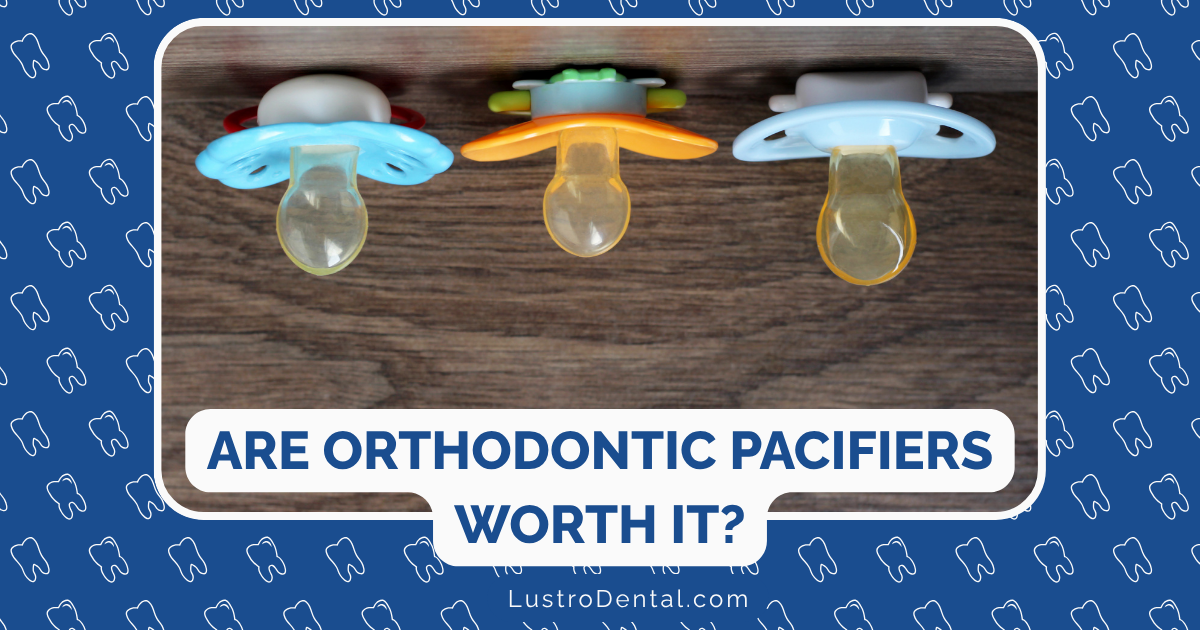
Walk down the baby aisle of any store, and you’ll notice a dizzying array of pacifier options. Among them, “orthodontic” or “dental-friendly” pacifiers stand out with promises of better dental development and fewer orthodontic issues down the road. For concerned parents wanting to make the best choices for their child’s development, these claims are certainly appealing.
But do orthodontic pacifiers actually deliver on their promises? Are they truly better for your child’s dental development than conventional pacifiers? This comprehensive guide examines the evidence behind orthodontic pacifiers, helping you separate marketing claims from scientific reality.
Before diving into effectiveness, let’s clarify what makes a pacifier “orthodontic”:
Dr. Sarah Johnson, pediatric dentist at Mehta Dental Group, explains: “The theory behind orthodontic pacifiers is that their shape allows for more natural tongue placement and less pressure on developing palate and teeth. They’re designed to work with the natural oral structures rather than against them.”
All pacifiers, regardless of design, can potentially affect dental development if used excessively or for too long. Common issues include:
An open bite occurs when the front teeth don’t meet when biting down, creating a gap between upper and lower teeth.
How it happens: The constant presence of a pacifier prevents the front teeth from fully erupting and can push them forward.
A posterior crossbite occurs when the upper back teeth fit inside the lower back teeth (the opposite of normal alignment).
How it happens: Sucking creates negative pressure that can narrow the upper jaw, particularly if the habit continues during periods of significant jaw development.
An overjet is characterized by upper front teeth that protrude significantly forward.
How it happens: The pressure from sucking can push the upper front teeth outward while potentially tilting lower front teeth inward.
The shape of the palate (roof of the mouth) can be altered by prolonged pacifier use.
How it happens: Pressure from the pacifier and altered tongue positioning can create a higher, narrower palate.
Let’s examine what scientific studies tell us about whether orthodontic pacifiers actually prevent these dental issues:
A 2016 study published in the Journal of Dentistry for Children compared the effects of conventional and orthodontic pacifiers on malocclusion in children aged 24-36 months. The researchers found:
This study suggests orthodontic pacifiers may have some advantages over conventional designs, particularly regarding anterior open bite and posterior crossbite.
A 2019 study published in BMC Pediatrics evaluated 198 children aged 3-5 who exclusively used orthodontic pacifiers. The researchers found:
However, the authors noted that there was insufficient evidence from systematic reviews to conclusively support the hypothesis that orthodontic pacifiers prevent malocclusion traits compared to conventional ones.
A randomized controlled trial conducted in Finland (referenced by London Dental Institute) examined the effects of pacifier use on dental occlusion by age 7. The researchers found:
This suggests that while orthodontic pacifiers may offer some benefit, the duration of pacifier use remains a more critical factor than pacifier type.
A meta-analysis cited by the American Academy of Family Physicians found:
This analysis emphasizes that duration of use is likely more important than pacifier design.
Based on the available research, here’s a balanced assessment:
Dr. Michael Chen, orthodontist at Clear Choice Ortho, summarizes: “While orthodontic pacifiers may offer some advantages over conventional designs, they’re not a magic solution. The duration of pacifier use is a much stronger predictor of dental issues than the type of pacifier used.”
Based on current evidence, here are practical recommendations for minimizing dental impact regardless of which pacifier type you choose:
The American Academy of Pediatrics recommends pacifier use during sleep in the first year to help reduce the risk of Sudden Infant Death Syndrome (SIDS). This important benefit should be weighed against potential dental concerns, particularly in the first year of life.
Some research suggests that introducing pacifiers too early may interfere with breastfeeding establishment. Consider waiting until breastfeeding is well-established (typically 3-4 weeks) before introducing any type of pacifier.
Every child is different, and some may be more prone to dental changes from pacifier use than others due to:
If you’re concerned about dental impacts but your child needs non-nutritive sucking for comfort, consider:
Consider consulting a pediatric dentist if:
Most pediatric dentists recommend a first dental visit by age 1, which provides an opportunity to discuss pacifier use and get personalized guidance.
While the research on orthodontic pacifiers shows some potential benefits, here’s what parents should keep in mind:
Orthodontic pacifier packaging often features claims like “dentist-recommended” or “prevents orthodontic issues.” These claims typically overstate the evidence. While orthodontic pacifiers may reduce certain risks compared to conventional pacifiers, they don’t eliminate them.
Orthodontic pacifiers are typically more expensive than conventional ones. Given the modest differences in outcomes, parents should weigh whether the additional cost is justified for their situation.
Dr. Emily Rodriguez, pediatric dentist, offers this perspective: “I’m less concerned about which type of pacifier a child uses than about when they stop using it. If you’re choosing between pacifier types, an orthodontic design is a reasonable choice, but focusing on gentle weaning by age 3 will have a much bigger impact on dental health.”
So, do orthodontic pacifiers actually prevent dental problems? The answer is nuanced:
If you’re choosing a pacifier for your child, an orthodontic design is a reasonable option that may offer some dental advantages. However, parents should maintain realistic expectations about these benefits and focus on appropriate usage guidelines and timely weaning, which will have a far greater impact on their child’s long-term dental health.
Remember that pacifiers serve important developmental and soothing functions for many infants and young toddlers. The goal isn’t to avoid them entirely but to use them thoughtfully and phase them out at the appropriate time to balance their benefits with potential dental impacts.
Have you used orthodontic pacifiers with your children? Share your experiences in the comments below!
No. While orthodontic pacifiers may reduce some dental impacts, the recommendation to discontinue pacifier use by age 3 applies to all pacifier types. Duration of use remains the most critical factor in preventing dental problems.
There’s no evidence that switching to an orthodontic pacifier will reverse dental changes that have already occurred. If you notice dental changes, consult a pediatric dentist for guidance.
Price doesn’t necessarily correlate with effectiveness. Look for an age-appropriate orthodontic pacifier from a reputable manufacturer rather than focusing solely on price.
If your child is approaching the age where you’ll be working on pacifier weaning anyway (2-3 years), focusing on gradual discontinuation is likely more beneficial than switching pacifier types.
Prolonged pacifier use (beyond age 3) may impact speech development, primarily due to dental changes like anterior open bite that can affect the pronunciation of certain sounds. This risk exists with both conventional and orthodontic pacifiers.