🦷 General Care
✨ Treatments
👶 Family Care
💚 Wellness
💡 Resources

🦷 General Care
✨ Treatments
👶 Family Care
💚 Wellness
💡 Resources

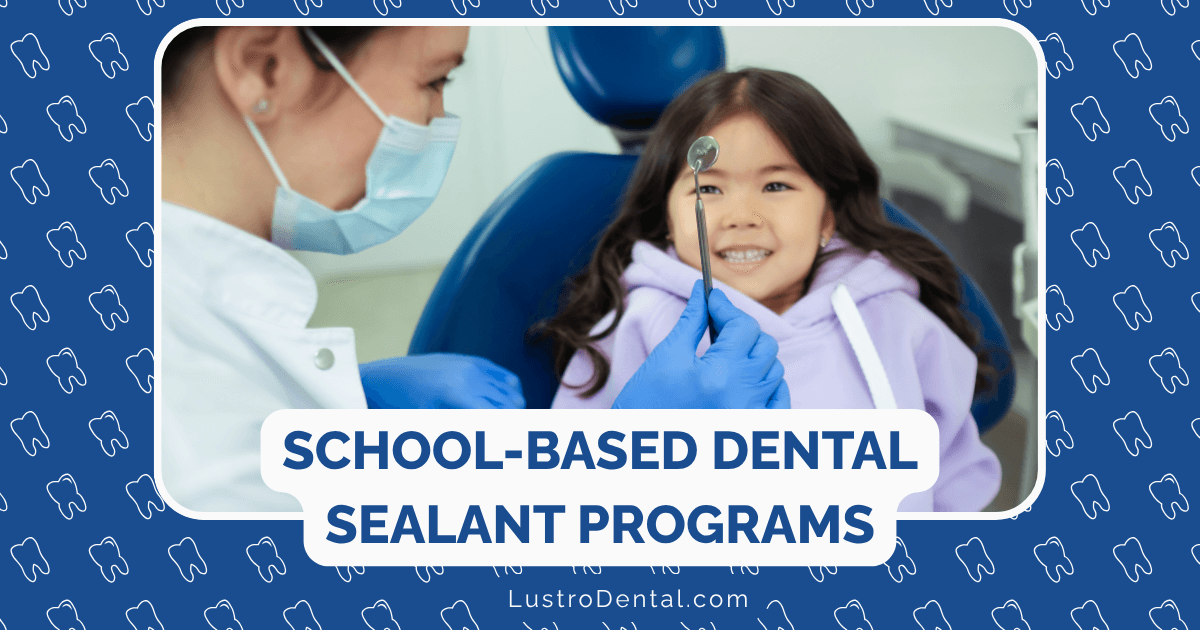
Dental decay remains the most common chronic disease among children in the United States, affecting nearly 60-90% of school-age children. For families facing financial constraints, transportation barriers, or limited access to dental providers, preventive dental care often becomes a luxury rather than a necessity. This reality has led to a significant oral health disparity, with children from low-income households experiencing nearly twice the rate of untreated cavities compared to their more affluent peers.
Amid these challenges, school-based dental sealant programs (SBSPs) have emerged as a powerful solution, bringing preventive dental care directly to where children spend most of their time—schools. These programs focus on applying dental sealants, thin protective coatings that prevent food and bacteria from settling in the deep grooves of molars where most childhood cavities develop.
This article explores the remarkable impact of school-based dental sealant programs across the country, highlighting success stories and demonstrating how these initiatives are transforming children’s oral health, one school at a time.
Before diving into success stories, let’s understand what makes these programs so effective.
Dental sealants are thin, plastic coatings painted onto the chewing surfaces of back teeth (molars). They quickly bond into the depressions and grooves of teeth, forming a protective shield that keeps out food and bacteria.
According to the Centers for Disease Control and Prevention (CDC), sealants prevent 80% of cavities in the back teeth, where most cavities in children occur. Once applied, sealants protect against 50% of cavities for up to four years and continue to provide some protection for up to nine years.
School-based dental sealant programs typically:
Dr. Sarah Johnson, public health dentist and director of a statewide sealant program, explains: “School-based sealant programs are a perfect example of bringing prevention to where the children are. Instead of expecting families to overcome multiple barriers to access care, we bring the care directly to the children in an environment where they already feel comfortable.”
The effectiveness of school-based dental sealant programs is backed by substantial research:
In economic terms, the median one-time cost per tooth sealed in school-based programs is $11.64, significantly lower than the average fee of $50.81 charged in private dental offices. This cost-effectiveness makes school sealant programs a wise investment of public health resources.
Let’s explore some of the most successful school-based dental sealant programs across the United States and the impact they’re having on children’s oral health.
Oregon has pioneered an innovative approach to expanding school-based sealant programs through financial incentives for managed care organizations.
The Initiative: In 2011, Oregon enacted H.B. 3650, placing nearly all Medicaid beneficiaries into coordinated care organizations (CCOs) that must meet specific health outcome benchmarks—including the percentage of 6- to 14-year-olds receiving dental sealants.
The Results:
The Innovation: Oregon created Dental3 (D3), a brokering organization that coordinates services between schools and providers. This coordination has improved the quality of care and increased sealant rates while reducing duplication of services.
“Oregon’s approach demonstrates how policy changes and financial incentives can dramatically expand the reach of school sealant programs,” notes Dr. Michael Chen, health policy researcher at the Pew Charitable Trusts. “By aligning financial incentives with public health goals, they’ve created a sustainable model for preventive care.”
Ohio has one of the nation’s most comprehensive school-based sealant programs, operating since the 1980s and serving as a model for other states.
The Initiative: Ohio’s Department of Health provides funding and technical assistance to local agencies that implement sealant programs in schools where 40% or more of students are eligible for free or reduced-price meals.
The Results:
The Innovation: Ohio has developed a standardized data collection system that allows for ongoing program evaluation and quality improvement. This system helps identify areas of need and measure program effectiveness over time.
Lisa Patel, program coordinator for Ohio’s sealant program, shares: “Our data-driven approach allows us to continuously improve our program and target resources where they’re most needed. We can see in real-time which schools have the highest need and adjust our services accordingly.”
Wisconsin’s Seal-A-Smile program represents a successful public-private partnership approach to school-based sealant programs.
The Initiative: Seal-A-Smile is a collaborative effort between the Wisconsin Department of Health Services, Delta Dental of Wisconsin, and local health departments, schools, and dental providers.
The Results:
The Innovation: Seal-A-Smile uses a hybrid funding model that combines state funding, private foundation support, and Medicaid reimbursement. This diverse funding stream has created program stability and allowed for consistent expansion over time.
“What makes Seal-A-Smile unique is our commitment to comprehensive care,” explains Dr. Emily Rodriguez, the program’s state coordinator. “We don’t just place sealants and leave. We ensure children with urgent needs are connected to a dental home for continued care.”
Texas has addressed the challenges of serving a large, diverse state through its Project Saving Smiles initiative.
The Initiative: Project Saving Smiles focuses on providing comprehensive preventive services, including dental sealants, to underserved children in major urban areas across Texas.
The Results:
The Innovation: Project Saving Smiles has developed a mobile dental clinic model that brings comprehensive services directly to schools. This approach allows for more intensive interventions when needed, including basic restorative care in some locations.
James Wilson, dental director for the Houston Health Department, notes: “Our mobile clinic model allows us to provide more comprehensive care than traditional sealant programs. When we identify a child with urgent needs, we can often address those needs immediately rather than just providing a referral that may never be acted upon.”
Not all success stories follow a linear path. Maine’s experience demonstrates how programs can adapt and rebuild after setbacks.
The Challenge: Penobscot Community Health Care (PCHC) in Bangor, Maine, ran a comprehensive school-based dental program for several years until the COVID-19 pandemic forced its closure in 2020.
The Response: Rather than abandoning school-based services entirely, PCHC is strategically rebuilding its program with an initial focus on dental sealants before expanding back to comprehensive care.
The Innovation: PCHC is addressing workforce shortages—a common challenge for school-based programs—by developing a pipeline program with local dental education institutions. This approach is helping to train the next generation of providers while rebuilding their school-based services.
Dr. Lisa Johnson of PCHC explains: “We learned that starting small with sealants allows us to reach more children quickly while we work on rebuilding our capacity for more comprehensive services. Sometimes taking a step back allows you to ultimately move forward more effectively.”
These success stories reveal several common elements that contribute to effective school-based dental sealant programs:
Successful programs prioritize schools with the highest need, typically defined as those where 50% or more of students qualify for free or reduced-price meals. This targeting ensures resources reach children at highest risk for dental disease.
The most sustainable programs utilize multiple funding sources, including:
Effective programs develop strong relationships with school administrators, nurses, teachers, and staff. These partnerships facilitate program implementation and help maximize student participation.
Successful programs minimize disruption to the school day through:
The most impactful programs systematically collect and analyze data to:
While sealants are the cornerstone of these programs, many successful initiatives incorporate additional components:
Despite their proven effectiveness, school-based dental sealant programs face several common challenges. Here’s how successful programs have addressed these obstacles:
Challenge: Many programs struggle to recruit and retain qualified dental professionals.
Solutions:
Challenge: Securing long-term, stable funding remains difficult for many programs.
Solutions:
Challenge: Obtaining parental consent can be a significant barrier to reaching all eligible children.
Solutions:
Challenge: State regulations regarding who can apply sealants and in what settings can limit program reach.
Solutions:
As school-based dental sealant programs continue to evolve, several promising trends are emerging:
Many programs are beginning to incorporate telehealth components, allowing for:
Advanced data systems are improving program operations through:
While maintaining a focus on prevention, many programs are strategically expanding services to include:
Advocacy efforts are focusing on policy changes that would:
School-based dental sealant programs represent one of public health’s most successful interventions. By bringing preventive services directly to children in school settings, these programs effectively:
The success stories highlighted in this article demonstrate that with strategic implementation, adequate resources, and supportive policies, school-based dental sealant programs can dramatically improve children’s oral health outcomes.
As Dr. Sarah Johnson observes, “When we look at the evidence and the real-world impact of these programs, it’s clear that school-based sealant programs are not just a good idea—they’re one of the most effective public health interventions we have for improving children’s oral health. The return on investment, both in economic terms and in children’s wellbeing, is extraordinary.”
For communities considering implementing or expanding school-based dental sealant programs, these success stories provide valuable models and lessons. By adapting these approaches to local needs and contexts, more children can benefit from this proven intervention—creating brighter, healthier smiles in classrooms across America.
For those interested in starting or improving a school-based dental sealant program, these resources provide valuable guidance:
Has your community implemented a school-based dental sealant program? Share your experiences in the comments below!