🦷 General Care
✨ Treatments
👶 Family Care
💚 Wellness
💡 Resources

🦷 General Care
✨ Treatments
👶 Family Care
💚 Wellness
💡 Resources

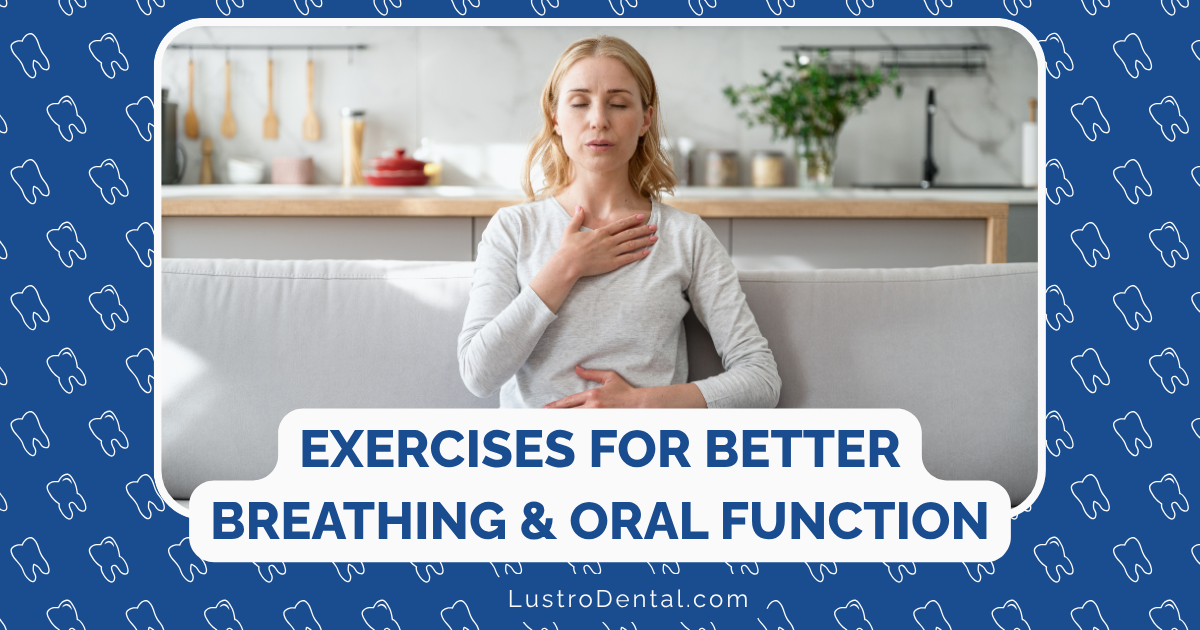
Have you ever noticed a child breathing through their mouth instead of their nose? Or perhaps you’ve been told you snore at night or have a tongue thrust that affects your speech? These issues might seem minor, but they can significantly impact oral development, sleep quality, and overall health. The good news? Myofunctional therapy offers a non-invasive approach to addressing these concerns through targeted exercises that retrain the muscles of the mouth, face, and throat.
As someone passionate about holistic dental health, I’ve seen remarkable improvements in patients who commit to myofunctional therapy. Let’s explore how these exercises work and how they might benefit you or your child.
Myofunctional therapy is a program of specific exercises that target the muscles of the face, mouth, and throat. The word “myo” refers to muscle, and “functional” relates to how these muscles work. This therapy essentially retrains muscles that have developed improper patterns, helping to establish:
According to the International Association of Orofacial Myology, these exercises can help address a range of issues from sleep-disordered breathing to speech problems and even certain orthodontic concerns.
Myofunctional therapy can help people of various ages who experience:
Research published in the Sleep Medicine Reviews journal found that myofunctional therapy reduced apnea severity by approximately 50% in adults and 62% in children. It also reduced snoring in 65% of participants.
Before diving into the exercises, it’s important to understand the profound connection between breathing and oral function. Our bodies are designed to breathe through the nose, which:
When we breathe through our mouths instead, it can lead to:
A study in the Journal of Oral Rehabilitation found that correcting breathing patterns through myofunctional therapy had positive effects on dental development and facial structure, especially in growing children.
Let’s explore some effective exercises that form the foundation of myofunctional therapy programs. For best results, these should be performed consistently under the guidance of a trained myofunctional therapist who can tailor a program to your specific needs.
The correct resting position for your tongue is crucial—it should rest entirely on the roof of your mouth, with the tip just behind (but not touching) your upper front teeth.
“Spot Check” Exercise:
A strong tongue that can maintain proper position is essential for nasal breathing and correct swallowing.
“Push-Up” Exercise:
“Tongue Sweep” Exercise:
Strong, active lip muscles help maintain a proper lip seal, which is crucial for nasal breathing.
“Button Pull” Exercise:
“Lip Seal” Exercise:
Many people with oral dysfunction push their tongue against or between their teeth when swallowing (tongue thrust), which can affect teeth alignment.
“Spot Swallow” Exercise:
“Dry Swallow with Tongue Up” Exercise:
These exercises help establish nasal breathing patterns.
“Alternate Nostril Breathing” Exercise:
“Breathing Awareness” Exercise:
A stable jaw position supports proper breathing and tongue positioning.
“Goldfish Exercise” (Partial Opening):
For best results, follow these guidelines:
Myofunctional therapy is not a quick fix but rather a retraining process that takes time and commitment. According to the American Academy of Physiological Medicine & Dentistry, patients typically follow a structured program for 6-12 months.
You might notice some improvements relatively quickly:
More significant changes take longer:
Sarah, a 34-year-old patient, came to my practice complaining of chronic fatigue, frequent headaches, and jaw pain. Examination revealed she was a habitual mouth breather with a low tongue posture. After committing to a 9-month myofunctional therapy program, Sarah experienced:
“I never realized how much my breathing pattern was affecting my overall health,” Sarah shared. “The exercises were simple but required consistency. Now, proper tongue position and nasal breathing feel completely natural to me.”
For personalized guidance, consider working with a certified myofunctional therapist. These professionals may have backgrounds in:
Look for credentials from organizations like the International Association of Orofacial Myology or the Academy of Orofacial Myofunctional Therapy.
Myofunctional therapy works best as part of a comprehensive approach that may include:
While myofunctional therapy is effective for many people, it’s important to have realistic expectations and know when additional interventions might be needed.
Consider seeking additional help if:
Myofunctional therapy offers a natural, non-invasive approach to improving breathing patterns and oral function. By strengthening and retraining the muscles of the face, mouth, and throat, these exercises address the root causes of many issues rather than just treating symptoms.
Whether you’re dealing with mouth breathing, sleep-disordered breathing, or other oral dysfunction, committing to a consistent practice of myofunctional exercises could be a significant step toward better health. Remember that these exercises complement (not replace) appropriate dental and medical care, and the best results come from working with qualified professionals who can tailor a program to your specific needs.
Have you tried myofunctional therapy exercises? What was your experience? Share your journey in the comments below.