🦷 General Care
✨ Treatments
👶 Family Care
💚 Wellness
💡 Resources

🦷 General Care
✨ Treatments
👶 Family Care
💚 Wellness
💡 Resources

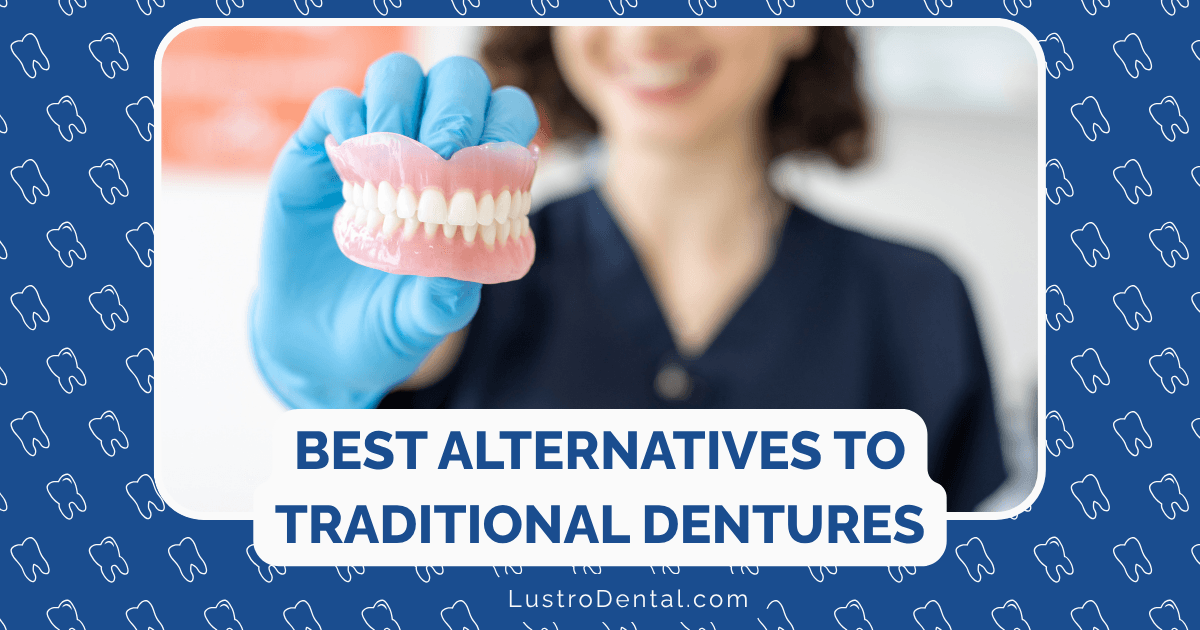
When my grandmother got her first set of dentures in the 1980s, she was told they were the best option available. Fast forward to today, and the landscape of tooth replacement has transformed dramatically. If you or a loved one are facing tooth loss, you’re fortunate to be living in an era with more innovative, comfortable, and natural-looking options than ever before.
According to the American College of Prosthodontists, more than 178 million Americans are missing at least one tooth, and about 40 million are missing all their teeth. Yet many aren’t aware of the full range of modern alternatives to traditional dentures that have emerged in recent years.
Let’s explore the cutting-edge options available in 2026 for replacing missing teeth, comparing their benefits, limitations, and costs to help you make an informed decision about your dental future.
Traditional removable dentures—plastic or porcelain teeth attached to a plastic base that mimics gum tissue—have been the standard tooth replacement method for generations. While they’re still a viable option for some, they come with well-known drawbacks:
“Traditional dentures served their purpose for decades, but they were always a compromise,” explains Dr. Sarah Chen, a prosthodontist specializing in tooth replacement. “Today’s alternatives aim to address these limitations by focusing on stability, bone preservation, comfort, and a more natural experience.”
Dental implants remain the premier option for tooth replacement, but the technology has advanced significantly in recent years.
What they are: Titanium or zirconia posts surgically placed in the jawbone that function as artificial tooth roots, supporting crowns, bridges, or dentures.
Latest innovations:
Best for: Patients seeking the most natural-feeling, long-lasting solution who have adequate bone density (or are willing to undergo bone grafting) and good overall health.
Cost range: $3,000-$5,800 per single implant (including crown and abutment)
“The advances in implant technology have been remarkable,” notes Dr. James Wilson, an oral surgeon. “We’re seeing faster healing times, higher success rates, and more patients who previously weren’t candidates for implants now being able to benefit from them.”
This revolutionary approach has transformed full-arch restoration, offering a fixed solution with fewer implants than traditionally required.
What they are: Complete arch of prosthetic teeth permanently attached to four to six strategically placed implants.
Latest innovations:
Best for: Patients missing all or most teeth who want a fixed, non-removable solution with less bone grafting than traditional implant approaches.
Cost range: $24,000-$50,000 per arch
“The All-on-4 approach has been revolutionary for patients who thought dentures were their only option,” explains Dr. Chen. “It provides the stability of implants with a more streamlined process and often avoids extensive bone grafting.”
These smaller alternatives to traditional implants have opened doors for patients previously considered poor implant candidates.
What they are: Titanium implants with a diameter of 1.8 to 3.3 mm (compared to traditional implants at 3.5 to 6 mm) that can be placed with less invasive procedures.
Latest innovations:
Best for: Patients with limited bone volume, those who cannot undergo extensive bone grafting procedures, or those seeking a less invasive and more affordable implant option.
Cost range: $500-$1,500 per implant
“Mini implants have dramatically expanded access to implant technology,” says Dr. Wilson. “They’re particularly valuable for older patients who may not be candidates for more extensive surgery but still want the stability implants provide.”
These combine elements of traditional dentures with the stability of implants for a middle-ground solution.
What they are: Removable dentures that snap onto two or more implants, providing significantly more stability than traditional dentures while remaining removable for cleaning.
Latest innovations:
Best for: Patients who want more stability than traditional dentures offer but prefer a removable appliance, or those seeking a more affordable implant-based solution.
Cost range: $5,000-$12,000 per arch (including implants and overdenture)
“Even just two implants in the lower jaw can transform a patient’s experience with dentures,” notes Dr. Chen. “Many patients report being able to eat foods they hadn’t enjoyed in years after switching to implant-supported overdentures.”
While bridges have been around for decades, new materials and techniques have significantly improved their longevity and aesthetics.
What they are: Prosthetic teeth anchored to adjacent natural teeth or implants.
Latest innovations:
Best for: Patients missing one to three adjacent teeth who have healthy teeth on either side of the gap or are candidates for implants.
Cost range: $2,000-$5,000 per unit (higher for implant-supported bridges)
Today’s partial dentures bear little resemblance to their predecessors, offering improved comfort, aesthetics, and function.
What they are: Removable appliances replacing some but not all teeth.
Latest innovations:
Best for: Patients missing multiple non-adjacent teeth who prefer a removable option or are seeking a more affordable solution.
Cost range: $1,000-$3,000
When evaluating these alternatives, several factors should influence your decision:
“When discussing options with patients, I always emphasize thinking about the total lifetime cost, not just the initial investment,” explains Dr. Wilson. “A solution that costs more upfront but lasts three times as long may actually be more economical in the long run.”
One of the most significant advantages of implant-based solutions is their ability to preserve jawbone. When teeth are lost, the bone that once supported them begins to resorb (shrink). This can lead to facial collapse, an aged appearance, and difficulties with future tooth replacement.
“Many patients don’t realize that bone loss continues throughout life after teeth are lost,” notes Dr. Chen. “This is why someone who has worn traditional dentures for decades often has that ‘sunken-in’ appearance. Implants help maintain not just your smile, but your facial structure.”
The ability to eat, speak, and smile confidently varies significantly among options:
While cost shouldn’t be the only factor, it’s undeniably important for most patients:
“Dental insurance typically covers 50% of the cost of dentures but classifies most implant procedures as ‘cosmetic,’ providing limited or no coverage,” explains Dr. Wilson. “However, many practices now offer financing options that can make more advanced solutions accessible.”
Options to manage costs include:
The “best” solution varies based on individual factors including:
“I always encourage patients to think about their daily life and what matters most to them,” says Dr. Chen. “For some, never having to remove their teeth is worth any cost. For others, a solution that’s easy to clean and maintain is more important than absolute stability.”
Emerging technologies promise even more advanced solutions:
The days of one-size-fits-all dentures are long behind us. Today’s tooth replacement options can be tailored to your specific needs, preferences, and budget. By understanding the full spectrum of alternatives available, you can work with your dental team to select the solution that will best support your oral health, overall wellbeing, and quality of life for years to come.
“What excites me most about practicing dentistry in 2026 is the ability to truly customize solutions for each patient,” reflects Dr. Wilson. “We’re no longer forcing patients to adapt to the limitations of dentures—instead, we’re adapting our approaches to meet each patient’s unique needs.”
Have you experienced any of these modern tooth replacement options? What factors are most important to you when considering alternatives to traditional dentures? Share your thoughts in the comments below.