🦷 General Care
✨ Treatments
👶 Family Care
💚 Wellness
💡 Resources

🦷 General Care
✨ Treatments
👶 Family Care
💚 Wellness
💡 Resources

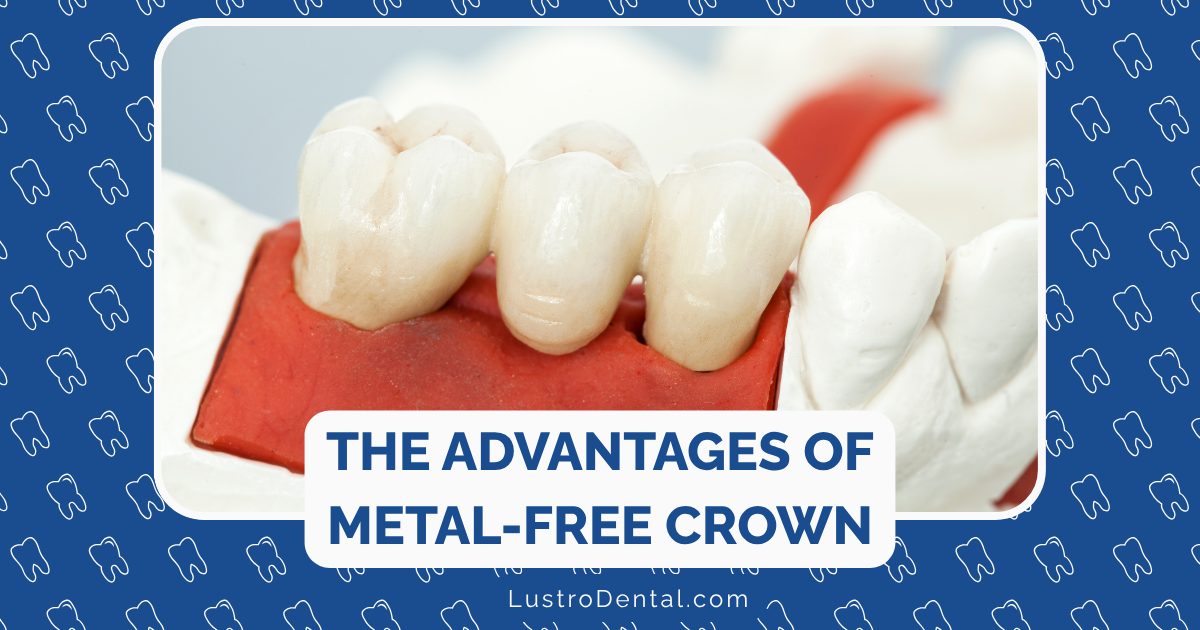
When it comes to restoring damaged teeth, dental crowns have been the go-to solution for decades. Traditionally, these crowns contained metal—either as a full metal crown or as the underlying structure for porcelain-fused-to-metal (PFM) restorations. But if you’ve visited a dentist recently, you may have noticed a significant shift in the materials being recommended.
Metal-free crowns have revolutionized restorative dentistry, offering solutions that are not only more natural-looking but also provide impressive functional benefits. As someone who’s passionate about helping people understand their dental options, I’m excited to share how these modern materials are transforming smiles and improving oral health outcomes.
To appreciate how far we’ve come, let’s briefly look at the history of dental crowns:
For much of the 20th century, dental crowns were primarily made from metals like gold, silver-palladium alloys, or non-precious metal alloys. These materials offered excellent durability but had obvious aesthetic limitations.
The introduction of porcelain-fused-to-metal (PFM) crowns in the 1960s was a significant advancement, combining the strength of a metal substructure with a more tooth-like porcelain exterior. However, these crowns still had drawbacks, including the potential for dark lines at the gumline as gums receded and the opaque appearance that lacked the translucency of natural teeth.
The past two decades have seen remarkable advancements in dental materials science, leading to the development of all-ceramic and zirconia crowns that eliminate the need for metal entirely. These materials continue to evolve, with the latest generations offering unprecedented combinations of strength, aesthetics, and biocompatibility.
Dr. Sarah Thompson, a prosthodontist at the American Academy of Cosmetic Dentistry, notes: “The development of high-strength ceramics has been a game-changer in restorative dentistry. We can now provide patients with restorations that are virtually indistinguishable from natural teeth while offering excellent longevity.”
Let’s explore the primary types of metal-free crowns available in 2025:
Lithium disilicate (often known by the brand name e.max®) has become one of the most popular ceramic materials due to its excellent combination of aesthetics and strength.
Key benefits:
According to a 10-year clinical study published in the Journal of Prosthetic Dentistry, lithium disilicate crowns show a survival rate of 96.7%, comparable to traditional gold restorations.
Zirconia (zirconium dioxide) has emerged as the powerhouse of metal-free materials, offering strength that rivals or exceeds that of metal crowns.
Key benefits:
The latest generation of zirconia materials has addressed earlier concerns about opacity. As Dr. Michael Chen of the International Association for Dental Research explains: “The new multilayered zirconia materials offer gradient translucency that mimics the natural transition from enamel to dentin, creating restorations that are not only incredibly strong but also aesthetically superior.”
Hybrid materials combine the benefits of ceramics and composites, offering unique advantages for specific situations.
Key benefits:
The newest entrants to the metal-free category are nano-ceramic materials, which use nanotechnology to enhance material properties.
Key benefits:
Now that we understand the materials, let’s explore why metal-free crowns have become the preferred choice for both dentists and patients:
The most obvious advantage of metal-free crowns is their natural appearance. Modern ceramic materials can be customized to match the color, translucency, and light-reflecting properties of your natural teeth.
“The aesthetic potential of today’s ceramics is remarkable,” says Dr. Jennifer Williams, a cosmetic dentist at Spear Education. “We can now recreate the subtle color variations, translucency, and surface characteristics of natural teeth to a degree that was impossible with metal-based restorations.”
This aesthetic advantage is particularly important for:
Metal allergies affect approximately 10-15% of the population, with nickel being the most common dental metal allergen. According to the American Academy of Allergy, Asthma & Immunology, symptoms of metal allergies in the mouth can include:
Metal-free materials like zirconia and lithium disilicate are highly biocompatible, virtually eliminating the risk of allergic reactions. This makes them ideal for patients with known metal sensitivities or those who prefer to avoid metals for health reasons.
Unlike metals, ceramic materials are poor conductors of heat and cold. This translates to:
A clinical study published in the Journal of Dentistry found that patients with metal-free crowns reported 60% less temperature-related discomfort compared to those with metal-based restorations.
Metal-free crowns offer significant benefits for gum health:
Dr. Robert Garcia, a periodontist at the American Academy of Periodontology, explains: “The interaction between crown materials and gum tissue is crucial for long-term success. Today’s ceramics can be polished to an extremely smooth finish and have excellent soft tissue compatibility, often resulting in healthier gingival response compared to metal-based restorations.”
Modern metal-free materials, particularly zirconia, offer strength comparable to or exceeding traditional metal options:
According to a 2024 systematic review in the International Journal of Prosthodontics, zirconia crowns show 5-year survival rates of 97.8%, outperforming metal-ceramic crowns in posterior applications.
Many metal-free materials allow for more conservative tooth preparation, meaning:
This biomimetic (life-mimicking) approach preserves the structural integrity of your natural teeth while still providing durable, aesthetic restorations.
Metal-free crowns are ideally suited for modern digital workflows:
Despite their many advantages, patients sometimes have questions about metal-free options:
For most applications, yes. Zirconia in particular has demonstrated exceptional durability, even for posterior teeth and bridges. A 2025 study in the Journal of Prosthetic Dentistry found that zirconia crowns had a lower failure rate than gold crowns over a 7-year period.
Metal-free crowns typically cost between $1,000 and $2,500 per tooth, depending on the specific material, your location, and the complexity of your case. This is comparable to the cost of high-quality metal-based restorations in many practices.
Many dental insurance plans now cover metal-free options at the same rate as traditional crowns, recognizing their status as the standard of care. According to the American Dental Association’s 2025 survey, 92% of dental insurance plans provide the same coverage for zirconia crowns as they do for metal-based alternatives.
Early generations of all-ceramic crowns sometimes appeared too white or opaque. Today’s materials offer multiple levels of translucency and can be customized with internal characterization to match the subtle variations in your natural teeth. A skilled dentist and laboratory technician can create restorations that are virtually indistinguishable from natural teeth.
The field continues to evolve rapidly, with several exciting developments on the horizon:
Researchers are developing ceramics with “smart” properties, such as:
While most ceramic crowns are currently milled from solid blocks, 3D printing technology is advancing rapidly:
New composite materials that more closely mimic the structural and mechanical properties of natural teeth:
While metal-free crowns offer numerous advantages, the best choice for you depends on your specific situation. Factors to consider include:
Dr. Lisa Johnson, a restorative dentist at Spear Education, advises: “The conversation about crown materials should be a collaborative one between patient and dentist. By understanding both the clinical requirements and the patient’s personal priorities, we can select the optimal material for each unique situation.”
The shift toward metal-free crowns represents more than just an aesthetic improvement—it’s a fundamental advancement in how we approach dental restoration. By combining exceptional aesthetics with outstanding functional properties and biocompatibility, today’s ceramic materials allow for restorations that truly honor the structural and visual characteristics of natural teeth.
If you’re considering a crown or replacing older metal-based restorations, discussing metal-free options with your dentist could lead to a solution that not only restores function but enhances the natural beauty of your smile for years to come.
The days of compromising between strength and aesthetics are behind us. With modern metal-free materials, you can have it all—beauty, strength, biocompatibility, and longevity—in a restoration that feels like a natural part of you.
Have you experienced metal-free dental crowns? We’d love to hear about your experience in the comments below!