🦷 General Care
✨ Treatments
👶 Family Care
💚 Wellness
💡 Resources

🦷 General Care
✨ Treatments
👶 Family Care
💚 Wellness
💡 Resources

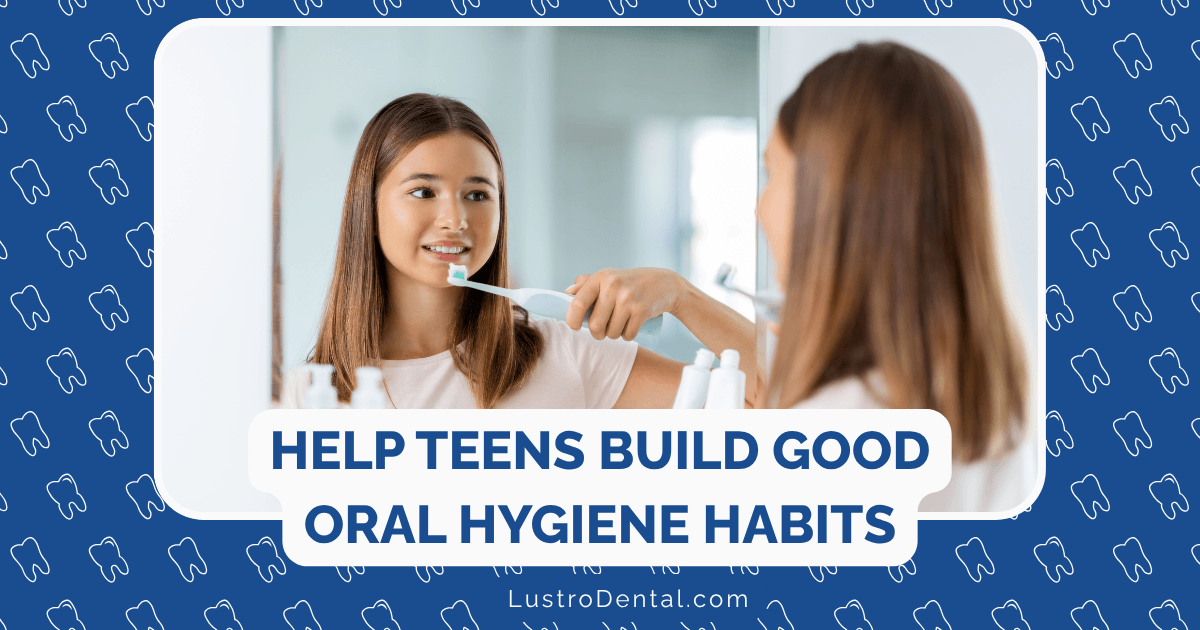
If you’re the parent of a teenager, you’ve likely experienced the eye-rolling, heavy sighing, or door-slamming that follows yet another reminder to brush their teeth. Despite your best intentions, “Have you brushed your teeth yet?” has somehow transformed from a simple question into a battle cry that launches World War III in your household.
You’re not alone. According to the American Dental Association, most teens brush for only about 75 seconds—well short of the recommended two minutes—and nearly 60% of adolescents ages 12 to 19 have had at least one cavity in their permanent teeth. The struggle is real, but the nagging approach clearly isn’t working.
So how do you motivate your teen to maintain good oral hygiene without turning into a broken record? Let’s dive into strategies that actually work, backed by psychology and real-world experience.
Before we tackle solutions, it helps to understand why teens seem allergic to both toothbrushes and parental advice. Dr. Sarah Chen, adolescent psychologist at Teen Health Institute, explains: “The teenage brain is undergoing massive rewiring. The prefrontal cortex—responsible for planning, decision-making, and considering long-term consequences—is still developing, while the reward centers are hyperactive.”
This means:
Research published in the Proceedings of the National Academy of Sciences found that when health behaviors were framed as ways to assert autonomy and resist manipulation by corporations (like food or tobacco companies), teens were significantly more motivated to make healthier choices.
Forget cavities and gum disease—focus on what matters to teens right now:
Dr. Michael Rodriguez, pediatric dentist at Adolescent Dental Care, notes: “When I talk to teens about yellow teeth affecting their appearance or bad breath impacting their social interactions, I suddenly have their full attention. It’s about connecting oral health to what they value right now.”
Most teens are glued to their devices—why not use that to your advantage?
James Peterson, tech reviewer at Digital Health Today, suggests: “The Philips Sonicare app turns brushing into a game with real-time feedback, while the Oral-B app gives teens ‘brushing scores’ they can improve over time. It’s like turning dental care into a video game.”
Autonomy is a powerful motivator for teens. Let them have a say in their oral health:
Emily Warren, parent of three teenagers, shares: “When I stopped micromanaging and instead gave my 16-year-old a budget to choose his own oral care products, his interest level skyrocketed. He came home with an electric toothbrush that plays music for two minutes and actually uses it without reminders.”
Instead of verbal reminders (aka nagging), set up environmental cues:
“Environmental cues bypass the resistance that comes with direct confrontation,” explains Dr. Lisa Chen, behavioral psychologist at Adolescent Development Center. “A sticky note doesn’t feel like mom or dad trying to control you—it’s just a neutral reminder.”
Teens are highly influenced by their peers and people they admire:
A 2024 study in the Journal of Adolescent Health found that teens were 62% more likely to adopt a health behavior when they believed their peers valued it. As one study participant noted, “I started flossing because my crush mentioned he does it every day.”
Research shows that aligning health behaviors with teens’ existing values creates stronger, more sustainable motivation:
Taylor Martinez, 17, explains why this works: “When my mom kept telling me to brush, I ignored her. When I learned that my favorite toothpaste tested on animals, I researched alternatives and ended up learning about oral health in the process. Now I brush with a bamboo toothbrush and vegan toothpaste because it aligns with what I care about.”
Remove barriers to good oral hygiene:
“Convenience is key,” says Dr. James Wilson, family dentist at Family Dental Center. “I tell parents to keep floss picks in the car, by the TV, and anywhere else their teen spends time. Make it easier to floss than not to floss.”
Nearly 4 million Americans under 18 wear braces, making this a common teen challenge:
For athletic teens:
Between school, activities, jobs, and social lives, teens are legitimately busy:
Sometimes resistance to oral hygiene goes beyond typical teenage behavior:
If you suspect any of these issues, consult with your teen’s dentist and healthcare provider for appropriate support.
“My son wouldn’t brush regularly until his crush mentioned bad breath was a deal-breaker. Suddenly, he’s flossing daily and using mouthwash without a single reminder from me.” — Maria, mother of a 16-year-old
“I started taking better care of my teeth when my dentist showed me close-up pictures of what was happening in my mouth. The visual impact was way more effective than my parents’ lectures.” — Jayden, 18
“We implemented a ‘no phone charging until teeth are brushed’ rule. No arguments, no exceptions. It worked within days because her phone is her lifeline.” — Derek, father of a 15-year-old
One effective approach is teaching teens the 3-3-3 rule:
This simple framework is easy to remember and provides clear expectations.
The key to motivating without nagging is shifting from external control to internal motivation:
Dr. Emily Warren, adolescent development specialist at Teen Health Institute, advises: “Remember that your long-term goal isn’t just clean teeth—it’s raising a self-motivated adult who takes responsibility for their health. Sometimes that means letting them experience natural consequences in the short term.”
Ultimately, motivating teens without nagging comes down to two fundamental principles: trust and respect. Trust that they can take responsibility for their health when given the right tools and information. Respect their growing autonomy and need for self-determination.
As one 17-year-old put it: “When my parents stopped treating me like a little kid who needed constant reminders and instead talked to me like they trusted me to handle my own hygiene, I actually wanted to prove I could do it. Their confidence in me made me more confident in myself.”
By focusing on intrinsic motivation rather than external control, you’re not just promoting good oral hygiene—you’re helping your teen develop the self-regulation skills they’ll need for a lifetime of health and well-being. And that’s something worth smiling about.
How have you successfully motivated your teen to maintain good oral hygiene? Share your tips and experiences in the comments below!