🦷 General Care
✨ Treatments
👶 Family Care
💚 Wellness
💡 Resources

🦷 General Care
✨ Treatments
👶 Family Care
💚 Wellness
💡 Resources

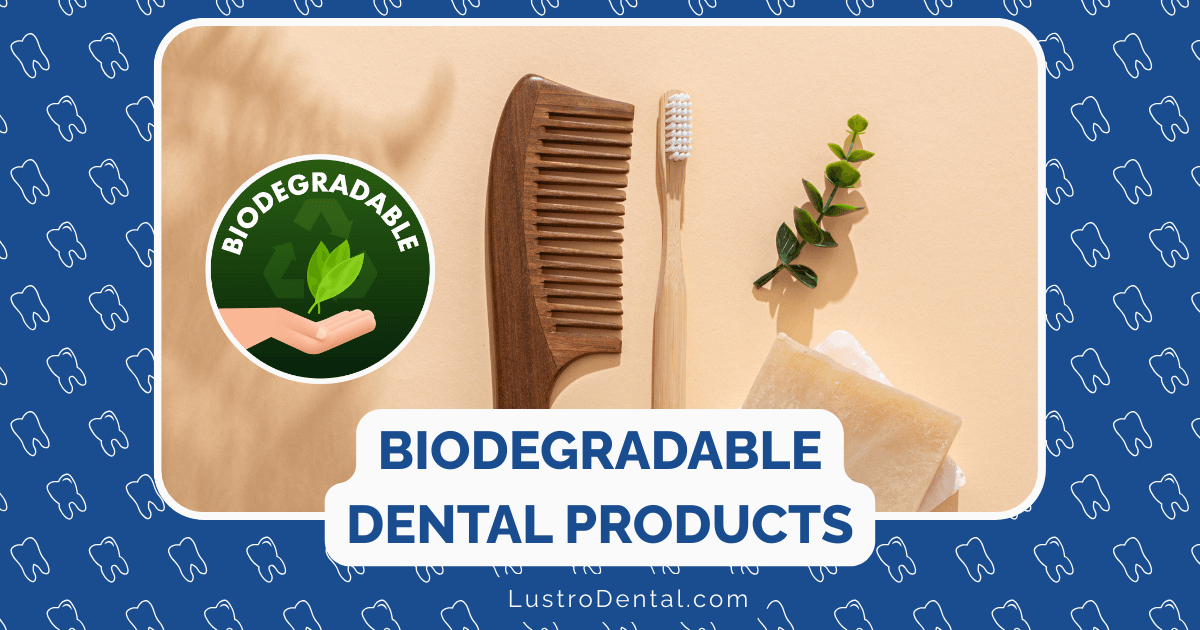
When you brush your teeth tonight, take a moment to consider the environmental impact of your oral care routine. The plastic toothbrush in your hand will likely outlive you—by several centuries. According to Outside Online, conventional plastic toothbrushes take approximately 500 years to decompose, and Americans alone discard an estimated 1 billion of them annually.
Add to that the 1.5 billion non-recyclable toothpaste tubes thrown away globally each year, as reported by Spotlight Oral Care, and the environmental footprint of our daily dental habits becomes staggering.
The good news? A growing market of biodegradable and eco-friendly dental products is making it easier than ever to maintain excellent oral health while reducing your environmental impact. Let’s explore the options available for eco-conscious patients who want to smile brightly without leaving a lasting mark on the planet.
Before diving into alternatives, it’s important to understand exactly why traditional dental products are problematic:
Dr. Sarah Chen, a sustainability-focused dentist, explains: “The average person will use around 300 toothbrushes in their lifetime. When you multiply that by billions of people, you begin to understand the scale of the problem we’re facing with dental waste.”
Fortunately, eco-friendly alternatives exist for virtually every dental product in your bathroom. Here’s a detailed look at your options:
The most common eco-friendly alternative to plastic toothbrushes is made from bamboo, a rapidly renewable resource.
Pros:
Cons:
Brands to consider:
A newer alternative made from biodegradable plant-based plastic.
Pros:
Cons:
Brands to consider:
Traditional silk floss offers an alternative to nylon.
Pros:
Cons:
Brands to consider:
Vegan alternatives made from plant fibers like corn or bamboo.
Pros:
Cons:
Brands to consider:
These solid toothpaste alternatives eliminate the need for plastic tubes.
Pros:
Cons:
Brands to consider:
Traditional paste formulations in more sustainable packaging.
Pros:
Cons:
Brands to consider:
Similar to toothpaste tablets, these dissolve in water to create mouthwash.
Pros:
Cons:
Brands to consider:
Liquid concentrates that you dilute at home.
Pros:
Cons:
Brands to consider:
A common concern about sustainable dental products is whether they clean as effectively as conventional options. Let’s address this question based on available evidence:
According to dental professionals and studies cited by True Smile Works, bamboo toothbrushes clean just as effectively as plastic ones. The cleaning action comes primarily from the bristles and proper brushing technique, not the handle material.
Dr. Michael Roberts, a dentist specializing in sustainable practices, explains: “The bristle configuration and your brushing technique are what matter most for effective plaque removal. The handle material—whether plastic or bamboo—has no impact on cleaning efficacy.”
Studies show that the mechanical action of flossing is what removes plaque between teeth. Both silk and plant-based flosses can effectively clean between teeth, though some eco-friendly options may have slightly different textures or thicknesses than what you’re accustomed to.
A 2020 study in the Journal of Dental Research found no significant difference in plaque removal between conventional and biodegradable flosses when proper technique was used.
The effectiveness of natural toothpaste depends largely on its ingredients. According to Brush Fresh Co:
Dr. Lisa Chen of Larry Molenda DDS notes: “Many natural ingredients have demonstrated effectiveness in promoting oral health. Tea tree oil has antimicrobial properties, while baking soda is excellent for neutralizing acids and gentle stain removal.”
Natural mouthwashes often use essential oils like tea tree, peppermint, and thyme, which have been shown to have antimicrobial properties. While they may not be as strong-tasting as conventional options, many can effectively freshen breath and support oral health.
A study in the Journal of Clinical Periodontology found that essential oil-based mouthwashes can be effective against plaque when used as directed.
Switching to sustainable dental products doesn’t have to happen overnight. Here are some practical tips for making the transition:
Begin by replacing items as they run out rather than discarding usable products.
Work with your dentist to ensure your eco-friendly choices support your oral health requirements.
Even biodegradable products need proper disposal:
Eco-friendly dental products often cost more upfront but consider:
We asked several dentists for their professional opinions on sustainable oral care:
Dr. James Wilson, DDS: “I’ve been recommending bamboo toothbrushes to my patients for years. They’re just as effective as plastic ones, and patients appreciate having an environmentally conscious option.”
Dr. Sarah Chen, DMD: “The key is finding products that balance sustainability with effectiveness. I work with patients to identify natural products that meet their specific oral health needs—whether that’s cavity prevention, sensitivity relief, or gum health.”
Dr. Michael Roberts, DDS: “I’ve seen a significant increase in patients asking about eco-friendly options. The good news is that the market has responded with products that are both effective and better for the planet.”
The field of eco-friendly dental care continues to evolve:
Major dental companies are beginning to respond to consumer demand for sustainable options:
Making the switch to biodegradable dental products is a small change that can have a significant environmental impact when multiplied across millions of users. As Dr. Chen puts it: “If every American switched to a bamboo toothbrush, we’d keep 50 million pounds of plastic out of landfills and oceans every year.”
The good news is that you don’t have to compromise on oral health to make environmentally conscious choices. With the growing variety of effective eco-friendly options, you can maintain a healthy smile while reducing your environmental footprint.
By making thoughtful choices about your dental care products, you’re contributing to a healthier planet—something we can all smile about.
Have you tried any biodegradable dental products? Share your experience in the comments below!