🦷 General Care
✨ Treatments
👶 Family Care
💚 Wellness
💡 Resources

🦷 General Care
✨ Treatments
👶 Family Care
💚 Wellness
💡 Resources

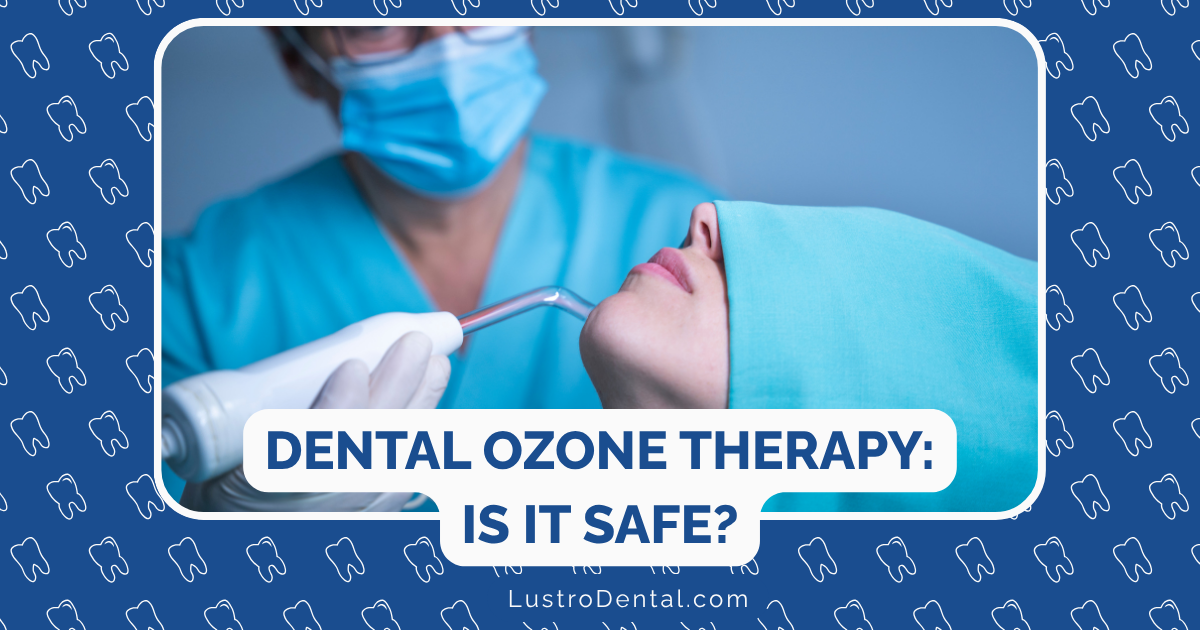
As patients increasingly seek natural, minimally invasive dental treatments, ozone therapy has emerged as an intriguing option in holistic and biological dentistry. This alternative approach utilizes ozone—a form of oxygen with three atoms (O₃) instead of the usual two—to treat various dental conditions. But with any treatment, especially one that isn’t mainstream, safety questions naturally arise.
If you’re considering ozone therapy for your dental needs or are simply curious about this treatment option, this comprehensive guide will help you understand its safety profile, potential risks, and what you should consider before proceeding.
Before diving into safety considerations, let’s briefly review what dental ozone therapy involves. Ozone can be applied in dentistry in three main forms:
Dental applications include treating cavities, disinfecting root canals, managing periodontal disease, reducing sensitivity, and accelerating wound healing after surgical procedures.
The therapy works primarily through ozone’s powerful oxidative properties, which can destroy bacteria, viruses, and fungi by disrupting their cell membranes. This same mechanism also stimulates blood flow, enhances immune responses, and promotes tissue healing.
When evaluating the safety of any dental treatment, it’s important to consider both the clinical research and real-world experience. Here’s what we currently know about dental ozone safety:
When properly administered by trained professionals, ozone therapy offers several safety advantages:
Dr. Sarah Johnson, a biological dentist who has incorporated ozone therapy into her practice for over a decade, notes: “When used according to established protocols by properly trained clinicians, dental ozone has an excellent safety record. Most of my patients tolerate it extremely well, often with fewer side effects than conventional treatments.”
Despite its generally favorable safety profile when properly administered, ozone therapy is not without risks:
According to a 2025 review published in Dimensions of Dental Hygiene, the maximum safe concentration of ozone in the oral cavity during therapy is 0.01 ppm, with medical-grade ozone typically consisting of 0.1% to 5% ozone mixed with 95% to 99.6% pure oxygen.
Not everyone is a suitable candidate for ozone therapy. Based on current medical understanding, ozone treatment is contraindicated for patients with:
Additionally, caution is advised for patients with:
Dr. Michael Chen, who researches integrative dental approaches, emphasizes: “Patient screening is absolutely critical before administering ozone therapy. A thorough medical history should be taken, and individuals with contraindications should be directed toward alternative treatments.”
One of the most important factors patients should understand is the regulatory status of dental ozone therapy. In the United States, the regulatory picture is complex:
The U.S. Food and Drug Administration (FDA) has not approved ozone therapy for dental or medical use. In fact, the FDA has issued warnings about ozone therapy, citing insufficient evidence regarding its safety and effectiveness. According to the FDA, ozone is classified as a toxic gas with no known useful medical application in specific, adjunctive, or preventive therapy.
As noted in an FDA document, ozone generators have not received clearance for dental applications, and the agency considers ozone potentially harmful if inhaled, with possible respiratory risks.
The FDA’s position doesn’t necessarily mean that dental ozone therapy is dangerous when properly administered, but it does have several important implications:
Dr. Lisa Williams, a dentist who integrates conventional and holistic approaches, explains: “I believe in the benefits of ozone therapy when appropriately used, but I always ensure my patients understand its regulatory status. Transparency is essential for informed consent.”
To put ozone therapy’s safety profile in context, it’s helpful to compare it with conventional dental treatments that address similar conditions:
Conventional approach: Uses sodium hypochlorite (bleach) and other chemical irrigants to disinfect the canal.
Ozone approach: Uses ozone gas or ozonated water for disinfection.
Conventional approach: Scaling and root planing, sometimes with adjunctive antibiotics or antiseptics like chlorhexidine.
Ozone approach: Ozonated water irrigation or direct gas application to periodontal pockets.
Conventional approach: Drilling and filling with various materials (amalgam, composite, etc.).
Ozone approach: Ozone application to arrest early decay, potentially avoiding drilling in some cases.
“What’s interesting about ozone therapy is that when used appropriately, it often has fewer side effects than many conventional treatments,” notes Dr. Robert Johnson, who practices integrative dentistry. “However, this doesn’t mean it’s right for everyone or every situation.”
If you’re considering ozone therapy, asking the right questions can help ensure you receive safe, appropriate treatment:
For dental professionals offering ozone therapy, and for patients seeking to ensure they receive safe treatment, these best practices are essential:
As research continues and technology advances, we may see developments that further enhance the safety profile of dental ozone therapy:
Dr. Emily Thompson, a researcher studying integrative dental approaches, is optimistic: “We’re seeing more rigorous research on ozone therapy each year. As our understanding grows, I believe we’ll develop even safer, more effective protocols that may eventually lead to broader acceptance in mainstream dentistry.”
Dental ozone therapy occupies an interesting position in modern dentistry—showing promise in clinical practice while lacking full regulatory approval and standardization. This creates a situation where patients must be particularly diligent in their decision-making process.
When considering ozone therapy, weigh these factors:
“The most important thing is that patients make fully informed decisions,” emphasizes Dr. Johnson. “Ozone therapy can be a valuable tool when used appropriately, but it’s not a panacea, and it’s not right for everyone.”
Dental ozone therapy presents an intriguing option in the expanding field of integrative dentistry. When administered correctly by properly trained professionals, it appears to have a favorable safety profile for most patients, often with fewer side effects than some conventional treatments.
However, the lack of FDA approval, standardized protocols, and long-term studies calls for a measured approach. Patients should carefully consider their individual health circumstances, thoroughly research providers, and maintain open communication with their dental professionals.
By understanding both the potential benefits and limitations of dental ozone therapy, you can make an informed decision that best serves your oral health needs while prioritizing safety.
Have you experienced ozone therapy in a dental setting? What was your experience like? Share your thoughts in the comments below.