🦷 General Care
✨ Treatments
👶 Family Care
💚 Wellness
💡 Resources

🦷 General Care
✨ Treatments
👶 Family Care
💚 Wellness
💡 Resources

That throbbing tooth pain has you reaching for the phone, hoping your dentist might call in an antibiotic prescription to provide some relief. I’ve seen this scenario play out countless times in dental practices, and I understand the desperation that comes with dental pain. But here’s something many people don’t realize: antibiotics aren’t always the answer, and in some cases, they might do more harm than good.
As someone who’s spent years advocating for proper dental health education, I want to help you understand when antibiotics make sense for dental infections and when other approaches might be better. Let’s clear up the confusion together.
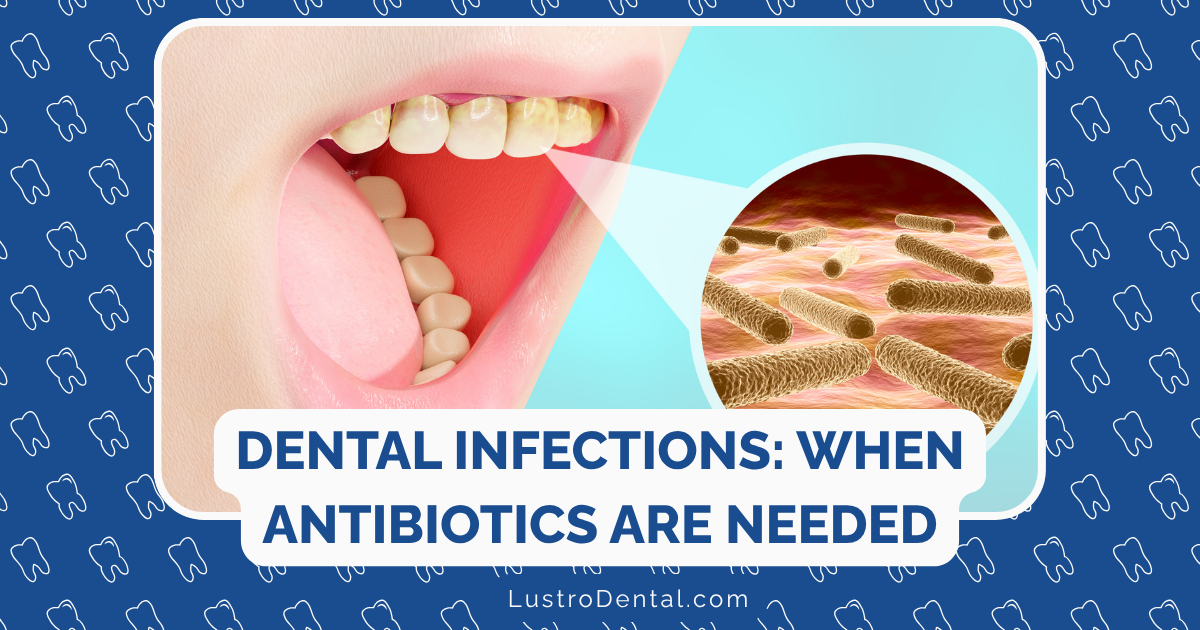
Before we dive into treatments, it’s important to understand what’s happening in your mouth when an infection takes hold. Dental infections typically occur when bacteria invade the inner pulp of your tooth (pulpitis) or create a pocket of pus at the root tip (abscess).
Common causes include:
These infections can manifest as severe pain, swelling, sensitivity to temperature, bad taste, fever, and sometimes visible pus around the gumline. Without proper treatment, they can spread to surrounding tissues and, in rare but serious cases, even to vital organs.
Contrary to popular belief, antibiotics alone rarely solve dental infections. However, there are specific scenarios where they play a crucial role:
When infection moves beyond the immediate area of the tooth and causes facial swelling, lymph node involvement, or fever, antibiotics become essential. These symptoms indicate the infection is spreading through your body’s tissues and needs to be controlled quickly.
If you have a condition that weakens your immune system (like diabetes, HIV, or cancer treatments), your dentist will likely prescribe antibiotics more readily. According to the American Dental Association, patients with compromised immunity need extra protection since their bodies can’t fight infections as effectively.
Patients with certain heart conditions may need antibiotics before invasive dental procedures. The American Heart Association has narrowed these recommendations to include only those at highest risk for infective endocarditis, such as:
Advanced gum infections that have created deep pockets and significant tissue damage might require antibiotics alongside professional cleaning and scaling.
Here’s where things get interesting – and where many patients are surprised. Antibiotics are not needed in many common dental situations:
If your infection is contained to the tooth itself with no fever or spreading, antibiotics won’t solve the problem. The reason is fascinating: antibiotics circulate in your bloodstream, but many dental infections exist in areas with poor blood supply or inside the tooth where blood vessels no longer function.
As explained by Central Ohio Endodontics, “Antibiotics do not cure tooth infections because they cannot reach the inside of the tooth where the infection resides.”
Healthy patients undergoing straightforward tooth extractions rarely need preventive antibiotics. Your body’s natural defenses, combined with proper aftercare, are usually sufficient.
Guidelines have changed significantly in recent years. The American Dental Association and the American Academy of Orthopaedic Surgeons now recognize that for most patients with prosthetic joints, the risks of antibiotic prophylaxis outweigh the benefits. According to Delta Dental, routine daily activities like brushing and flossing actually cause more bacteremia (bacteria in the bloodstream) than most dental procedures.
That aching tooth might be excruciating, but pain alone doesn’t indicate infection. Many conditions like cracked teeth, exposed dentin, or sinus pressure can cause dental pain without bacterial involvement.
Here’s the crucial part many patients miss: Antibiotics alone cannot cure most dental infections. They may temporarily reduce symptoms and control spreading infection, but the source must be addressed through proper dental treatment:
Without these interventions, the infection will almost certainly return once the antibiotic course ends.
I’ve seen too many patients request antibiotics unnecessarily, not realizing the potential consequences:
If you’re experiencing dental pain or signs of infection:
Antibiotics have their place in dental care, but that place is more limited than many people realize. The best approach to dental infections combines appropriate antibiotic use (only when truly necessary) with proper dental treatment to address the root cause.
Remember, good preventive care – regular checkups, proper oral hygiene, and addressing dental problems early – remains your best defense against ever developing a dental infection in the first place.
Have you ever been prescribed antibiotics for a dental condition? Was the reason explained clearly? I’d love to hear your experiences in the comments below.