🦷 General Care
✨ Treatments
👶 Family Care
💚 Wellness
💡 Resources

🦷 General Care
✨ Treatments
👶 Family Care
💚 Wellness
💡 Resources

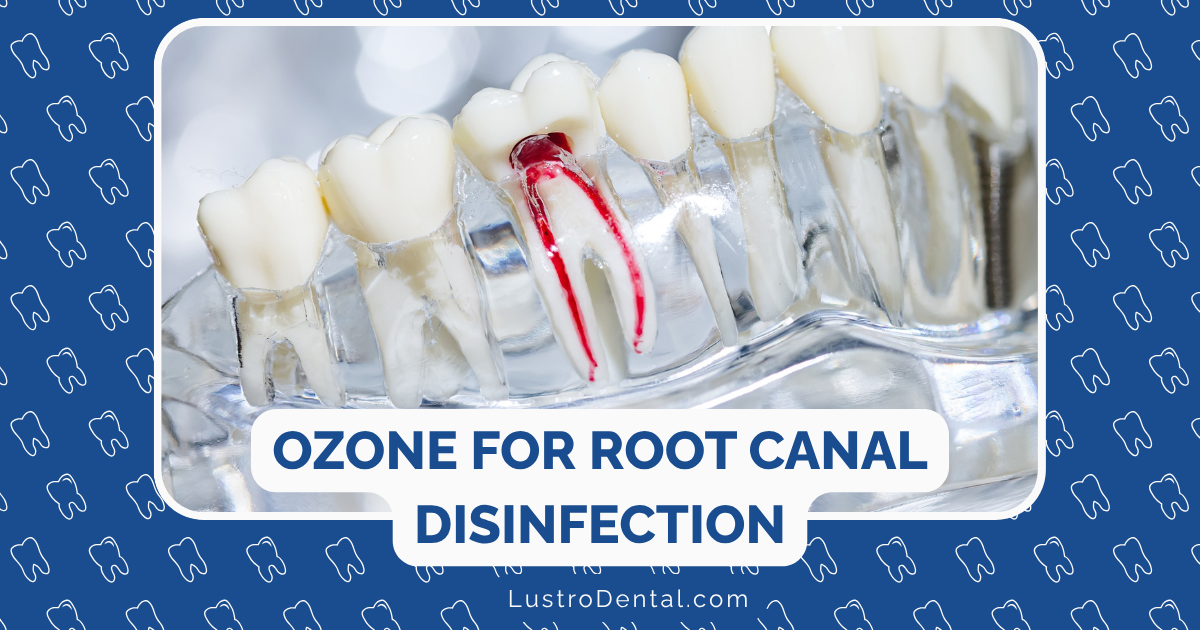
Few dental procedures evoke as much anxiety as root canal therapy. Despite its reputation, this essential treatment saves millions of teeth each year that would otherwise be lost to infection or extraction. But what if there was a way to make root canals more effective and comfortable? Enter ozone therapy—an innovative approach that’s gaining attention for its potential to enhance disinfection and improve outcomes in endodontic treatment.
As a dental health advocate, I’m excited to share how this natural disinfectant is being integrated into modern root canal procedures and what the current research tells us about its effectiveness. Let’s explore the science behind ozone therapy and how it might transform your root canal experience.
Before diving into ozone therapy, it’s important to understand what makes root canal infections so challenging to treat.
When bacteria invade the dental pulp (the soft tissue inside your tooth containing nerves and blood vessels), they don’t simply float around as individual cells. Instead, they form complex communities called biofilms—structured colonies of bacteria embedded in a protective matrix of polysaccharides, proteins, and DNA.
These biofilms serve as bacterial fortresses, making the microorganisms up to 1,000 times more resistant to antibiotics and disinfectants compared to their free-floating counterparts. What’s more, the intricate anatomy of root canal systems—with their microscopic branches, isthmuses, and tubules—creates countless hiding places for these bacterial communities.
“The complexity of root canal anatomy combined with the protective nature of biofilms presents one of the greatest challenges in endodontic therapy,” explains Dr. Sarah Johnson, an endodontist who incorporates ozone therapy into her practice. “Traditional disinfection methods can struggle to reach all these hidden areas, potentially leaving behind bacteria that can lead to persistent infections.”
Conventional root canal therapy relies heavily on mechanical cleaning with specialized instruments, followed by chemical disinfection. The gold standard disinfectant has long been sodium hypochlorite (NaOCl)—commonly known as bleach—typically used in concentrations of 1.5% to 6%.
Sodium hypochlorite is prized for its broad-spectrum antimicrobial activity and ability to dissolve organic tissue. However, it comes with limitations:
These limitations have spurred the search for complementary or alternative disinfection methods, with ozone therapy emerging as a promising candidate.
Ozone (O₃) is a naturally occurring molecule consisting of three oxygen atoms. While we often hear about ozone in the context of our atmosphere’s protective layer or as an air pollutant, medical-grade ozone has been used therapeutically for over a century in various medical fields.
In dentistry, ozone therapy involves applying ozone gas, ozonated water, or ozonated oils to infected areas of the tooth. But how exactly does this colorless gas combat root canal infections?
Ozone’s bacteria-killing power comes from its unique oxidative properties. Here’s how it works in root canal disinfection:
Ozone is a potent oxidizer that attacks the cell membranes of bacteria through a process called “oxidative stress.” It targets the unsaturated fatty acids in bacterial cell membranes, triggering a reaction called lipid peroxidation. This essentially “rusts” the cell membrane, creating holes that compromise the bacterium’s structural integrity.
Unlike some traditional disinfectants, ozone can penetrate biofilms effectively. Its gaseous form allows it to access areas that liquid irrigants might miss, including microscopic tubules and accessory canals.
“One of ozone’s greatest advantages in endodontics is its ability to diffuse through biofilms,” notes Dr. Michael Chen, who researches innovative disinfection methods. “This helps address one of the primary challenges in root canal therapy—reaching bacteria in those hard-to-access areas of the root canal system.”
Bacteria rely on specific enzymes to carry out their metabolic functions. Ozone oxidizes the sulfhydryl groups in these enzymes, rendering them inactive. Without functioning enzymes, bacteria cannot metabolize nutrients, reproduce, or maintain their cellular functions.
Perhaps most devastating to bacteria, ozone can damage their DNA through oxidation of nucleic acids. This prevents bacteria from reproducing and ultimately leads to their death.
Beyond its direct antimicrobial effects, ozone can stimulate the immune response in surrounding tissues, potentially enhancing the body’s natural healing processes after treatment.
Dental professionals use several methods to deliver ozone for root canal disinfection:
Applied directly to the root canal using specialized dental handpieces, gaseous ozone can penetrate the complex three-dimensional structure of the root canal system, reaching areas that conventional irrigants might miss.
Water infused with ozone can be used as an irrigation solution during the cleaning and shaping phase of root canal treatment. It provides antimicrobial action while being gentle on the surrounding tissues.
Olive or sunflower oils treated with ozone create a stable, long-lasting form that can be applied to the canal as an intracanal medicament between appointments in multi-visit root canal treatments.
While ozone therapy shows promise, it’s important to consider what the scientific evidence tells us about its effectiveness for root canal disinfection.
Recent research has demonstrated several benefits of ozone therapy in endodontic treatment:
Despite these promising findings, there are important limitations to consider:
For many patients, the benefits of ozone therapy extend beyond its antimicrobial properties. Here’s what you might experience with ozone-enhanced root canal therapy:
One of the most consistently reported benefits is a significant reduction in post-treatment discomfort. A crossover study found that ozone treatment significantly decreased post-treatment pain as measured by visual analog scale (VAS) scores.
“Many of my patients who have had conventional root canals in the past are surprised by how much more comfortable they feel after ozone-enhanced treatment,” says Dr. Lisa Williams, who has incorporated ozone therapy into her endodontic practice for over five years. “They often report less tenderness, swelling, and need for pain medication.”
Ozone therapy has been associated with enhanced healing responses in dental tissues. By increasing oxygenation, enhancing blood flow, and stimulating fibroblast activity, ozone can potentially accelerate the healing process after endodontic treatment.
The targeted nature of ozone therapy means less potential for irritation to surrounding tissues compared to some traditional irrigants. This can be particularly beneficial for patients with a history of sensitivity to conventional root canal treatments.
In some cases, the enhanced disinfection provided by ozone may allow for more efficient treatment, potentially reducing the number of appointments needed to complete therapy.
Rather than replacing traditional methods entirely, ozone therapy is typically used as a complementary approach to enhance conventional root canal treatment. Here’s how a typical ozone-enhanced root canal procedure might unfold:
As with conventional treatment, the process begins with proper diagnosis, local anesthesia, and creating an access opening to reach the infected pulp chamber.
The canals are cleaned and shaped using specialized instruments to remove infected tissue and create space for disinfection and filling.
Traditional irrigants like sodium hypochlorite are typically still used for their tissue-dissolving properties and initial disinfection.
Following conventional irrigation, ozone gas or ozonated water is applied to the canal system, reaching areas that might have been missed by traditional methods.
After ozone therapy, the canals are dried and sealed with biocompatible materials to prevent reinfection.
Dr. Robert Johnson, an endodontist who has researched ozone applications, emphasizes the complementary nature of this approach: “We’re not suggesting that ozone should replace conventional methods entirely. Rather, it’s about creating a synergistic effect—using the strengths of both approaches to achieve the best possible outcomes for our patients.”
While ozone therapy offers exciting possibilities, it’s not universally available or appropriate for every situation. You might be a good candidate if:
However, ozone therapy may not be suitable if:
“The ideal approach is always personalized,” advises Dr. Williams. “We consider each patient’s specific situation, including the tooth’s condition, their overall health, and their preferences, before determining whether ozone therapy would be beneficial.”
If you’re interested in exploring ozone-enhanced root canal therapy, here are some tips for finding a qualified provider:
As research continues to evolve, we can expect to see further refinements in ozone therapy protocols for root canal treatment. Key areas of development include:
“What excites me about the future of ozone in endodontics is the potential to develop truly personalized protocols,” says Dr. Chen. “As we better understand the mechanisms of action and individual patient factors, we can tailor treatments to achieve optimal results for each person’s unique situation.”
Ozone therapy represents a valuable addition to the endodontic toolbox. While not a magic bullet, the growing body of evidence suggests that when used as an adjunct to traditional root canal therapy, ozone can enhance disinfection, reduce post-treatment pain, and potentially improve overall outcomes.
The most balanced approach appears to be integrating ozone therapy with conventional methods, leveraging the strengths of both to provide the most comprehensive care. By continuing to refine protocols and delivery systems, the dental profession can work toward maximizing the benefits of this promising technology.
If you’re facing root canal therapy and are interested in exploring ozone-enhanced treatment, discuss this option with your dentist or endodontist. Together, you can determine whether this innovative approach might be beneficial for your specific situation, potentially making your root canal experience more comfortable and successful.
Have you experienced ozone therapy during root canal treatment? What was your experience like? Share your thoughts in the comments below.