🦷 General Care
✨ Treatments
👶 Family Care
💚 Wellness
💡 Resources

🦷 General Care
✨ Treatments
👶 Family Care
💚 Wellness
💡 Resources

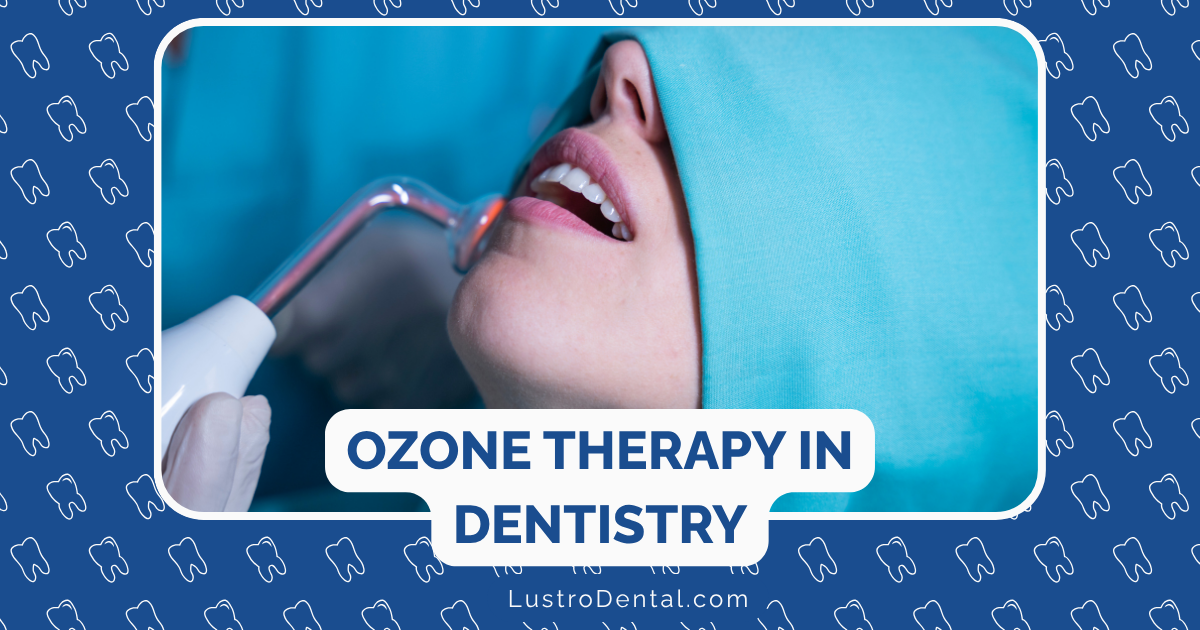
Have you ever wondered if there might be more natural, less invasive ways to address dental issues? As we continue to seek gentler yet effective approaches to oral healthcare, one treatment modality has been gaining significant attention: ozone therapy. Once considered alternative or experimental, ozone therapy has steadily built a foundation of clinical evidence that’s transforming how we approach various dental conditions.
In this comprehensive overview, we’ll explore how ozone therapy is being applied in dental practices in 2025, examine the current scientific evidence supporting its use, and help you understand when it might be an appropriate option for your dental care.
Ozone (O₃) is a naturally occurring molecule consisting of three oxygen atoms. While we often hear about ozone in the context of our atmosphere’s protective layer or as an air pollutant, medical-grade ozone has been used therapeutically for over a century.
In dentistry, ozone is valued for its powerful antimicrobial properties and ability to stimulate healing responses in tissues. It works through several mechanisms:
“Ozone therapy represents a paradigm shift in how we approach infection control and tissue healing in dentistry,” explains Dr. Sarah Johnson, a biological dentist who has incorporated ozone into her practice for over a decade. “It allows us to harness the body’s natural healing mechanisms while reducing our reliance on antibiotics and more invasive interventions.”
Dental practitioners utilize ozone in several forms, each with specific applications:
Delivered through specialized dental handpieces, ozone gas can penetrate small spaces and porous tissues. It’s commonly used for treating early caries, disinfecting root canals, and addressing periodontal pockets.
Water infused with ozone is used as an irrigation solution during procedures and as a mouth rinse. Studies have shown that ozonated water can effectively reduce bacterial loads in the oral cavity while being gentle on tissues.
Oils (typically olive or sunflower) treated with ozone create a stable, long-lasting form that can be applied to tissues. These are particularly useful for treating oral lesions, promoting wound healing, and managing inflammation.
Let’s examine how ozone therapy is being applied across different dental specialties in 2025, along with the current evidence supporting these applications.
Periodontal (gum) disease remains one of the most common chronic conditions worldwide, affecting nearly half of adults over 30. Traditional treatment typically involves scaling and root planing (SRP) to remove plaque and calculus from beneath the gumline.
Current Evidence: A 2025 systematic review published in Nature Scientific Reports analyzed 13 randomized controlled trials involving 655 patients. The findings demonstrated that combining ozone therapy with SRP resulted in:
Dr. Michael Chen, periodontist and researcher at the University of California, notes: “What’s particularly promising about ozone as an adjunct to periodontal therapy is that it addresses both the microbial challenge and the inflammatory response without the side effects we sometimes see with antibiotics.”
Root canal therapy aims to eliminate infection from within the tooth while preserving the natural structure. Traditionally, this involves mechanical cleaning and chemical disinfection of the root canal system.
Current Evidence: Research from 2024-2025 has shown that incorporating ozone into endodontic protocols can:
A clinical trial published in the Journal of Endodontics found that patients who received ozone therapy during endodontic treatment reported significantly lower pain scores in the days following the procedure compared to conventional treatment alone.
However, it’s important to note that ozone is typically used as a complementary approach rather than a replacement for traditional irrigants like sodium hypochlorite, as noted in a comprehensive review by Springer.
Perhaps one of the most exciting applications of ozone in dentistry is in the management of dental caries (cavities), particularly early-stage lesions.
Current Evidence: Studies have demonstrated that ozone can:
Research published in 2025 has shown that gaseous ozone application to early pit and fissure caries resulted in arrest or reversal of the lesions in approximately 65% of cases when combined with remineralization therapies.
“Ozone therapy aligns perfectly with the principles of minimally invasive dentistry,” explains Dr. Lisa Williams, professor of restorative dentistry. “It allows us to treat decay at earlier stages, preserving more natural tooth structure and potentially avoiding the restoration cycle altogether in some cases.”
Ozone therapy has shown particular promise in treating soft tissue conditions in the oral cavity.
Current Evidence: Clinical trials have demonstrated effectiveness in:
A 2025 crossover study found that surgical sites irrigated with ozonated water showed significantly better wound healing outcomes compared to those treated with saline, with reduced inflammation markers and accelerated tissue repair.
Tooth sensitivity affects millions of people worldwide and can significantly impact quality of life. Ozone has emerged as a potential management strategy for this common condition.
Current Evidence: Studies indicate that ozonated products can:
The mechanism appears to involve both the occlusion of dentinal tubules and the desensitization of nerve endings, offering a multi-faceted approach to this challenging condition.
While ozone shows promise in many areas of dentistry, the evidence is not universally positive. Current research indicates that:
When administered correctly by trained professionals using modern equipment, ozone therapy in dentistry is generally considered safe with minimal side effects. However, important safety considerations exist:
Ozone therapy is contraindicated in several conditions, including:
“Patient selection is crucial when considering ozone therapy,” emphasizes Dr. Robert Johnson, dental researcher and safety advocate. “While the risk profile is generally favorable, proper screening and adherence to protocols are essential to ensure patient safety.”
For many patients, ozone therapy offers a gentler experience compared to some traditional dental treatments. The procedures are typically:
Many patients report satisfaction with ozone treatments, particularly those who have had negative experiences with conventional approaches or who prefer more natural treatment modalities.
In 2025, ozone therapy is increasingly being integrated into mainstream dental practices rather than being limited to holistic or biological dental offices. This integration typically takes one of several forms:
Most commonly, ozone is used as an adjunct to conventional treatments, enhancing outcomes while maintaining standard protocols. For example, using ozone as a supplementary disinfectant after traditional scaling and root planing.
In some cases, particularly with early-stage conditions or for patients with contraindications to conventional treatments, ozone may be offered as an alternative approach.
Increasingly, dental practices are incorporating ozone into preventive protocols, using periodic applications to manage biofilm and support overall oral health.
As with many emerging technologies, cost and accessibility remain considerations for patients interested in ozone therapy:
Looking beyond 2025, several developments are likely to shape the future of ozone in dental practice:
Ozone therapy represents a promising addition to the dental toolbox, offering antimicrobial, anti-inflammatory, and healing-promoting properties through a generally well-tolerated approach. The growing body of evidence supports its use in several dental applications, particularly as an adjunct to conventional treatments.
If you’re interested in exploring ozone therapy as part of your dental care:
As with any dental treatment, the decision to incorporate ozone therapy should be made in partnership with your dental care provider, considering your unique oral health needs, medical history, and personal preferences.
Have you experienced ozone therapy in a dental setting? What was your experience like? Share your thoughts in the comments below.