🦷 General Care
✨ Treatments
👶 Family Care
💚 Wellness
💡 Resources

🦷 General Care
✨ Treatments
👶 Family Care
💚 Wellness
💡 Resources

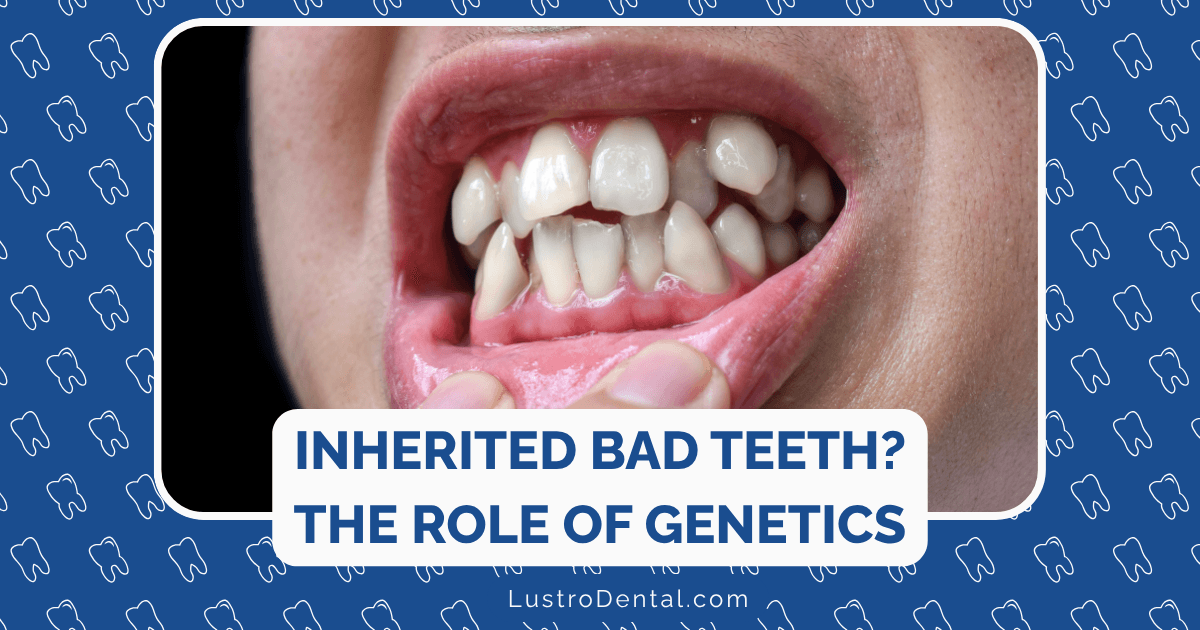
“Bad teeth run in my family.” This common refrain is often used to explain everything from cavities to crooked teeth to gum disease. But how much of our dental health is truly predetermined by our genetic code, and how much is influenced by our daily habits and environment?
This question isn’t merely academic—it has profound implications for how we approach dental care, prevention strategies, and even how we think about our own responsibility for oral health. In this comprehensive exploration, we’ll examine the complex interplay between genetics and environment in dental health, separating scientific fact from convenient fiction.
Modern genetic research has identified numerous genes that influence various aspects of dental health. According to a 2024 systematic review published in the Journal of Dental Research, approximately 60% of tooth decay susceptibility can be attributed to genetic factors, while environmental influences account for the remaining 40%.
Dr. Sarah Johnson, a dental geneticist at the University of Michigan, explains: “We’ve identified over 50 genes that play significant roles in dental development and health. These genes influence everything from the physical structure of teeth to the composition of saliva and even how our immune system responds to oral bacteria.”
Key genetic influences include:
Several genes directly affect how teeth form, including:
Mutations in these genes can lead to specific inherited dental conditions:
Genetic factors also influence our saliva, which plays a crucial protective role in oral health:
Dr. Michael Chen, researcher at the National Institute of Dental and Craniofacial Research, notes: “Variations in saliva genes can affect everything from how effectively you neutralize acids to how well you break down food particles. These differences can significantly impact cavity risk, even with identical oral hygiene habits.”
Our genetic makeup also determines how our bodies respond to oral bacteria:
A 2023 study in the Journal of Periodontology found that specific variants in immune-related genes can increase periodontal disease risk by 30-50%, independent of oral hygiene practices.
Surprisingly, even our food choices may have genetic components:
Research has attempted to quantify the genetic contribution to various dental conditions:
However, these figures come with important caveats. Dr. Lisa Rodriguez, periodontist and genetic researcher, explains: “Heritability estimates don’t mean that a condition is predetermined. They simply indicate the proportion of variation in a population that can be attributed to genetic differences. Environmental factors can still dramatically alter outcomes, especially for complex conditions like cavities and gum disease.”
While genetics provides the blueprint, environment and behavior often determine how that blueprint is expressed. The American Dental Association emphasizes that even individuals with genetic predispositions to dental problems can maintain excellent oral health with appropriate preventive measures.
Perhaps the most obvious environmental factor is oral hygiene:
A 2024 longitudinal study published in Caries Research followed 500 participants with high genetic risk scores for cavities. Those who maintained excellent oral hygiene experienced 60% fewer cavities than predicted by their genetic profile, demonstrating that behavior can significantly override genetic predisposition.
Dietary choices profoundly impact dental health:
Dr. James Wilson, nutritional dentistry specialist, notes: “Even individuals with genetically weaker enamel can maintain healthy teeth by limiting acidic and sugary foods. Conversely, those with ‘good genes’ can develop rampant decay with poor dietary choices.”
Access to fluoride represents another significant environmental factor:
Research from the Centers for Disease Control and Prevention indicates that fluoride exposure can reduce cavity rates by 20-40%, regardless of genetic predisposition.
Emerging research highlights the importance of early life influences:
A 2023 study in Pediatric Dentistry found that maternal vitamin D levels during pregnancy significantly impacted enamel quality in children, independent of the children’s genetic profiles for enamel formation.
The most accurate model of dental health recognizes that genes and environment don’t operate independently—they interact in complex ways.
Individuals with genetic variants affecting enamel formation (such as certain AMELX mutations) may have inherently thinner or more porous enamel. While this genetic factor increases vulnerability, environmental exposure to acidic beverages dramatically amplifies the risk.
A person with these genetic variants who regularly consumes acidic drinks might experience severe erosion, while someone with the same genetic profile who limits acidic beverages may maintain relatively healthy enamel.
Certain interleukin gene variants affect how aggressively the body responds to oral bacteria with inflammation—a key factor in periodontal disease. However, this genetic predisposition becomes particularly problematic when combined with poor oral hygiene.
Dr. Thomas Lee, periodontist at Boston University Dental School, explains: “Someone with high-risk immune genes but excellent plaque control might never develop periodontal disease, while someone with the same genetic profile and poor oral hygiene could experience rapid bone loss.”
Genetic factors influencing salivary gland function can predispose some individuals to lower saliva production. This genetic tendency becomes particularly problematic when combined with environmental factors like certain medications or chronic mouth breathing.
The combination of genetically reduced saliva and environmentally suppressed flow can create a high-risk scenario for rampant decay that neither factor alone would cause.
Understanding the interplay between genetics and environment has important practical implications for dental care.
If you have a family history of specific dental conditions or know you carry certain genetic variants, consider these strategies:
Dr. Maria Garcia, specialist in preventive dentistry, emphasizes: “Knowing your genetic risk factors doesn’t mean accepting poor dental health as inevitable. Instead, it allows for targeted prevention strategies that can be remarkably effective.”
The emerging field of dental genetics offers new opportunities for personalized patient care:
Research in dental genetics continues to advance rapidly, with several promising developments on the horizon:
Several companies are developing rapid genetic tests that could be performed in dental offices to identify specific risk variants. These tests could potentially guide immediate treatment decisions and preventive recommendations.
Researchers are exploring treatments that target specific genetic vulnerabilities:
Advanced algorithms combining genetic data with clinical assessments may soon provide highly accurate predictions of dental disease risk, allowing for truly personalized prevention plans.
Dr. Robert Johnson, dental informatics researcher, notes: “We’re approaching a time when a combination of genetic testing, clinical examination, and artificial intelligence could predict with remarkable accuracy who will develop specific dental problems and when, allowing for precisely targeted prevention.”
The question of whether bad teeth are inherited is neither simple nor binary. The truth lies in understanding the complex interplay between our genetic heritage and our daily choices.
While we cannot change our genetic code, we can significantly alter how those genes express themselves through environmental modifications and preventive care. Even individuals with significant genetic risk factors can maintain excellent oral health with appropriate interventions.
Perhaps most importantly, the emerging understanding of dental genetics should empower rather than fatalize. Knowledge of genetic risk factors should motivate enhanced prevention rather than resignation to poor outcomes.
As Dr. Jennifer Adams, dental geneticist, eloquently states: “Genetics may load the gun, but environment pulls the trigger. In dental health, we have remarkable control over the environmental factors that determine whether genetic vulnerabilities manifest as actual disease.”
For patients and practitioners alike, the future of dental care lies not in debating nature versus nurture, but in harnessing our understanding of both to create truly personalized approaches to oral health—approaches that acknowledge genetic realities while maximizing the power of prevention.
Have you noticed dental conditions that seem to run in your family? How have you addressed these potential genetic factors? Share your experiences in the comments below.