🦷 General Care
✨ Treatments
👶 Family Care
💚 Wellness
💡 Resources

🦷 General Care
✨ Treatments
👶 Family Care
💚 Wellness
💡 Resources

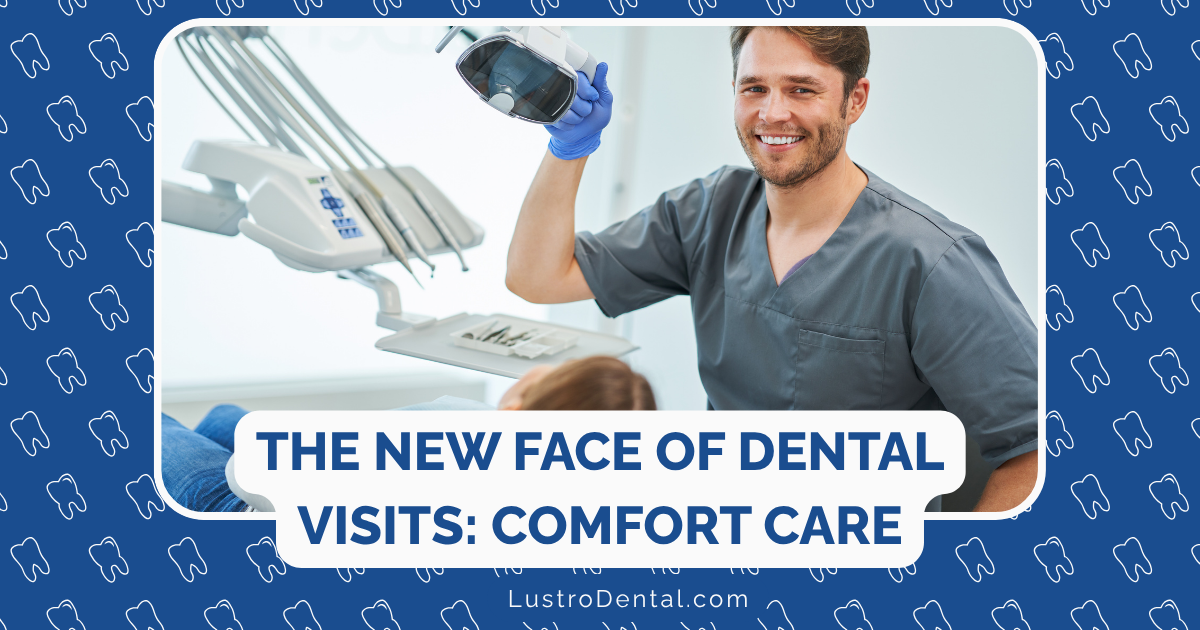
If the thought of sitting in a dental chair makes your heart race and your palms sweat, you’re not alone. Dental anxiety affects an estimated 36% of the population, with about 12% experiencing extreme fear that leads to avoiding dental care altogether. This avoidance often creates a vicious cycle: skipped check-ups lead to worsening oral health, which eventually requires more invasive (and potentially more anxiety-inducing) treatments.
The good news? Modern dentistry has evolved dramatically to address these concerns. Today’s dental practices are implementing innovative approaches specifically designed to reduce anxiety and create more comfortable experiences for patients. From technological advances to environmental design, these changes are transforming dental visits into significantly more pleasant experiences.
Let’s explore how modern dentistry is making check-ups more comfortable for even the most anxious patients.
Remember the stark, clinical dental offices of the past? The harsh lighting, antiseptic smell, and intimidating equipment on display? Modern dental practices have undergone a complete transformation in their approach to office design.
“The environment sets the tone for the entire patient experience,” explains Dr. Sarah Chen, a dentist who specializes in treating anxious patients. “We’ve reimagined dental offices as welcoming spaces that feel more like spas than medical facilities.”
Today’s dental practices often feature:
Research published in the Journal of Dental Research found that environmental design elements can reduce perceived stress by up to 30% during dental visits. Something as simple as having a window with a natural view can significantly lower anxiety levels during treatment.
Modern dental practices are increasingly attentive to sensory experiences that can trigger anxiety.
“We now understand that dental anxiety often has specific sensory triggers,” notes dental hygienist Jennifer Marsh. “By addressing these triggers directly, we can create a more comfortable experience tailored to each patient’s needs.”
Sensory-conscious practices now offer:
A 2023 study in the Journal of Dental Anxiety found that practices implementing three or more sensory accommodation options saw a 45% reduction in reported anxiety levels among patients with moderate to severe dental fear.
One of the most common anxiety triggers is fear of pain, particularly from injections. Modern dentistry has developed several innovations to make the numbing process virtually painless:
“The anxiety around ‘the shot’ has been one of dentistry’s biggest challenges,” explains Dr. Michael Rodriguez, DDS. “These new delivery systems are game-changers. Many patients don’t even realize they’ve received an injection.”
Modern dentistry emphasizes preserving natural tooth structure with less drilling and cutting:
“With these minimally invasive approaches, many procedures that once required anesthesia can now be performed comfortably without it,” notes Dr. Lisa Warren, a prosthodontist. “Patients are amazed when we complete fillings with no drilling and no shot.”
Remember those uncomfortable bitewing X-rays with sharp edges digging into your mouth? Modern imaging has evolved significantly:
“Digital imaging not only improves diagnostic capabilities but dramatically enhances patient comfort,” says Dr. Rodriguez. “No more gagging on impression material or dealing with uncomfortable film holders.”
One of the most exciting innovations in dental anxiety management is the integration of virtual reality (VR) technology. This immersive distraction tool is showing remarkable results in clinical studies.
Virtual reality works by engaging multiple sensory systems simultaneously, effectively “flooding” the brain with alternative input that competes with pain and anxiety signals.
A 2024 systematic review published in Frontiers in Medicine analyzed 1,522 patients and found that VR distraction significantly reduced pain perception by up to 42% and anxiety by 75% during dental procedures.
“VR creates what we call ‘cognitive distraction’ – essentially giving the brain something else to focus on besides the dental procedure,” explains Dr. Chen. “It’s particularly effective because it’s immersive, engaging both visual and auditory senses simultaneously.”
Today’s dental offices are implementing VR in several ways:
“What’s fascinating is that VR seems to work well across age groups,” notes dental hygienist Marsh. “We’ve seen remarkable results with both children and adults, though the content needs to be age-appropriate.”
For patients with more severe anxiety, modern dentistry offers improved pharmacological approaches that are safer and more comfortable than ever before.
“Modern sedation dentistry is about finding the minimum effective dose to ensure comfort while maintaining safety,” explains Dr. Warren. “We can now tailor the approach to each patient’s anxiety level and the complexity of the procedure.”
While technology has dramatically improved dental comfort, the human element remains crucial in managing dental anxiety.
Modern dental practices are implementing psychological approaches proven to reduce anxiety:
“One of the most effective anxiety-reducing techniques costs nothing: giving patients a sense of control,” notes Dr. Rodriguez. “Simply knowing they can raise a hand to take a break makes many patients feel significantly more comfortable.”
Many modern dental practices now invest in specialized training for their entire team:
“Every team member, from the receptionist to the dental assistant, plays a role in making anxious patients feel comfortable,” emphasizes Dr. Chen. “We train our entire team to recognize anxiety cues and respond with empathy.”
For those with severe dental anxiety, even walking into a dental office can be overwhelming. Teledentistry offers a gentle introduction to dental care.
Modern dental practices increasingly offer:
“Teledentistry allows anxious patients to establish trust before they ever set foot in our office,” says Dr. Warren. “That initial relationship building can make all the difference for someone who’s been avoiding dental care due to fear.”
Looking ahead to 2025 and beyond, several emerging technologies promise to make dental visits even more comfortable:
“The future of dentistry is focused on personalization,” predicts Dr. Rodriguez. “We’re moving toward truly individualized approaches to comfort that consider each patient’s unique anxiety profile.”
If dental anxiety has kept you from regular check-ups, consider these approaches to easing back into dental care:
“The most important thing to remember is that you’re not alone,” reassures dental hygienist Marsh. “Dental anxiety is incredibly common, and modern dental practices are better equipped than ever to help you have a comfortable experience.”
The days of white-knuckle dental visits are becoming a thing of the past. Through thoughtful environmental design, technological innovations, and psychological approaches, modern dentistry is creating experiences that are dramatically more comfortable than what previous generations endured.
Whether your anxiety stems from fear of pain, loss of control, or past negative experiences, today’s dental practices have solutions designed specifically to address your concerns. By taking advantage of these modern approaches, you can maintain optimal oral health without the stress and discomfort that may have kept you away in the past.
“The best part of modern dentistry isn’t just that we can provide more comfortable care,” concludes Dr. Chen. “It’s that patients who previously avoided dental visits are now getting the regular preventive care they need, avoiding more serious problems down the road. That’s the real victory.”