🦷 General Care
✨ Treatments
👶 Family Care
💚 Wellness
💡 Resources

🦷 General Care
✨ Treatments
👶 Family Care
💚 Wellness
💡 Resources

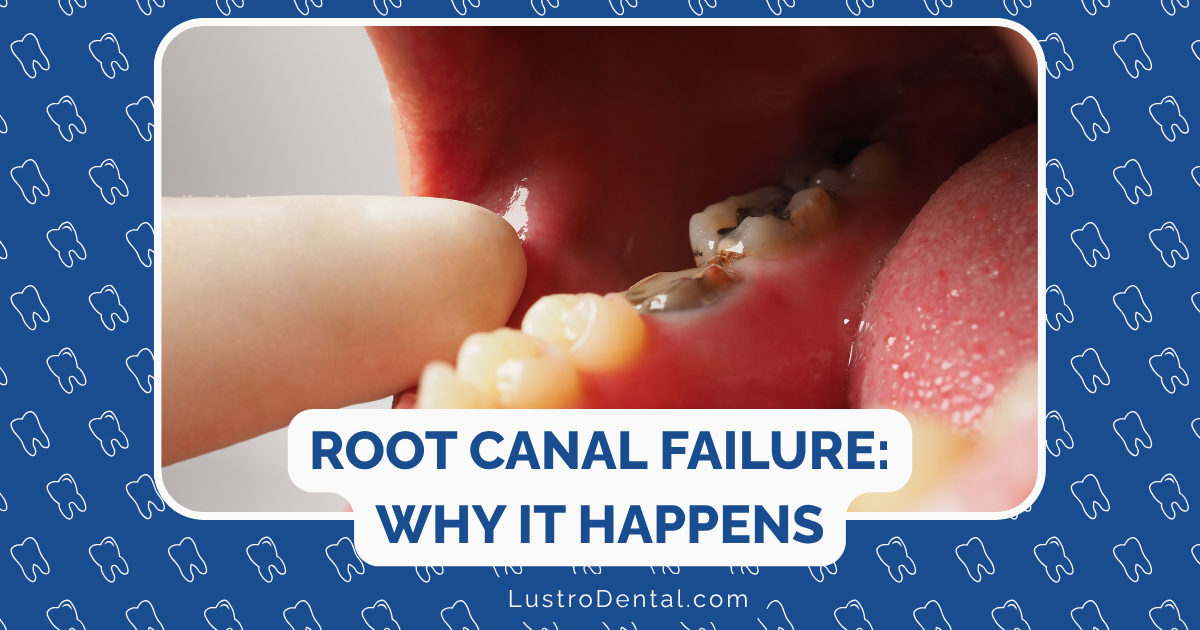
Root canal therapy is one of dentistry’s most valuable procedures, saving millions of teeth each year that would otherwise require extraction. With success rates typically between 90-95%, the vast majority of root canals provide long-lasting relief and function. However, even with the best techniques and care, some root canals do fail—leaving patients confused, frustrated, and wondering what comes next.
As someone who’s guided many patients through this challenging situation, I understand the disappointment and anxiety that can accompany a failed root canal. In this article, I’ll explain why root canals sometimes fail, how to recognize the signs of failure, and most importantly, what treatment options are available to help you make informed decisions about your dental health.
Before diving into causes and solutions, let’s clarify what we mean by a “failed” root canal. A root canal is considered unsuccessful when:
Dr. Sarah Johnson, endodontist at Midtown Endodontist NYC, explains: “A successful root canal eliminates infection, resolves symptoms, and allows the tooth to function normally. When these outcomes aren’t achieved, we consider alternative approaches to address the underlying issues.”
How do you know if your root canal has failed? Here are the most common symptoms to watch for:
While some discomfort is normal for a few days after treatment, persistent or returning pain—especially pain that increases when biting or applying pressure—may indicate a problem.
A small, pimple-like bump (called a fistula) near the treated tooth often indicates a chronic infection draining through the gums.
Lingering sensitivity when pressing on the tooth or surrounding gum tissue can signal ongoing inflammation.
While some darkening can occur naturally after root canal treatment, significant or progressive discoloration might suggest internal problems.
A treated tooth that becomes loose may indicate infection affecting the supporting structures.
When failure is suspected, dental imaging plays a crucial role in diagnosis. According to Murray Hill Endodontics, advanced imaging techniques provide valuable insights:
A 2024 study in Nature emphasized that proper diagnosis is essential for determining the appropriate retreatment approach.
Understanding why root canals fail helps in determining the most appropriate solution. Here are the most frequent causes:
The leading cause of failure is bacteria remaining in the canal system. This can occur due to:
Technical aspects of the procedure can sometimes lead to failure:
A systematic review published in 2024 identified coronal leakage as a major factor in root canal failure. This occurs when:
The tooth itself may develop problems that compromise the root canal:
Recent research has highlighted the impact of systemic conditions on endodontic outcomes:
When a root canal fails, several treatment options are available. The choice depends on the specific cause of failure, the restorability of the tooth, and patient preferences.
Often the first choice for addressing failed root canals, retreatment involves:
Success Rates: According to a 2023 meta-analysis, nonsurgical retreatment has a success rate of:
Dr. Michael Chen, endodontic researcher, notes: “Retreatment is generally the most conservative option and should be considered first unless specific contraindications exist.”
When retreatment isn’t possible or likely to succeed, microsurgical approaches offer an alternative:
Modern microsurgical techniques using specialized equipment have dramatically improved outcomes compared to traditional approaches.
Success Rates: A 2024 study in Nature reported:
In some cases, saving the natural tooth may not be feasible or advisable:
Replacement options include:
Success Rates: An 8-year follow-up study comparing retreatment to extraction/implant found:
When deciding between retreatment, surgery, or extraction, several factors should be considered:
A balanced assessment should consider the long-term outlook for each option:
If you’re facing a failed root canal, here’s what typically happens during the consultation process:
Dr. Lisa Wong, endodontist, emphasizes: “The decision should be individualized based on the specific clinical situation, the patient’s overall dental health, and personal preferences. There’s rarely a one-size-fits-all solution.”
While not all failures can be prevented, these steps can significantly reduce the risk:
A failed root canal can be disappointing, but it’s important to remember that effective solutions exist. With modern techniques and materials, even teeth with previous unsuccessful treatment can often be saved and remain functional for many years.
The key is prompt recognition of the problem, accurate diagnosis of the cause, and selection of the most appropriate retreatment option. By working closely with your dental team and understanding your options, you can make informed decisions that support your long-term oral health.
Whether the best path forward is retreatment, microsurgery, or extraction and replacement, today’s advanced dental techniques offer excellent prospects for resolving the problem and restoring both function and comfort.
Have you experienced a failed root canal? Do you have questions about treatment options? Share your thoughts or concerns in the comments below, and we’ll address them in a future post!