🦷 General Care
✨ Treatments
👶 Family Care
💚 Wellness
💡 Resources

🦷 General Care
✨ Treatments
👶 Family Care
💚 Wellness
💡 Resources

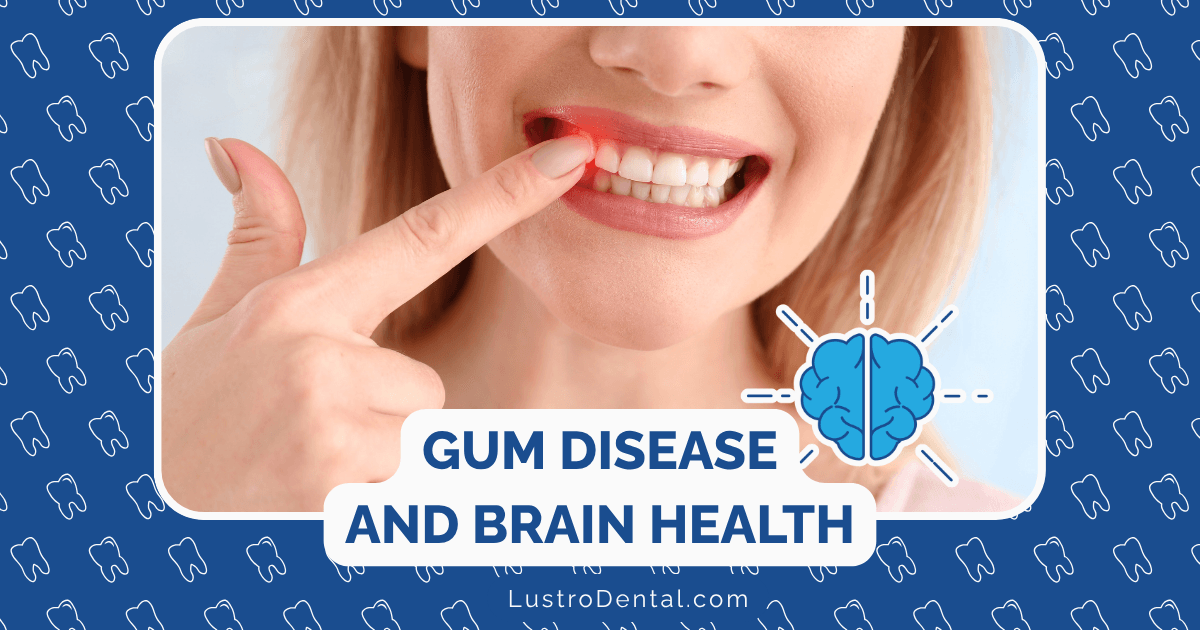
For decades, we’ve understood that oral health impacts more than just our smiles. The mouth-body connection has been well-established in relation to heart disease, diabetes, and pregnancy complications. But perhaps one of the most fascinating—and concerning—relationships emerging from recent research is the link between gum disease and brain health.
As a dental health advocate who has followed this research closely, I find the evidence both compelling and urgent. Could the state of our gums actually influence our cognitive function as we age? Let’s explore what science is revealing about this critical connection.
The human mouth hosts nearly 700 species of bacteria—a complex microbiome that, when balanced, supports our health. However, when harmful bacteria proliferate due to poor oral hygiene, they can trigger inflammatory responses that extend far beyond the oral cavity.
How exactly do problems in your mouth affect your brain? Research has identified several potential pathways:
Perhaps most surprisingly, bacteria associated with periodontal disease can actually travel from the mouth to the brain. A groundbreaking study published in the Journal of Alzheimer’s Disease found that Porphyromonas gingivalis (P. gingivalis)—the primary bacterium in chronic gum disease—can infiltrate brain tissue.
Dr. Sarah Chen, a neuroinflammation researcher at Columbia University, explains: “These bacteria don’t just stay in the mouth. They can enter the bloodstream through inflamed gum tissue and potentially cross the blood-brain barrier, especially when that barrier is already compromised due to aging or other health conditions.”
Once in the brain, these bacteria produce enzymes called gingipains that are toxic to neurons, potentially contributing to neurodegeneration.
Even when bacteria don’t directly invade the brain, the inflammatory response they trigger can have far-reaching effects.
According to research from the American Academy of Periodontology, periodontitis causes chronic inflammation that can affect distant organs, including the brain. Inflammatory molecules produced in response to gum infection can travel through the bloodstream, potentially cross the blood-brain barrier, and trigger neuroinflammation.
This systemic inflammation may contribute to or exacerbate existing inflammatory processes in the brain, potentially accelerating cognitive decline.
Periodontal disease has been linked to damage in blood vessels throughout the body, including those supplying the brain.
Dr. Michael Rodriguez, a periodontist specializing in inflammatory diseases, notes: “The same inflammatory processes that damage gum tissue can also affect the endothelial lining of blood vessels, potentially reducing blood flow to the brain and contributing to vascular dementia.”
The connection between gum disease and brain health isn’t merely theoretical. A growing body of evidence supports this relationship:
A 2025 study published in the Journal of Periodontology examined 51 middle-aged and elderly individuals with normal cognition but varying levels of periodontal disease. The researchers found altered brain connections in individuals with gum disease compared with those with healthy gums.
Specifically, participants with moderate-to-severe periodontitis showed impaired brain network function, even though they had not yet developed cognitive symptoms. This suggests that gum disease might affect brain function before cognitive decline becomes apparent.
The hippocampus—a brain region critical for memory and learning—appears particularly vulnerable to the effects of periodontal disease.
Research published in Neurology found that gum disease and tooth loss were associated with hippocampal shrinkage. In a study of 172 older adults, those with mild gum disease and fewer healthy teeth showed increased shrinkage in the left hippocampus. Remarkably, each lost tooth was associated with brain aging equivalent to nearly one year.
The temporal relationship between gum disease and cognitive decline provides further evidence of their connection:
To understand the gum disease-brain health connection more deeply, we need to examine the specific inflammatory mechanisms involved:
Recent research published in Annals of Research in Medicine and Health highlights the role of inflammasomes—multimeric protein complexes that are central to the inflammatory response in periodontal tissues.
The NLRP3 inflammasome is particularly significant in periodontal disease, triggering the release of pro-inflammatory cytokines such as interleukin-1β (IL-1β) and IL-18. These cytokines not only exacerbate tissue destruction in the periodontium but can also contribute to neuroinflammation when they enter the systemic circulation.
Dr. Jennifer Lee, an immunologist specializing in inflammatory diseases, explains: “Inflammasomes act as alarm systems within cells. When they detect bacterial components from periodontal pathogens, they initiate inflammatory cascades that, while intended to be protective, can become destructive when chronically activated.”
P. gingivalis produces several virulence factors that may directly impact brain health:
According to a 2025 study published in Frontiers in Immunology, these virulence factors can cross the blood-brain barrier and activate immune cells in the brain, contributing to neuroinflammation and potentially altering healthy neurons.
The hallmarks of Alzheimer’s disease include the accumulation of amyloid beta plaques and tau tangles in the brain. Emerging evidence suggests that periodontal pathogens may influence these processes:
If gum disease can impact brain health, could improving oral health help protect cognitive function? While more research is needed, current evidence suggests several promising approaches:
The foundation of prevention remains consistent oral hygiene practices:
The National Institutes of Health emphasizes that these basic practices remain the most effective first-line defense against periodontal disease.
Professional dental care is essential for detecting and addressing periodontal issues before they become severe:
Dr. Robert Chen, a periodontist with a focus on systemic health connections, advises: “Professional cleanings remove bacterial biofilms that can’t be eliminated through home care alone. For those with a history of gum disease, more frequent professional cleanings may be beneficial.”
Several lifestyle factors influence both periodontal and brain health:
Emerging research is exploring specific anti-inflammatory approaches that may benefit both oral and brain health:
A 2025 study in PubMed Central highlights several bioactive compounds that show promise in reducing periodontal inflammation:
These compounds work by inhibiting inflammatory pathways, reducing cytokine production, and modulating the immune response from pro-inflammatory to anti-inflammatory.
More specific interventions are being investigated, including:
While these approaches are still experimental, they represent promising directions for future treatment.
Some people face elevated risks for both periodontal disease and cognitive decline. If you fall into one of these categories, preventive oral care becomes even more critical:
Genetic predisposition can influence both periodontal disease susceptibility and cognitive health:
As we age, several factors can complicate oral health maintenance:
For older adults, adaptive tools like electric toothbrushes, water flossers, or toothbrushes with modified handles may help maintain effective oral hygiene despite physical limitations.
Certain health conditions warrant special attention to oral health:
If you have these conditions, work closely with both your dentist and physician to coordinate care and minimize inflammation throughout your body.
The connection between oral health and brain function represents an exciting frontier in both dentistry and neuroscience. Several promising research directions may yield new insights and interventions:
Future approaches may focus on promoting a healthy balance of oral bacteria rather than simply eliminating harmful species. Oral probiotics and prebiotics could potentially help maintain this balance.
Researchers are developing more sophisticated methods to detect periodontal disease in its earliest stages, potentially including salivary biomarkers that could indicate both oral inflammation and neuroinflammation.
The growing recognition of the oral-systemic connection is driving interest in integrated care models where dental and medical professionals collaborate more closely, particularly for patients at high risk for both periodontal disease and cognitive decline.
The emerging connection between periodontal disease and brain health underscores a fundamental truth: our bodies function as integrated systems, not isolated components. What happens in our mouths can indeed affect our brains, particularly through inflammatory pathways.
While research continues to evolve, the current evidence provides compelling reasons to prioritize periodontal health as part of a comprehensive approach to brain health and cognitive preservation. The good news is that many of the preventive strategies—regular brushing and flossing, professional dental care, and healthy lifestyle choices—are accessible to most people.
By taking proactive steps to maintain healthy gums, you’re not just protecting your smile; you may also be safeguarding your cognitive function for years to come. In the complex relationship between oral health and brain health, inflammation appears to be the critical mediator—and controlling this inflammation through good oral hygiene may offer a practical strategy for supporting long-term brain health.
Have you noticed changes in your gum health as you’ve aged? Are you concerned about the connection between oral health and brain function? Share your thoughts in the comments below.