🦷 General Care
✨ Treatments
👶 Family Care
💚 Wellness
💡 Resources

🦷 General Care
✨ Treatments
👶 Family Care
💚 Wellness
💡 Resources

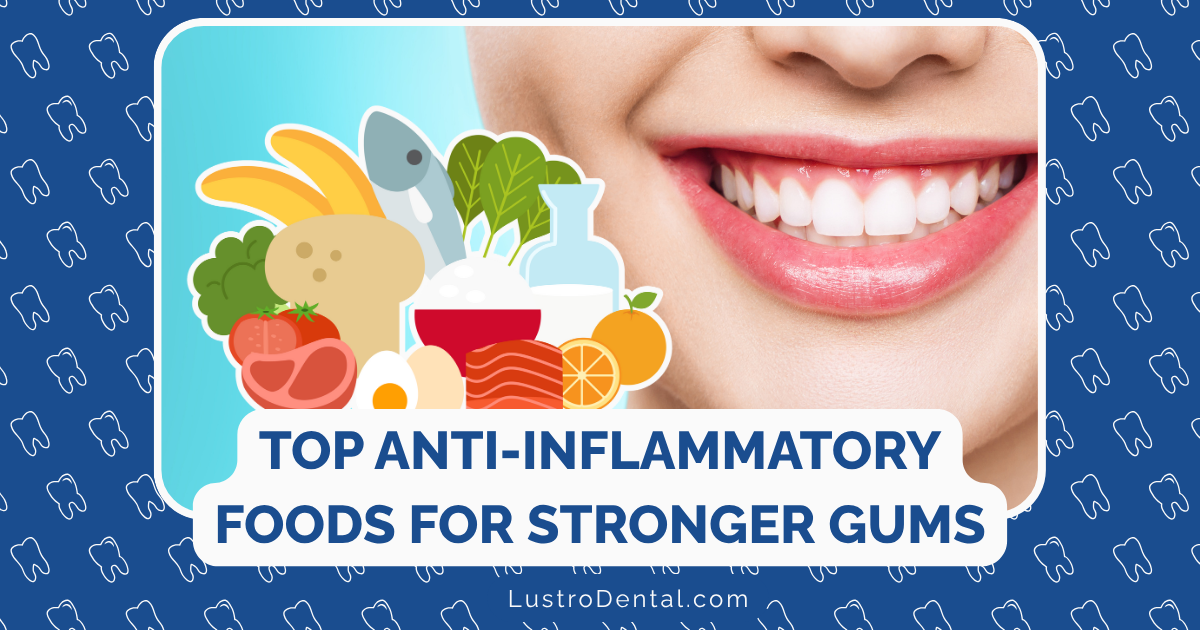
When patients ask me about improving their gum health, they’re often surprised when I start talking about what’s on their plate. While brushing, flossing, and regular dental visits remain the foundation of good oral health, the foods you eat play a crucial—and often overlooked—role in maintaining healthy gums.
Recent research has revealed just how profound the connection between diet and gum health truly is. According to a 2023 study published in PubMed Central, what we eat can either fuel inflammation in our gums or help fight against it. This is particularly important considering that periodontal disease affects nearly half of all American adults over 30, with almost 8% suffering from severe periodontitis.
In this article, I’ll explore how specific nutrients and foods can protect your gums, reduce inflammation, and potentially reverse early signs of gum disease. I’ll also identify the dietary culprits that may be sabotaging your oral health without you realizing it.
Before diving into specific foods, it’s helpful to understand what we’re fighting against. Periodontal disease begins with gingivitis—inflammation of the gums characterized by redness, swelling, and bleeding during brushing or flossing. If left untreated, it can progress to periodontitis, where the infection damages the soft tissue and bone supporting your teeth, potentially leading to tooth loss.
At the heart of this process is inflammation. While inflammation is a natural immune response designed to protect your body, chronic inflammation can become destructive, breaking down the tissues that support your teeth.
This is where your diet comes in. Certain foods have powerful anti-inflammatory properties that can help combat gum inflammation, while others can exacerbate it.
Omega-3 fatty acids are renowned for their anti-inflammatory properties throughout the body, including your gums.
How they help your gums:
A 2020 review found significant improvements in periodontal disease measures among those taking omega-3 supplements. Another study showed that regular consumption of fatty fish was linked to reduced gingival inflammation and periodontal pockets.
Best food sources:
Practical tip: Aim to eat fatty fish at least twice a week or consider incorporating ground flaxseeds into your daily diet if you follow a plant-based diet.
Vitamin C plays a crucial role in collagen production, which is essential for maintaining the integrity of your gum tissue.
How it helps your gums:
A 2019 review found that individuals with lower blood levels of vitamin C were more likely to develop gum disease. In fact, severe vitamin C deficiency can lead to scurvy, which is characterized by bleeding gums.
Best food sources:
Practical tip: Include at least one vitamin C-rich food in each meal. For example, add bell peppers to your morning omelet, enjoy an orange as a midday snack, and include broccoli with dinner.
Antioxidants help combat oxidative stress and neutralize free radicals that can damage gum tissue.
How they help your gums:
Best food sources:
Practical tip: Green tea deserves special mention for gum health. According to a study highlighted by Clinica Pronova, green tea contains catechins with antioxidant properties that are 100 times more potent than vitamin C and specifically protect periodontal tissues.
Vitamin D and calcium work together to support bone health, including the alveolar bone that holds your teeth in place.
How they help your gums:
A 2023 study found that vitamin D administration negatively correlated with gingival index scores, indicating reduced gum inflammation. Multiple studies have found lower blood levels of vitamin D in individuals with periodontal disease compared to those with healthy gums.
Best food sources for calcium:
Best food sources for vitamin D:
Practical tip: Vitamin D is difficult to obtain solely from food. Consider spending 10-15 minutes in the sun a few times a week (without sunscreen) to boost your vitamin D levels naturally, or talk to your healthcare provider about supplementation.
Your mouth, like your gut, has its own microbiome—a community of bacteria that can either support or harm your oral health.
How they help your gums:
A study cited by Healthline found that individuals with periodontitis who took a probiotic lozenge showed greater reductions in harmful bacteria compared to those who did not.
Best food sources:
Practical tip: Look for dairy products that specifically mention “live active cultures” on the label, and choose unsweetened varieties to avoid added sugars that can harm your teeth.
Coenzyme Q10 (CoQ10) is concentrated in the gums and has potent antioxidant and anti-inflammatory properties.
How it helps your gums:
A systematic review and meta-analysis from 2022 found that CoQ10 use in combination with scaling and root planing could improve periodontitis. Another study showed significant reductions in gum inflammation in those taking CoQ10 alongside dental treatment.
Best food sources:
Practical tip: While CoQ10 can be found in foods, the amounts are relatively small. For therapeutic effects, supplements may be more effective. Consult with your healthcare provider before starting any supplement regimen.
Now that we’ve covered the key nutrients, let’s look at how to incorporate them into a comprehensive anti-inflammatory eating plan that supports gum health.
Multiple studies have shown that the Mediterranean diet can significantly improve gum health. According to a randomized controlled trial cited in PMC, adherence to a Mediterranean diet for just 6 weeks led to significant improvements in gingival inflammatory parameters without changes in dental bacterial plaque scores.
Key components of the Mediterranean diet for gum health:
Breakfast:
Lunch:
Snack:
Dinner:
Evening:
Just as some foods can fight inflammation, others can promote it. According to a 2024 study in Nature, certain dietary patterns can significantly increase your risk of periodontal disease.
Why they harm your gums:
Common sources to limit:
Startling fact: The average American consumes approximately 68 grams (17 teaspoons) of added sugar daily, far exceeding the American Heart Association’s recommendation of less than 36 grams for men and 25 grams for women.
Why they harm your gums:
Common sources to limit:
Practical tip: If you do consume acidic foods or beverages, rinse your mouth with water afterward and wait at least 30 minutes before brushing to avoid damaging softened enamel.
Why they harm your gums:
Common sources to limit:
Research insight: A study published in PMC found that the ratio of omega-6 to omega-3 fatty acids is critical, with a high ratio associated with increased inflammatory processes linked to periodontal disease.
If you’re currently dealing with gingivitis or periodontitis, dietary changes can complement your dental treatment plan.
Focus on:
Avoid:
Focus on:
The connection between gum health and overall wellness is bidirectional. Poor gum health can contribute to systemic inflammation, potentially increasing the risk of conditions like heart disease, diabetes, and even cognitive decline. Similarly, a diet that promotes gum health also supports overall health.
According to research published in News Medical, a longitudinal study from Finland analyzed data from over 3,300 individuals, linking gum health, dietary patterns, and systemic inflammation over an 11-year period. The findings underscore the importance of integrating nutritional guidance into periodontal care.
Changing your diet can be challenging, but these practical tips can help you successfully incorporate more gum-friendly foods:
While no diet can replace good oral hygiene practices and regular dental care, the foods you eat can significantly impact your gum health. By embracing an anti-inflammatory diet rich in omega-3 fatty acids, vitamins C and D, antioxidants, and probiotics—while limiting sugars, acids, and processed foods—you’re providing your gums with the nutritional support they need to stay healthy.
Remember that consistency is key. The occasional indulgence won’t derail your gum health, but your daily dietary patterns make the biggest difference. Think of each meal as an opportunity to nourish not just your body, but your smile as well.
Your gums reflect your overall health, and the right diet can help them—and you—thrive.
Have you noticed improvements in your gum health after changing your diet? Share your experience in the comments below!