🦷 General Care
✨ Treatments
👶 Family Care
💚 Wellness
💡 Resources

🦷 General Care
✨ Treatments
👶 Family Care
💚 Wellness
💡 Resources

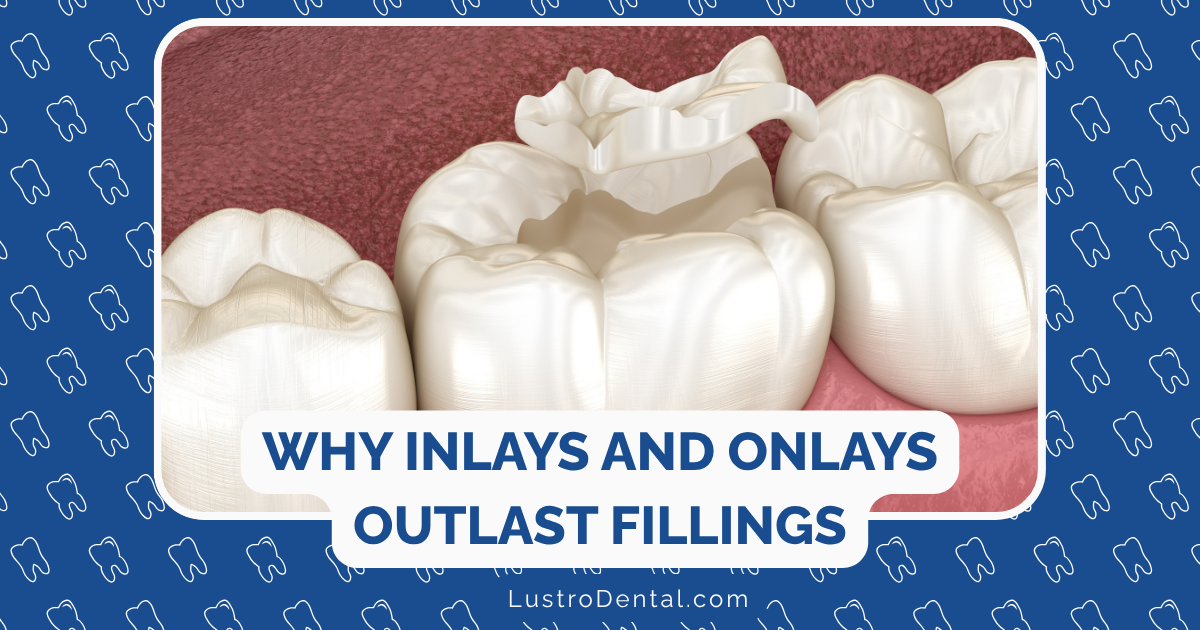
When it comes to restoring damaged teeth, dental fillings have long been the standard treatment. However, for many patients, a more precise and durable option exists: dental inlays and onlays. These custom-crafted restorations offer significant advantages in longevity and performance compared to traditional fillings. But what exactly makes them last longer, and is the additional investment worth it?
As someone who’s spent years helping patients understand their dental restoration options, I can tell you that the difference between a filling and an inlay or onlay isn’t just about cost—it’s about precision, materials, and long-term oral health. Let’s explore the science and craftsmanship behind why inlays and onlays typically outlast conventional fillings by years, even decades.
First, let’s look at the numbers. According to clinical studies and data from the American Dental Association:
This significant difference in lifespan isn’t coincidental—it’s the result of fundamental differences in how these restorations are designed, fabricated, and placed. Understanding these differences helps explain why inlays and onlays represent a superior long-term investment for many patients.
Perhaps the most significant factor in the extended lifespan of inlays and onlays is their precision fabrication process.
Traditional fillings are “direct restorations,” meaning they’re created directly in your mouth. The dentist places soft material into the cavity, shapes it, and then hardens it in place. While convenient, this approach has inherent limitations in accuracy and strength.
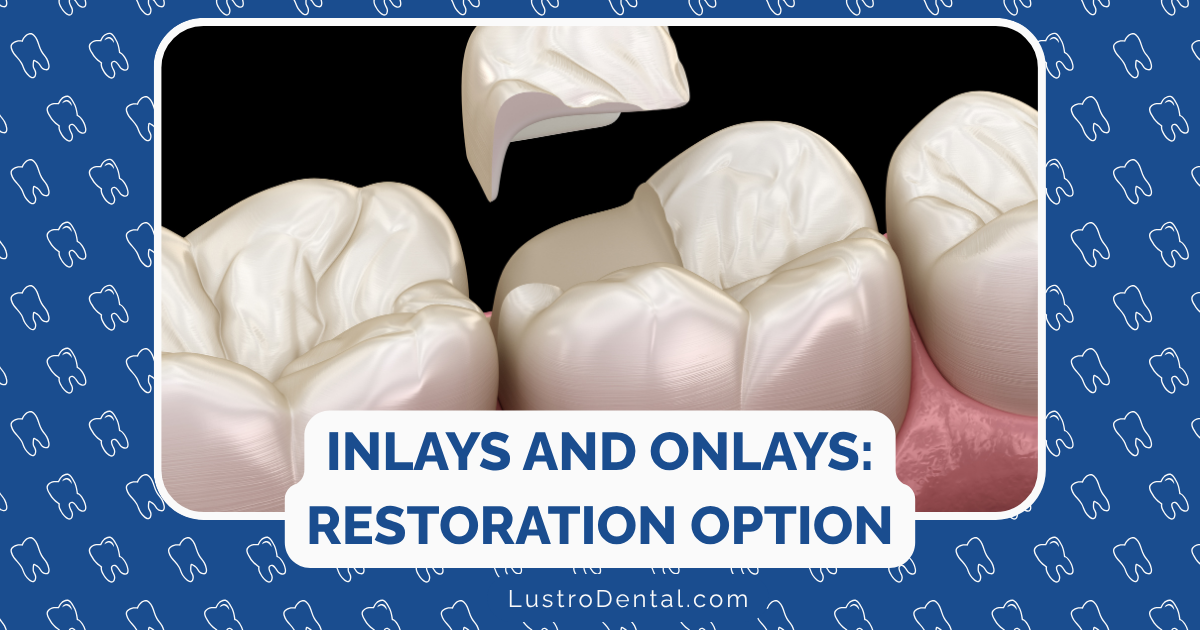
Inlays and onlays, by contrast, are “indirect restorations.” They’re custom-fabricated outside your mouth based on precise impressions or digital scans of your tooth. This approach allows for:
Dr. Sarah Johnson, a prosthodontist at the University of Michigan School of Dental Medicine, explains: “When we create fillings directly in the mouth, we’re working in a challenging environment with limitations in visibility, moisture control, and access. With inlays and onlays, we can achieve a level of precision that’s simply not possible with direct techniques.”
Traditional laboratory-fabricated inlays and onlays involve creating a model of your tooth, then hand-crafting the restoration by a skilled dental technician. This meticulous process allows for extraordinary attention to detail.
“A skilled dental technician can achieve marginal adaptations of less than 50 microns—about half the width of a human hair,” notes Dr. Michael Chen of the American College of Prosthodontists. “This precision at the margins is critical for preventing bacterial infiltration and recurrent decay.”
Modern CAD/CAM (Computer-Aided Design/Computer-Aided Manufacturing) technology has further enhanced the precision of inlays and onlays. Systems like CEREC, E4D, and others use digital scanning and computer-controlled milling or 3D printing to create restorations with remarkable accuracy.
A 2023 study published in the Journal of Prosthetic Dentistry found that CAD/CAM-fabricated ceramic inlays achieved marginal gaps averaging just 80-110 microns—well within the clinically acceptable range of under 120 microns. This precision fit significantly reduces the risk of bacterial infiltration at the margins, a common cause of restoration failure.
The materials used for inlays and onlays offer significant advantages over those used in traditional fillings:
While modern composite (tooth-colored) fillings have improved dramatically, they still face several challenges:
These factors can lead to marginal leakage, fractures, and wear over time.
The materials used for inlays and onlays are specifically selected for durability:
Dr. Lisa Rodriguez of the Academy of Biomaterials explains: “Laboratory-processed materials achieve a degree of polymerization and structural integrity that’s simply not possible with in-mouth techniques. This translates directly to improved physical properties and longevity.”
Research from the International Journal of Prosthodontics shows that laboratory-processed composite inlays exhibit 30-40% higher flexural strength and significantly less wear than direct composite fillings.
The junction where a restoration meets the natural tooth—called the margin—is the most vulnerable area for failure. Superior marginal integrity is perhaps the single most important factor in restoration longevity.
Traditional fillings face several challenges at the margins:
A 2022 study in the Journal of Dental Research found that composite fillings showed marginal discrepancies averaging 150-250 microns after five years, with 68% showing detectable leakage.
Inlays and onlays achieve superior marginal integrity through:
A comparative study published in Operative Dentistry found that ceramic inlays maintained marginal integrity significantly better than composite fillings over a 10-year period, with 91% of inlays showing excellent margin quality compared to only 42% of composite fillings.
Perhaps one of the most underappreciated advantages of inlays and onlays is how they interact with the remaining tooth structure.
Traditional fillings, particularly large ones, can actually weaken teeth:
In contrast, inlays and onlays can actually increase tooth strength:
“Think of a large filling as a weak spot in the tooth, while an inlay or onlay acts more like a reinforcing structure,” explains Dr. James Wilson of the Advanced Restorative Institute. “This is particularly important for teeth with large restorations that experience significant chewing forces.”
The way inlays and onlays are attached to teeth offers another longevity advantage:
Direct fillings face several placement challenges:
Inlays and onlays benefit from:
A 2023 study in the Journal of Adhesive Dentistry found that the bond strength of ceramic inlays was 37% higher than direct composite restorations after thermocycling, suggesting better long-term stability of the restoration-tooth interface.
The superior longevity of inlays and onlays isn’t just theoretical—it’s backed by substantial clinical research:
While inlays and onlays typically cost more upfront than fillings, their extended lifespan often makes them more economical in the long run:
If we consider a 30-year period for a molar restoration:
Scenario 1: Composite Fillings
Scenario 2: Ceramic Inlay
While the inlay appears more expensive in this simple analysis, it doesn’t account for:
When these factors are considered, inlays and onlays often represent the more cost-effective option, particularly for larger restorations in teeth that experience significant chewing forces.
While inlays and onlays offer significant longevity advantages, they’re not necessary for every situation. They make the most sense when:
Dr. Jennifer Martinez of the American Academy of Restorative Dentistry suggests: “For small, simple cavities, a well-placed composite filling can provide excellent service. But as the restoration size increases, the advantages of inlays and onlays become more pronounced. It’s about matching the restoration to the clinical situation.”
While inlays and onlays offer impressive longevity advantages, they do have some potential drawbacks:
Regardless of whether you choose a filling or an inlay/onlay, these strategies will help maximize its lifespan:
The superior longevity of inlays and onlays isn’t magical—it’s the direct result of precision fabrication, superior materials, and biomechanical advantages. When a restoration fits perfectly, is made from optimally processed materials, and is designed to strengthen rather than weaken the tooth, the result is predictably longer service life.
For patients seeking the most durable solution for damaged teeth—particularly those who’ve experienced repeated filling failures—inlays and onlays represent a significant advancement in restorative dentistry. While they require a greater initial investment, the precision of these custom restorations often translates to decades of reliable service, making them not just a clinical choice but a wise long-term investment in oral health.