🦷 General Care
✨ Treatments
👶 Family Care
💚 Wellness
💡 Resources

🦷 General Care
✨ Treatments
👶 Family Care
💚 Wellness
💡 Resources

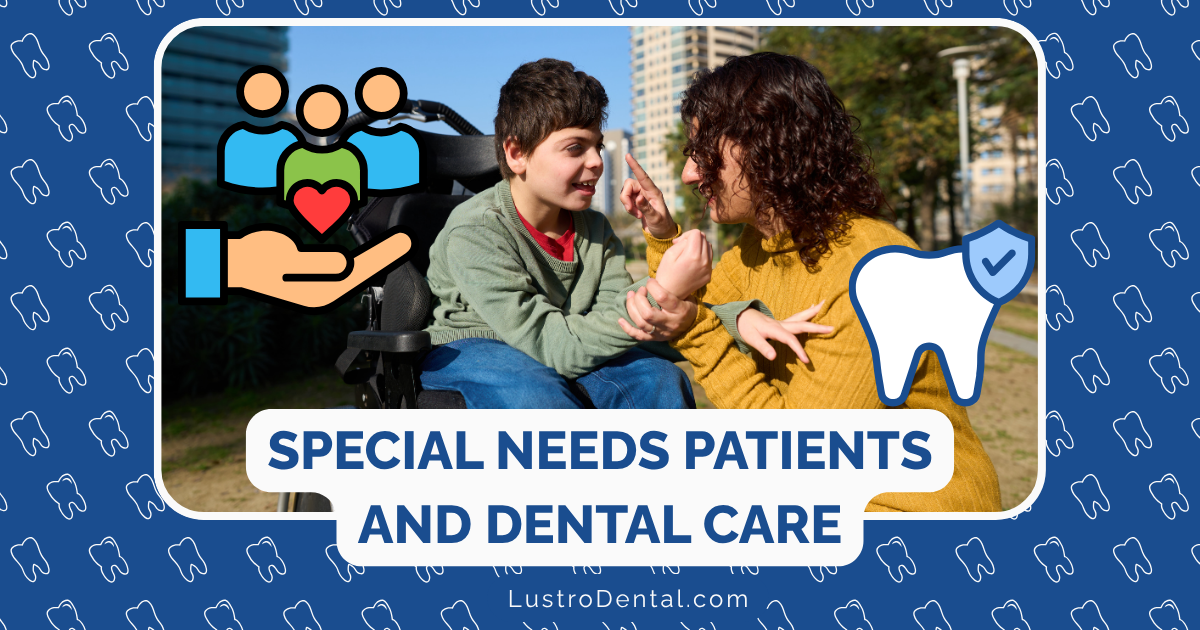
For many of us, a dental appointment is a minor inconvenience—perhaps slightly uncomfortable, but manageable. For individuals with special needs, however, the unfamiliar sounds, sensations, and procedures of a dental visit can trigger profound anxiety or even fear. This is where consistency becomes not just helpful, but essential.
Throughout my years advocating for improved dental care, I’ve witnessed remarkable transformations when practices prioritize consistency for their special needs patients. What begins as an impossible challenge often evolves into a manageable—sometimes even positive—experience through the power of familiarity and trust built over time.
Before exploring solutions, let’s understand why building trust is particularly crucial for special needs patients.
Patients with special needs—whether developmental, cognitive, physical, or sensory—often face unique challenges in dental settings:
Research published in the Journal of Dentistry confirms what many practitioners observe: trust in the dentist-patient relationship directly correlates with patient pain perception and anxiety levels. For special needs patients, this connection is even more pronounced.
Dr. Maria Chen, who specializes in treating patients with intellectual and developmental disabilities, explains: “Trust isn’t just about feeling comfortable—it’s about creating a foundation where treatment becomes possible at all. Without trust, we often can’t even begin.”
When special needs patients encounter inconsistency in their dental care, the consequences can be significant:
A systematic review of barriers to dental care for children with disabilities found that negative experiences and lack of consistent, specialized care significantly contributed to poor oral health outcomes. The good news? Consistency offers a powerful solution.
Creating consistency involves multiple elements working together to build familiarity and predictability.
Perhaps the single most important factor in building trust is maintaining consistency in who provides care.
Research-Backed Benefits: A study published in BMC Oral Health found that caregivers consistently identified familiar staff as a critical factor in successful dental visits for special needs patients. The relationship with specific providers—not just the practice as a whole—was key to reducing anxiety and improving cooperation.
Practical Implementation:
Dr. James Wilson, whose practice specializes in treating patients with autism, shares: “We’ve seen patients who couldn’t tolerate even basic exams transform into cooperative patients simply because they saw the same hygienist at every visit for a year. That relationship is irreplaceable.”
The physical environment plays a crucial role in creating comfort and predictability.
Research-Backed Benefits: Research in Special Care in Dentistry highlights that familiar environments help patients with special needs learn coping skills and reduce anxiety. Consistency in setting creates a foundation for successful treatment.
Practical Implementation:
“We always use Room 3 for Alex,” explains dental hygienist Sarah Johnson. “It’s his room. We even keep a small sign with his name that we put up when he arrives. This simple consistency has dramatically reduced his anxiety.”
How appointments unfold—the sequence of events, the language used, the techniques employed—should follow predictable patterns.
Research-Backed Benefits: The American Academy of Pediatric Dentistry emphasizes that patients learn best when messages and expectations are delivered consistently. Procedural consistency helps patients develop familiarity with the rhythm and requirements of dental care.
Practical Implementation:
Dental assistant Michael Brown notes: “We created a visual schedule for Sophia that shows each step of her cleaning. We follow it exactly the same way every time. After three visits, she started pointing to the next step before we even mentioned it—she had internalized the routine.”
When and how appointments occur significantly impacts the trust-building process.
Research-Backed Benefits: The Oral Health Foundation recommends that patients with special needs have shorter, more frequent appointments rather than lengthy, infrequent visits. This approach builds familiarity and prevents overwhelming experiences.
Practical Implementation:
“Tuesday at 10 am is Jason’s time,” explains office manager Lisa Chen. “We’ve blocked that slot for him every three months. The predictability helps him prepare mentally, and we’ve seen his anxiety decrease with each consistent visit.”
Consistency in communication is fundamental to developing trust with special needs patients.
Research-Backed Benefits: A study in Special Care in Dentistry found that dental professionals who adapted their communication style to meet the specific needs of special needs patients achieved significantly better outcomes and patient cooperation.
Practical Implementation:
Creating and maintaining detailed records ensures consistency across visits and providers.
Practical Implementation:
Dr. Rebecca Torres emphasizes: “Our detailed special needs profiles have transformed our practice. When a patient arrives, everyone from reception to the dental assistant knows exactly how to interact with them in a consistent way. The continuity has dramatically improved our success rate with complex patients.”
Real-world examples illustrate how consistency transforms dental experiences for special needs patients.
Patient Profile: Michael, a 12-year-old with autism spectrum disorder and significant sensory sensitivities
Initial Challenge: Unable to tolerate even entering the dental office without extreme distress; had never completed a full examination
Consistency Approach:
Results After One Year:
Michael’s mother shares: “The consistency has been life-changing. What started as our biggest stress is now just a regular part of our routine. The trust he’s built with Dr. Wilson and his team transferred to how he approaches his daily brushing too.”
Patient Profile: Eleanor, a 67-year-old with early-stage dementia and anxiety disorder
Initial Challenge: Combative during dental procedures; required sedation for basic care; declining oral health
Consistency Approach:
Results After Six Months:
Eleanor’s daughter notes: “The consistency gave my mother something to hold onto as her memory declined. The familiar faces, voices, and routines created an island of comfort in what could have been a frightening experience.”
Creating consistency requires intentional systems and practice-wide commitment.
Caregivers are essential partners in building trust through consistency.
Dr. Lisa Zhang emphasizes: “When we align our in-office approach with what caregivers do at home, we see dramatically better results. Consistency across environments is powerful.”
Despite best intentions, maintaining consistency can be challenging. Here are strategies for addressing common obstacles:
As we look toward the future, several promising developments may enhance our ability to provide consistent care:
Building trust through consistency isn’t just about making dental visits more comfortable—though that’s certainly important. It’s about creating the foundation that makes comprehensive dental care possible for special needs patients who might otherwise go without essential treatment.
When we prioritize consistency in personnel, environment, procedures, and communication, we transform what could be traumatic experiences into manageable, even positive ones. We open the door to preventive care that can save patients from more invasive treatments later. We demonstrate respect for the unique needs of each individual.
As dental professionals, caregivers, and advocates, our commitment to consistency sends a powerful message: we see you, we value you, and we’ll be here for you—the same faces, the same places, the same approaches—visit after visit. That predictability creates the safety that allows trust to grow and flourish over time.
By embracing consistency as a core value in special needs dentistry, we don’t just improve individual dental visits—we transform the entire healthcare experience for some of our most vulnerable patients. And that’s something worth smiling about.
Have you experienced the power of consistency in dental care for special needs patients? Share your stories and strategies in the comments below.