🦷 General Care
✨ Treatments
👶 Family Care
💚 Wellness
💡 Resources

🦷 General Care
✨ Treatments
👶 Family Care
💚 Wellness
💡 Resources

For the millions of Americans suffering from moderate to severe gum disease, the prospect of traditional periodontal surgery has long been a source of anxiety. The cutting, suturing, pain, and extended recovery time associated with conventional treatments have led many patients to delay or avoid necessary care altogether—often with devastating consequences for their oral and overall health.
But a revolutionary approach is transforming how we treat periodontal disease. The Laser-Assisted New Attachment Procedure (LANAP) is fundamentally changing treatment outcomes, patient experiences, and the future of periodontal therapy.
As someone deeply committed to dental health education, I’ve witnessed firsthand how this technology is transforming lives. Let’s explore how LANAP works, the clinical evidence supporting its effectiveness, and why it represents such a significant advancement in periodontal care.
Before diving into LANAP, it’s important to understand what we’re treating. Periodontal disease affects nearly half of all adults over 30 in the United States, according to the Centers for Disease Control and Prevention. In its advanced stages (periodontitis), the disease destroys the soft tissues and bone that support your teeth, potentially leading to tooth loss and contributing to systemic health issues.
Traditional treatment approaches include:
While effective, these conventional approaches often involve significant discomfort, bleeding, swelling, and extended recovery periods—deterring many patients from seeking treatment until the disease has progressed to advanced stages.
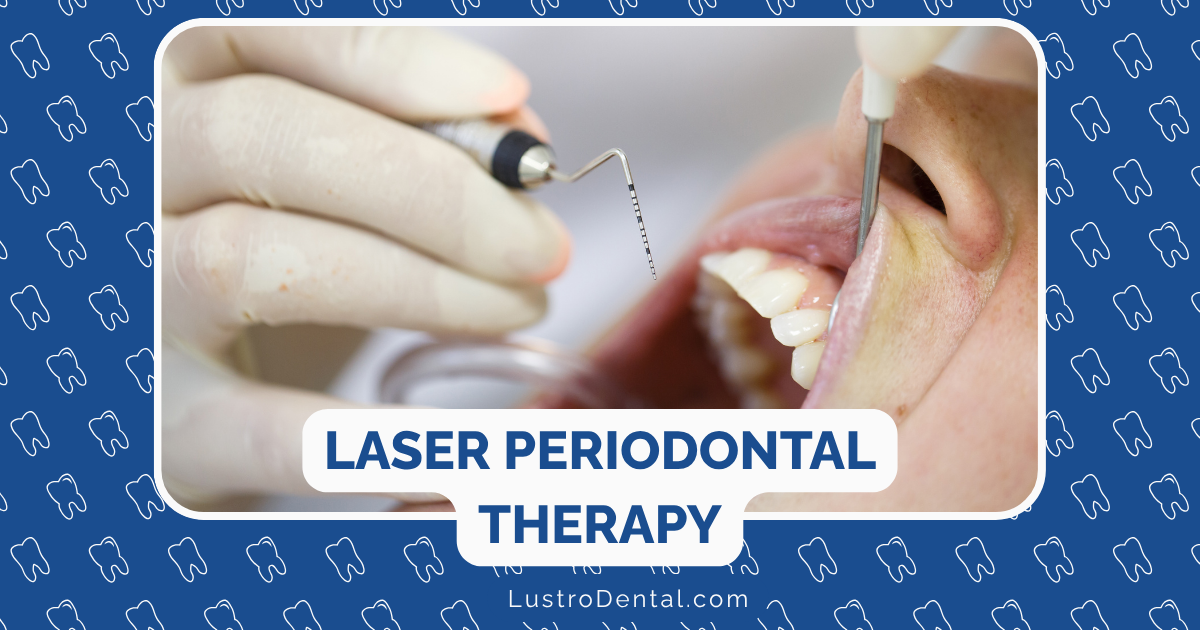
LANAP is an FDA-cleared laser protocol that treats moderate to severe periodontal disease using the PerioLase® MVP-7™ Nd:YAG laser. Unlike traditional surgery, LANAP doesn’t require cutting or suturing the gums.
The procedure works through a series of precisely sequenced steps:
Dr. Sarah Chen, a periodontist at Boston Periodontal Associates, explains: “What makes LANAP truly revolutionary is its selectivity. The laser energy is attracted to dark pigmented bacteria and diseased tissue, leaving healthy tissue untouched. This selectivity is what enables true regeneration rather than just repair.”
The effectiveness of LANAP isn’t just anecdotal—it’s backed by substantial clinical research. According to LANAP.com, the procedure is supported by:
A 2023 randomized controlled trial published in the Journal of Periodontology compared LANAP to traditional scaling and root planing (SRP) in 68 patients with periodontitis. The results were compelling:
Perhaps most impressive are the long-term outcomes. According to data from PS Dental Services, 98% of patients receiving LANAP therapy show no further disease progression after five years, compared to only 5% of patients who undergo traditional surgery.
Beyond the clinical benefits, LANAP is dramatically changing the patient experience of periodontal treatment.
Michael R., a 57-year-old patient who had previously undergone traditional periodontal surgery, describes the difference: “With traditional surgery, I was in significant pain for days, had extensive swelling, and couldn’t eat normally for weeks. With LANAP, I felt minimal discomfort during the procedure and was back to my normal routine the next day. The difference was night and day.”
This experience is typical. According to multiple studies, LANAP patients report:
Perhaps one of the most significant impacts of LANAP is on treatment acceptance. Research from LANAP.com indicates that 91% of patients accept treatment using the LANAP Protocol compared to just 33% for traditional osseous surgery.
Dr. Robert Williams, a periodontist who has performed both traditional surgery and LANAP for over a decade, notes: “Many patients who had been avoiding necessary treatment for years finally agree to proceed when LANAP is offered. The reduced anxiety, discomfort, and recovery time make it a much easier decision for patients who might otherwise continue to delay care until they’re facing tooth loss.”
| Factor | LANAP | Traditional Surgery |
| Procedure Time | 1-2 hours per quadrant | 2-4 hours per quadrant |
| Anesthesia | Local anesthesia only | Local anesthesia, sometimes sedation |
| Cutting/Sutures | None | Extensive cutting and suturing |
| Pain Level | Minimal to moderate | Moderate to severe |
| Bleeding | Minimal | Significant |
| Swelling | Minimal | Moderate to severe |
| Recovery Time | 24-48 hours | 2-4 weeks |
| Return to Work | Usually next day | Typically 2-7 days |
| Gum Recession | Minimal | Often significant |
| Tissue Regeneration | Promotes true regeneration | Primarily repair, not regeneration |
| Long-term Stability | 98% stable at 5 years | 5% stable at 5 years |
One of the most remarkable aspects of LANAP is its ability to stimulate true regeneration of the attachment apparatus—including new cementum, periodontal ligament, and alveolar bone. This has been confirmed through human histological studies, making LANAP the only laser protocol with FDA clearance for true periodontal regeneration.
Dr. Lisa Johnson, Director of Laser Dentistry at Northwestern University Dental School, explains the significance: “With traditional surgery, we’re primarily focused on removing disease and repairing damage. With LANAP, we’re actually creating an environment that allows the body to regenerate lost tissues. This represents a fundamental shift in how we approach periodontal disease—from management to true healing.”
The regenerative potential of LANAP is particularly valuable for:
While LANAP is effective for most patients with moderate to severe periodontitis, certain groups may find it particularly beneficial:
For those with dental phobias or anxiety about surgical procedures, LANAP offers a less intimidating alternative that still delivers excellent results.
Patients with conditions that affect healing or increase surgical risks (diabetes, cardiovascular disease, those on blood thinners) often experience better outcomes with the less invasive LANAP approach.
The minimal downtime associated with LANAP makes it ideal for patients who can’t afford extended recovery periods away from work or social obligations.
For patients who have delayed treatment due to fear of traditional surgery, LANAP provides an opportunity to address advanced disease before tooth loss occurs.
With its impressive 98% stability rate at five years, LANAP offers a more predictable long-term outcome than traditional approaches.
If you’re considering LANAP treatment, here’s what you can typically expect:
Jennifer L., a recent LANAP patient, shares her experience: “I was eating normally by the second day, with just some minor tenderness. Within a week, I couldn’t even tell I’d had the procedure done. My six-month follow-up showed my 8mm pockets had reduced to 3mm, and there was no bleeding when they checked. It was remarkable.”
The cost of LANAP typically ranges from $500 to $3,000 per quadrant, depending on the severity of disease and geographic location. While this may be comparable to or slightly higher than traditional surgery upfront, many patients find it more cost-effective long-term due to:
Many dental insurance plans now provide coverage for LANAP, though coverage levels vary. Most practices offer financing options to make this treatment accessible to more patients.
As LANAP continues to gain acceptance and more long-term data becomes available, we’re seeing several emerging trends:
Researchers are exploring the use of LANAP protocols for:
Combining LANAP with advanced diagnostics, growth factors, and other regenerative approaches is showing promise for enhanced outcomes.
As more periodontists and dentists receive training in LANAP, access to this treatment option continues to expand nationwide.
Dr. Michael Romano, President of the American Academy of Periodontology, notes: “We’re seeing a significant shift in the standard of care for moderate to severe periodontitis. While traditional surgical approaches still have their place, LANAP has fundamentally changed our approach to treatment planning and expanded our ability to save teeth that might previously have been deemed hopeless.”
The introduction of LANAP represents one of the most significant advancements in periodontal therapy in decades. By combining the precision of laser technology with a carefully sequenced protocol, LANAP delivers:
For patients facing decisions about periodontal treatment, LANAP offers a compelling alternative to traditional surgery—one that removes many of the barriers that have historically prevented patients from receiving needed care.
As with any medical procedure, LANAP isn’t appropriate for every situation, and consultation with a trained periodontist is essential to determine the best approach for your specific condition. However, for many patients with moderate to severe periodontitis, LANAP represents a revolutionary step forward in their journey toward renewed oral health and wellbeing.
Have you experienced LANAP treatment? Share your experience in the comments below.