🦷 General Care
✨ Treatments
👶 Family Care
💚 Wellness
💡 Resources

🦷 General Care
✨ Treatments
👶 Family Care
💚 Wellness
💡 Resources

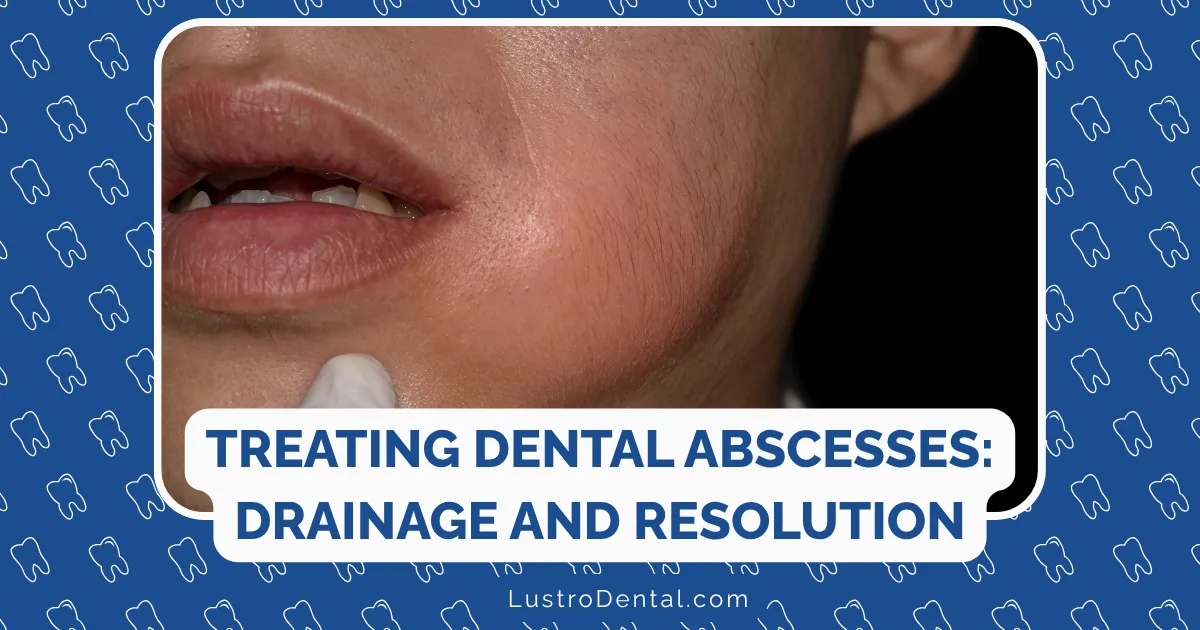
I still remember Mark, a patient who came into our office clutching his jaw, eyes watering from the pain of what turned out to be a severe dental abscess. “I’ve been putting this off for days,” he admitted. “I was scared of what might happen at the dentist.”
Mark’s fear is something I see regularly. The thought of having a dental abscess drained can trigger anxiety in even the bravest individuals. But understanding what happens during the treatment process can transform that fear into confidence—and more importantly, get you the relief you desperately need.
Before we dive into treatment, let’s understand what we’re dealing with. A dental abscess is a pocket of pus that forms due to bacterial infection. Think of it as your body’s way of containing an infection, creating a barrier around the bacteria while your immune system tries to fight it off.
Dental abscesses typically form in three main locations:
Regardless of the type, the symptoms are hard to ignore: throbbing pain, facial swelling, sensitivity to temperature, bad taste in your mouth, fever, and sometimes difficulty swallowing or breathing if the infection spreads.
Your body may sometimes resolve very minor infections on its own, but dental abscesses almost always require professional intervention. According to the Mayo Clinic, the primary goal of treatment is to eliminate the infection completely.
You need drainage and treatment when you experience:
Don’t wait until these symptoms become severe. Early intervention means simpler treatment and faster recovery.
Let me walk you through exactly what happens during an abscess drainage procedure, so you’ll know what to expect if you ever need one:
Your dentist will first examine the area, likely take X-rays, and assess the extent of the infection. This helps determine the best approach for drainage and whether additional treatments like root canal therapy or extraction might be necessary.
Despite what many fear, the drainage procedure itself shouldn’t be painful. Your dentist will thoroughly numb the area with local anesthesia. If you’re particularly anxious, sedation options might also be available.
Dr. Parrella, a dental specialist, explains that ensuring patient comfort through proper anesthesia is a critical first step in the procedure.
Once you’re comfortably numb, your dentist will:
For larger or more complex abscesses, your dentist might place a small rubber drain to keep the area open and allow continued drainage over the next few days. This drain is usually secured with a stitch and will be removed at a follow-up appointment.
Drainage alone isn’t enough—the underlying cause must be treated to prevent recurrence. Depending on your situation, this might involve:
Recovery from a dental abscess drainage procedure happens in stages:
According to Lehman & Menis Oral Surgery, it’s important to keep your head elevated with two to three pillows during the first couple of days to help reduce swelling.
To support healing and minimize discomfort:
While some discomfort is expected during recovery, certain symptoms warrant immediate attention. Contact your dentist if you experience:
Once you’ve experienced a dental abscess, you’ll likely be motivated to prevent another one. Here’s how:
A dental abscess is a serious condition that requires prompt professional treatment. While the thought of drainage might seem intimidating, remember that this procedure provides immediate relief and is the crucial first step toward healing.
Mark, the patient I mentioned earlier, was amazed at how quickly he felt better after his abscess was drained. “I wish I hadn’t waited so long,” he told me at his follow-up appointment. “The procedure wasn’t nearly as bad as I’d imagined, and the relief was almost immediate.”
If you’re experiencing symptoms of a dental abscess, don’t let fear keep you from seeking care. The discomfort of treatment is temporary, but the relief is lasting—and necessary to protect your overall health.
Have you experienced a dental abscess? What was your treatment experience like? Share your story in the comments to help others who might be facing similar situations.
With proper anesthesia, you shouldn’t feel pain during the procedure itself. You might feel pressure or movement, but the area will be numb. After the anesthesia wears off, some discomfort is normal, but it’s typically much less than the pain of the untreated abscess.
The actual drainage procedure usually takes about 15-30 minutes, though your entire appointment may be longer to allow for examination, X-rays, and discussion of follow-up care.
If the underlying cause is properly addressed (through root canal, extraction, or periodontal treatment), the abscess shouldn’t return. However, if you develop new decay or gum disease in other areas, new abscesses could form.
Your dentist will evaluate the extent of damage to the tooth and its supporting structures. Generally, if enough healthy tooth structure remains and the infection can be completely removed, a root canal may save the tooth. If the damage is too extensive, extraction might be recommended.
According to Healthline, proper follow-up care is essential to ensure the infection is completely resolved and to prevent recurrence.