🦷 General Care
✨ Treatments
👶 Family Care
💚 Wellness
💡 Resources

🦷 General Care
✨ Treatments
👶 Family Care
💚 Wellness
💡 Resources
For millions of Americans, dental care remains an elusive necessity. With nearly 70 million people lacking dental insurance and many more underinsured, the gap between needing dental care and affording it continues to widen. This reality forces many to postpone treatment until pain becomes unbearable, often resulting in more extensive and expensive procedures—or worse, permanent damage to their oral health.
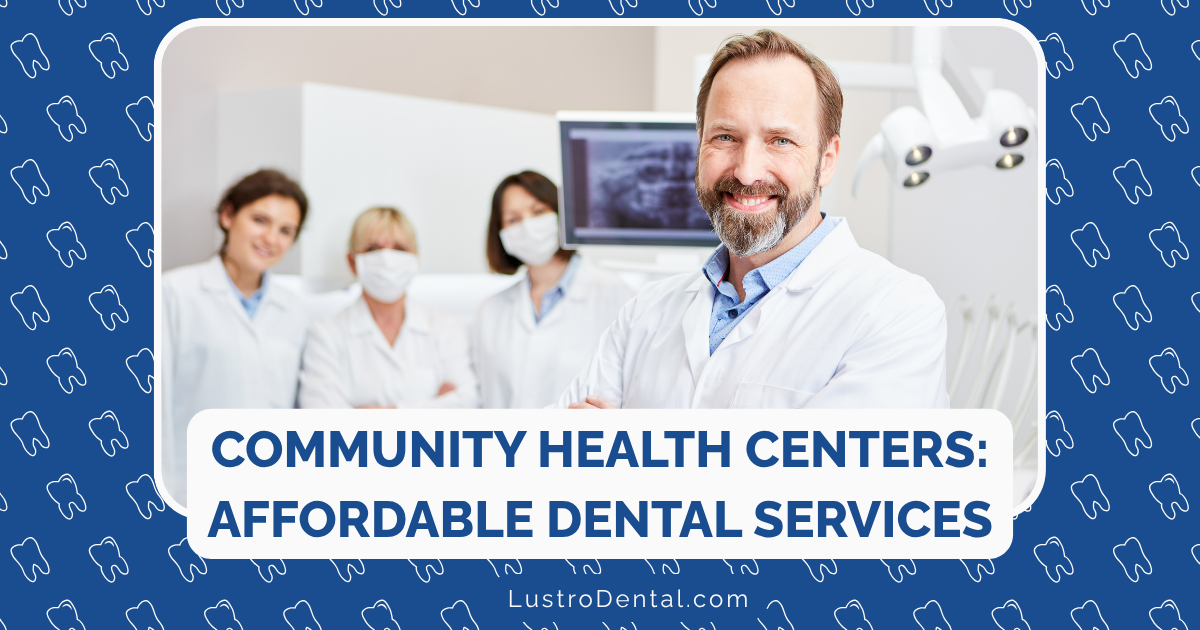
Fortunately, a nationwide network of Community Health Centers provides a vital solution for those struggling to afford dental care. These centers, particularly Federally Qualified Health Centers (FQHCs), offer quality dental services at significantly reduced rates, making essential oral healthcare accessible to those who need it most.
Community Health Centers are non-profit, community-based healthcare providers that deliver comprehensive, culturally competent, high-quality primary healthcare services. Federally Qualified Health Centers (FQHCs) are a specific type of community health center that receives funding from the Health Resources and Services Administration (HRSA) to provide care in underserved areas.
According to the National Association of Community Health Centers, these centers serve more than 31 million people across the United States, including:
What sets these centers apart is their mission to provide care to everyone, regardless of their ability to pay, insurance status, or immigration status.
Most FQHCs provide a comprehensive range of dental services designed to address both preventive care and treatment needs. Services typically include:
It’s important to note that service availability varies by location. While all centers offer basic preventive and emergency services, more specialized treatments may only be available at larger centers or those with dental specialists on staff.
The cornerstone of affordability at Community Health Centers is the sliding fee scale—a payment system that adjusts the cost of services based on a patient’s ability to pay. This approach ensures that financial circumstances don’t prevent anyone from receiving necessary dental care.
The sliding fee scale is based on two primary factors:
Centers typically organize their fee structure into categories based on Federal Poverty Guidelines (FPG), which are updated annually. For 2024, the poverty guideline for an individual is $15,060, and for a family of four, it is $31,200.
A typical sliding fee scale structure might look like this:
| Income Level (% of Federal Poverty Guidelines) | Discount Level | Example: Cleaning Cost |
| ≤ 100% FPG | 80-100% discount | $0-20 |
| 101-125% FPG | 60-80% discount | $20-40 |
| 126-150% FPG | 40-60% discount | $40-60 |
| 151-175% FPG | 20-40% discount | $60-80 |
| 176-200% FPG | 10-20% discount | $80-90 |
| > 200% FPG | No discount (full fee) | $100 |
According to the Health Resources & Services Administration, health centers must provide a full discount to individuals and families with annual incomes at or below 100% of the Federal Poverty Guidelines, with partial discounts available for those with incomes between 101% and 200% of the FPG.
Finding a Community Health Center that offers dental services is straightforward with these resources:
The most comprehensive resource is the HRSA Find a Health Center tool, which allows you to:
Each state has a Primary Care Association (PCA) that supports community health centers. These associations often maintain directories of centers in their state, including information about dental services. For example, the North Carolina Community Health Center Association represents 43 community health center organizations across the state.
Your local health department can provide information about community health centers in your area. Many health departments maintain lists of low-cost dental providers, including FQHCs.
Dialing 2-1-1 connects you to a helpline that can provide information about health and human services in your area, including community health centers offering dental services.
Understanding what to expect when visiting a Community Health Center for dental services can help ease any anxiety about the process.
Most centers require appointments for dental services. Some centers may have waiting lists for new patients, so it’s advisable to call well in advance of when you need care.
To determine your eligibility for the sliding fee scale, you’ll typically need to bring:
Many centers allow you to download and complete forms before your visit to save time. Check the center’s website or ask when you call for an appointment.
Your first visit will include a registration process where staff will:
According to Family First Health, this process typically involves reviewing your documentation and calculating your discount based on the center’s sliding fee scale.
Your initial dental visit typically includes:
After your examination, the dental provider will:
Many people wonder about the quality of care at Community Health Centers. It’s important to note that these centers:
In fact, studies have shown that the quality of care at FQHCs is comparable to that of private practices, with high patient satisfaction rates.
Community Health Centers accept most forms of insurance, including:
Even if you have insurance, you may still qualify for the sliding fee scale for services not covered by your insurance or to help with copays and deductibles.
For those without insurance or with remaining balances after insurance, Community Health Centers typically offer:
According to Community Health Center, Inc., many centers offer payment plans for patients unable to pay their account balance in full.
One of the unique advantages of Community Health Centers is their integrated approach to healthcare. Most centers offer medical, behavioral health, and dental services under one roof, allowing for coordinated care that addresses the connection between oral health and overall health.
This integrated model is particularly beneficial for patients with chronic conditions like diabetes, which can significantly impact oral health. By facilitating communication between dental providers and primary care physicians, Community Health Centers can provide more comprehensive care.
Many Community Health Centers offer specialized programs for specific populations with unique dental needs:
The impact of Community Health Centers on dental health can be profound. Consider these examples:
Maria, a single mother of three, had been suffering from severe tooth pain for months but couldn’t afford to see a dentist. Through her local FQHC, she qualified for the sliding fee scale and received a root canal for just $75—a procedure that would have cost over $1,000 at a private practice. With her pain resolved, she was able to return to work and properly care for her children.
James, a 67-year-old retiree on a fixed income, had gone years without dental care after losing his employer-sponsored insurance. At his local Community Health Center, he received a comprehensive exam, cleaning, and denture repair for less than $100. The center also helped him establish a regular schedule of preventive care to avoid more serious issues in the future.
The Rodriguez family, new immigrants to the United States without insurance, found comprehensive dental care for their entire family at a Community Health Center. The parents received necessary fillings and cleanings, while their children benefited from preventive sealants and fluoride treatments—all at costs adjusted to their income level.
While Community Health Centers provide invaluable dental services, it’s important to acknowledge some challenges:
Due to high demand, some centers have waiting lists for new patients or longer waits between appointments. For non-emergency services, you may need to schedule appointments weeks or months in advance.
Not all centers offer comprehensive dental services. Some may focus primarily on preventive care and basic treatments, referring patients elsewhere for specialized procedures.
Although there are over 1,400 Community Health Centers nationwide, some rural areas may still have limited access, requiring patients to travel significant distances for care.
As non-profit organizations reliant on federal funding and grants, Community Health Centers may face resource limitations that affect service availability.
To maximize the benefits of dental services at Community Health Centers:
Don’t wait until you’re in pain to seek dental care. Schedule regular preventive visits to avoid more serious and costly problems.
Inquire about all available services, costs, payment options, and any assistance programs for which you might qualify.
Complete recommended treatments and follow home care instructions to maintain your dental health between visits.
Many centers actively seek patient feedback to improve their services. Share your experiences—both positive and negative—to help centers better serve their communities.
Many people aren’t aware of the affordable dental services available at Community Health Centers. Share information with friends, family, and community members who might benefit.
Community Health Centers represent one of our healthcare system’s most effective responses to the dental care access crisis. By providing quality, affordable dental services regardless of ability to pay, these centers help bridge the gap between needing care and receiving it.
If you’re struggling to afford dental care, a Community Health Center may offer the solution you need. With their sliding fee scales, comprehensive services, and commitment to serving all community members, these centers provide a pathway to better oral health and, by extension, improved overall health and quality of life.
Don’t let financial constraints prevent you from maintaining your dental health. Explore the Community Health Center options in your area and take the first step toward affordable, accessible dental care.
Have you received dental care at a Community Health Center? Share your experience in the comments below to help others navigating their dental care options.