🦷 General Care
✨ Treatments
👶 Family Care
💚 Wellness
💡 Resources

🦷 General Care
✨ Treatments
👶 Family Care
💚 Wellness
💡 Resources

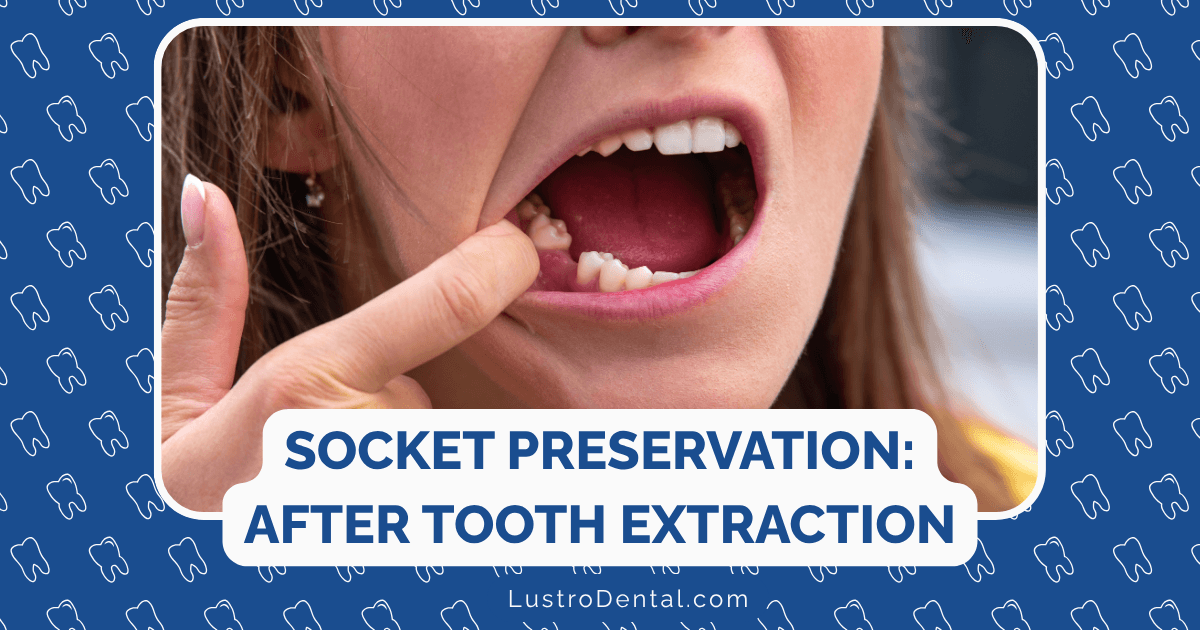
When John came to our office needing a tooth extraction, his main concern wasn’t the procedure itself but what would happen afterward. “I might want an implant in the future,” he told me, “but I’ve heard you can lose bone after an extraction. Is there anything we can do to prevent that?”
John’s question highlights a critical concern in modern dentistry. When a tooth is extracted, the body naturally begins to resorb the surrounding bone—a process that can significantly complicate future implant placement. Fortunately, a procedure called socket preservation can help maintain that precious bone structure, keeping options open for optimal tooth replacement.
In this comprehensive guide, we’ll explore socket preservation—what it is, why it matters, how it’s performed, and what you can expect if you’re considering this procedure.
When a tooth is removed, it leaves behind an empty socket in the alveolar bone (the specialized bone that surrounds and supports our teeth). What many people don’t realize is that this bone exists primarily to support teeth—and when a tooth is gone, the body considers that bone unnecessary.
Research published in the Journal of Dental Research reveals the timeline of bone loss after extraction:
Dr. Sarah Johnson of the American Academy of Periodontology explains: “The most rapid bone loss occurs in the first three months after extraction. This initial remodeling can dramatically change the shape of the ridge, often creating a concavity that makes implant placement challenging or even impossible without additional grafting procedures.”
This bone loss creates several potential problems:
As Dr. Michael Chen of Mayo Clinic notes, “Prevention is always more predictable than reconstruction. Socket preservation allows us to maintain the natural dimensions of the jaw, creating an optimal foundation for future restorative options.”
Socket preservation (also called ridge preservation or alveolar ridge preservation) is a procedure performed at the time of tooth extraction to maintain the bone that would otherwise be lost.
The procedure involves:
This approach helps maintain both the width and height of the bone, creating an ideal environment for future implant placement.
Several types of graft materials can be used for socket preservation, each with its own advantages and considerations:
Source: Harvested from another site in your body, typically the chin, ramus (back part of lower jaw), or hip
Advantages:
Considerations:
Source: Cadaver bone processed through tissue banks under strict FDA regulations
Advantages:
Considerations:
Source: Typically bovine (cow) or porcine (pig) bone processed to remove all organic components
Advantages:
Considerations:
Source: Laboratory-created materials, typically calcium phosphates or bioactive glass
Advantages:
Considerations:
According to research published in the International Journal of Oral & Maxillofacial Implants, all these materials can effectively preserve socket dimensions, though they work through slightly different biological mechanisms.
Dr. Robert Wilson, a researcher at the National Institute of Dental and Craniofacial Research, explains: “The ideal graft material depends on the specific clinical situation and patient preferences. In many cases, combinations of materials may provide optimal results by leveraging the advantages of each.”
If you’re scheduled for a tooth extraction with socket preservation, here’s what you can expect during the procedure:
The entire procedure typically takes 30-60 minutes, depending on the complexity of the extraction and the specific preservation technique used.
Understanding the healing process can help set appropriate expectations:
Dr. Lisa Rodriguez of the American Academy of Implant Dentistry notes: “The timeline can vary based on individual factors like age, health status, and the specific materials used. Some patients may be ready for implant placement as early as 3-4 months, while others may benefit from a longer healing period.”
In some cases, dentists may recommend placing an implant at the same time as extraction rather than performing socket preservation. This approach, called immediate implant placement, has specific indications and considerations:
A study in the International Journal of Oral and Maxillofacial Surgery found that both approaches can yield excellent results when properly selected for the appropriate clinical situation.
Socket preservation does add some cost and complexity to a tooth extraction, leading many patients to wonder if it’s truly necessary. Consider these benefits when making your decision:
Socket preservation keeps your restorative options open. Without it, bone loss may eliminate the possibility of an ideal implant placement, forcing compromises in the final restoration.
While socket preservation adds cost to the extraction procedure, it’s typically much less expensive than the bone augmentation procedures that might be needed later if significant resorption occurs.
Placing an implant in a preserved socket is generally more straightforward, requiring less surgical time and potentially fewer complications than placing an implant in a resorbed ridge.
Even if you choose a bridge or removable prosthesis rather than an implant, a preserved ridge creates a more natural appearance without the collapsed look that often occurs after bone loss.
Many patients report peace of mind knowing they’ve taken steps to maintain their options, even if they’re not ready for an implant immediately.
While socket preservation offers significant benefits, it’s not necessary or appropriate in every situation. Consider these factors when discussing options with your dental provider:
Remember John from the beginning of our article? He opted for socket preservation when his molar was extracted. Six months later, when he decided to proceed with an implant, the site had maintained excellent bone volume and density.
“The extra step at the time of extraction made a huge difference,” John shared. “My dentist showed me X-rays of what typically happens without preservation, and I’m glad I didn’t have to deal with the additional procedures that would have been needed to rebuild the bone.”
John’s implant was placed in a straightforward procedure with excellent primary stability, and he now has a fully functional restoration that’s indistinguishable from a natural tooth.
Socket preservation represents a proactive approach to maintaining your oral health options after tooth extraction. By preserving the bone that would otherwise be lost, this relatively simple procedure can save time, expense, and discomfort down the road.
As Dr. Wilson puts it, “Socket preservation is essentially an investment in your future oral health. It’s much easier to maintain bone than to try to rebuild it later.”
If you’re facing a tooth extraction, discuss socket preservation with your dental professional to determine if it’s appropriate for your specific situation. This conversation is particularly important if you’re considering an implant—either immediately or in the future—or if the extraction site is in an aesthetically significant area.
By understanding your options and making informed decisions, you can ensure the best possible foundation for whatever tooth replacement option you ultimately choose.
Have you undergone socket preservation or are you considering it? Share your questions or experiences in the comments below to help others making similar decisions.
The cost typically ranges from $200-$500 per site, depending on the materials used and the complexity of the case. Some dental insurance plans provide partial coverage, especially when the extraction is covered.
Most patients can receive an implant 4-6 months after socket preservation. The exact timeline depends on individual healing factors, the graft material used, and the quality of bone needed for the specific implant planned.
Most patients report minimal discomfort after socket preservation, similar to or slightly more than a standard extraction. The discomfort is typically well-managed with over-the-counter pain relievers.
Without preservation, the body naturally resorbs bone from the extraction site, potentially creating both functional and aesthetic problems. The ridge may lose up to 50% of its width within 6 months, often necessitating more extensive grafting procedures before implant placement.
While generally very successful, factors that can compromise results include infection, poor oral hygiene, smoking, certain medical conditions, and dislodgement of the graft material. Following post-operative instructions carefully helps ensure optimal outcomes.