🦷 General Care
✨ Treatments
👶 Family Care
💚 Wellness
💡 Resources

🦷 General Care
✨ Treatments
👶 Family Care
💚 Wellness
💡 Resources

If you’re on a periodontal maintenance plan, you’ve already taken an important step in managing gum disease—a chronic condition that requires ongoing care. While the standard recommendation is often a cleaning every three to four months, this one-size-fits-all approach doesn’t always address the dynamic nature of periodontal health.
As someone who has worked with countless periodontal patients, I’ve seen how maintenance needs can change over time. Some patients require more frequent visits, while others might eventually extend their intervals. The key is recognizing when your current maintenance schedule isn’t meeting your needs.
In this article, I’ll share the warning signs that your periodontal maintenance plan may need adjustment, helping you protect your oral health and your investment in treatment.
Before we dive into the signs that your plan needs adjustment, let’s quickly review what periodontal maintenance aims to accomplish:
Dr. Joan Otomo-Corgel, former president of the American Academy of Periodontology, explains: “Periodontal maintenance isn’t just about cleaning—it’s an ongoing therapeutic intervention designed to manage a chronic disease and prevent its progression.”
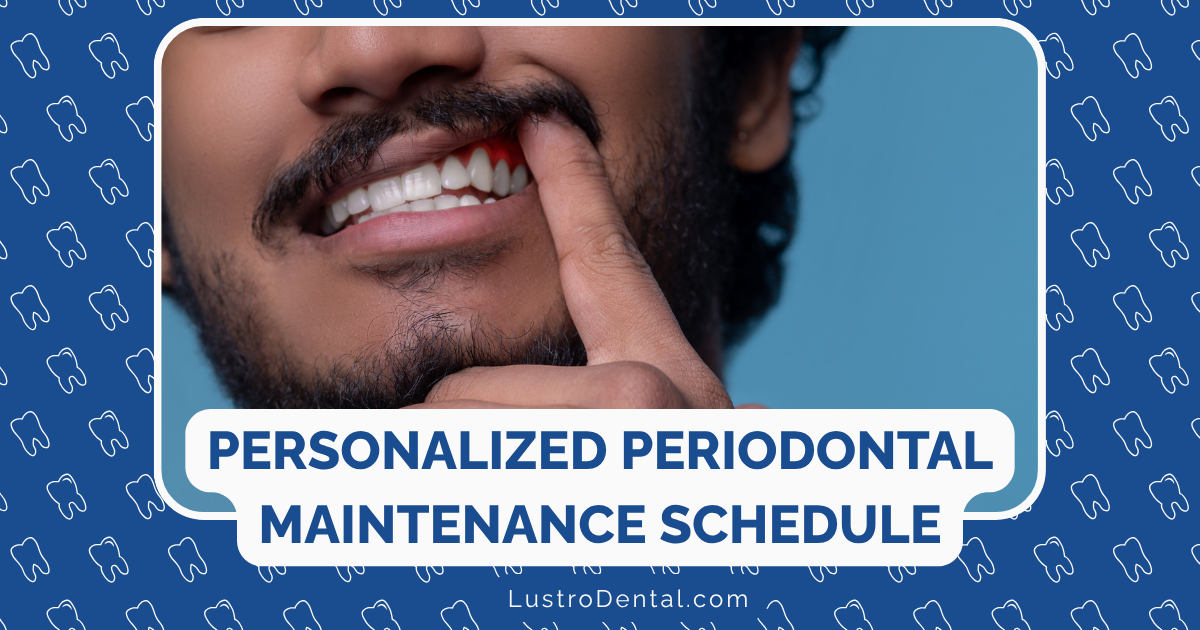
Perhaps the most obvious sign that your current maintenance schedule isn’t sufficient is bleeding gums, particularly if it:
According to a 2025 study published in the Journal of Periodontology, bleeding on probing remains one of the most reliable indicators of active inflammation and disease progression.
What it means: Bleeding indicates active inflammation, suggesting that the current interval between maintenance visits may be allowing bacterial colonies to reestablish and trigger an inflammatory response before your next appointment.
During each maintenance visit, your dental professional should measure the depth of the spaces between your teeth and gums (periodontal pockets). Increasing measurements are a red flag:
What it means: Deepening pockets indicate active disease progression and potential attachment loss. This suggests your current maintenance frequency may not be adequately controlling bacterial growth and inflammation.
While occasional bad breath happens to everyone, persistent issues may signal problems:
What it means: These symptoms often indicate bacterial overgrowth in periodontal pockets, suggesting your current maintenance interval may be allowing pathogenic bacteria to reach problematic levels between visits.
Your gums’ appearance can provide important clues about your periodontal health:
Dr. Michael Wilson, periodontist at Mayo Clinic, notes: “Visual changes in the gingival tissues often precede more serious clinical signs. Patients who notice these changes should bring them to their dental professional’s attention promptly.”
What it means: These visual changes typically indicate inflammation and potential disease activity, suggesting your maintenance interval may need to be shortened.
Changes in how your teeth feel or fit together warrant immediate attention:
What it means: These changes often indicate ongoing bone loss and disease progression, suggesting your current maintenance plan isn’t adequately controlling the disease.
If you notice patterns in how your gums respond to maintenance visits, pay attention:
What it means: These patterns may indicate that your current maintenance interval is too long, allowing disease activity to resume before your next appointment.
Your periodontal disease risk isn’t static—it can change based on various factors:
A 2025 article in MyPerioPro highlighted that individuals with risk factors such as smoking, diabetes, or genetic predispositions should have more frequent monitoring, potentially every three to four months, compared to the annual check for those without such risk factors.
What it means: Changes in risk factors may necessitate adjustments to your maintenance frequency, even if you haven’t yet seen clinical signs of disease progression.
Your ability to perform effective home care is a critical factor in periodontal health:
What it means: If your ability to maintain effective home care diminishes, more frequent professional maintenance may be necessary to compensate.
The traditional three to four-month recall interval isn’t arbitrary—it’s based on research about bacterial recolonization and disease progression. However, studies also show that maintenance needs vary significantly between individuals.
A longitudinal study published in PubMed in 2025 found that:
This research supports the idea that maintenance frequency should be tailored to individual risk profiles and adjusted based on clinical response.
Consider discussing more frequent maintenance if you:
According to Dimensions of Dental Hygiene, some high-risk patients may benefit from maintenance visits as frequent as every 2-3 months.
On the other hand, your maintenance interval might potentially be extended if:
Research indicates that some patients with stable conditions may maintain periodontal health with visits as infrequent as every 6-12 months, though this should only be considered after a period of demonstrated stability.
If you’re concerned that your maintenance plan may need adjustment, here’s how to address it:
Keep a simple log of symptoms like bleeding, discomfort, or bad breath between visits. Note when they occur relative to your last maintenance appointment.
Request your pocket depth measurements at each visit and keep track of changes over time. Understanding your own data empowers you to participate in treatment decisions.
Have an open conversation about how changes in your health, medications, or lifestyle might be affecting your periodontal status.
If you’re consistently experiencing problems despite maintenance and good home care, consider consulting with a periodontist (gum specialist) for an evaluation.
While insurance typically covers periodontal maintenance, it may limit the number of covered visits per year. Discuss with your dental team how to optimize coverage while meeting your health needs.
Dr. Sarah Johnson, periodontist at University of California, San Francisco, advises: “Don’t let insurance dictate your health needs. If more frequent maintenance is clinically indicated, consider it an investment in preventing more costly treatments down the road.”
Modern periodontal care is moving toward more personalized approaches based on risk assessment. According to a 2025 article in Decisions in Dentistry, risk-based recare intervals (RBRIs) are becoming the standard of care.
This approach considers:
The result is a truly personalized maintenance schedule that might include:
Patient profile: 58-year-old male with controlled Type 2 diabetes and history of moderate periodontitis.
Initial plan: Periodontal maintenance every 4 months.
Warning signs: Persistent bleeding in posterior areas and increasing pocket depths in molar regions despite good home care.
Adjustment: Increased to every 3 months with focused attention on problem areas.
Outcome: Stabilization of disease with no further progression after one year on the adjusted schedule.
Patient profile: 42-year-old female with history of severe periodontitis, now stable.
Initial plan: Periodontal maintenance every 3 months.
Warning signs: Localized deep pocket and bleeding around one implant, while natural teeth remained stable.
Adjustment: Maintained 3-month interval but added specialized implant maintenance protocol and local antimicrobial treatment.
Outcome: Resolution of implant inflammation and maintenance of stability throughout the mouth.
Patient profile: 35-year-old male, former smoker, history of moderate periodontitis.
Initial plan: Periodontal maintenance every 3 months.
Progress: After two years of perfect stability, excellent home care, and no bleeding on probing.
Adjustment: Gradual extension to 4-month intervals with close monitoring.
Outcome: Maintained stability with the extended interval, reducing annual costs while preserving health.
The goal of periodontal maintenance isn’t just to clean your teeth—it’s to preserve them for a lifetime by preventing disease progression. Being attentive to the warning signs that your current plan needs adjustment can help you achieve this goal more effectively.
Remember that periodontal disease is a chronic condition with periods of activity and remission. Your maintenance needs may change over time, and that’s normal. The key is working with your dental team to recognize these changes and adapt accordingly.
By understanding the signs that your maintenance plan needs adjustment and advocating for personalized care, you’re taking control of your oral health and making the most of your investment in periodontal treatment.