🦷 General Care
✨ Treatments
👶 Family Care
💚 Wellness
💡 Resources

🦷 General Care
✨ Treatments
👶 Family Care
💚 Wellness
💡 Resources

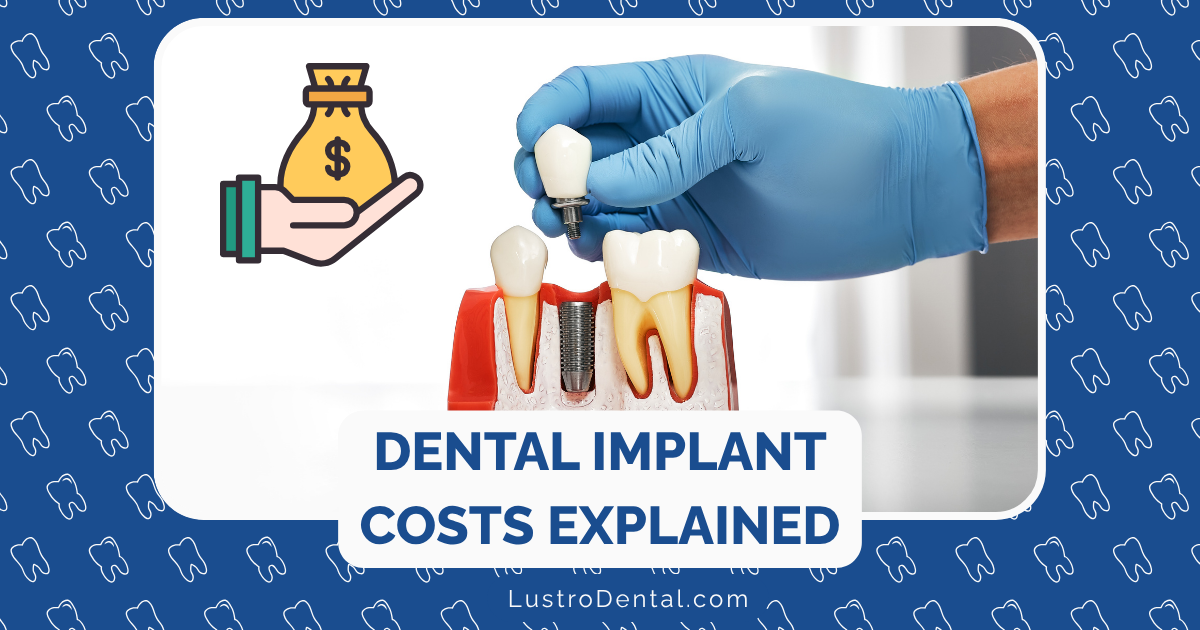
If you’re considering dental implants to replace missing teeth, you’ve likely discovered that they represent a significant financial investment. While the upfront cost may cause initial sticker shock, understanding exactly what you’re paying for—and the long-term value implants provide—can help you make an informed decision about this life-changing dental treatment.
As someone who’s helped many patients navigate the financial aspects of dental care, I believe transparency about costs is essential. In this comprehensive guide, I’ll break down the real costs of dental implants in 2025, explain the factors that influence pricing, explore payment options, and help you understand why implants—despite their higher initial cost—often represent the best long-term value for tooth replacement.
Let’s start with the bottom line—what can you expect to pay for dental implants this year? While costs vary based on numerous factors (which we’ll explore in detail), here are the current national averages:
Average total cost: $3,000-$5,800
This typically includes:
Average cost for 2-3 teeth: $6,000-$10,000+
For replacing several adjacent teeth, options include:
Traditional approach (6-8 implants per arch): $20,000-$45,000 per arch
All-on-4® or similar (4-6 implants supporting a full arch): $24,000-$50,000 per arch
Full mouth reconstruction (both arches): $40,000-$80,000
Dr. Sarah Johnson, a prosthodontist at the American College of Prosthodontists, notes: “While these figures represent national averages, I always emphasize to patients that costs can vary significantly based on their specific case, the practice location, and the expertise of their provider.”
A dental implant is not a single product but rather a complete treatment system involving multiple components and procedures. Here’s what’s typically included in the quoted price:
According to the American Academy of Implant Dentistry, these components represent the standard package for implant treatment. However, it’s crucial to confirm exactly what’s included in any quote you receive, as some practices may itemize these differently.
Many patients require supplementary procedures that can significantly impact the total investment:
Average cost: $150-$350 per tooth (simple extraction) Surgical extraction: $250-$500 per tooth
If you still have damaged teeth in the implant site, they’ll need to be removed before implant placement.
Average cost: $300-$3,000 (depending on extent and material used)
Necessary when there isn’t sufficient bone volume to support an implant. The cost varies based on:
Average cost: $1,500-$5,000
Required for upper jaw implants when there isn’t enough bone height between the jaw and sinus cavity.
Average cost: $700-$1,500 per site
Sometimes needed to ensure adequate gum tissue around the implant for aesthetics and health.
Average cost: $300-$500
Advanced imaging beyond standard X-rays is often essential for precise implant planning.
Dr. Michael Chen, an oral surgeon, explains: “These additional procedures aren’t merely optional extras—they’re often essential for creating the proper foundation for successful implants. Without them, the long-term success of the implant could be compromised.”
Understanding what drives pricing can help you evaluate quotes and make informed decisions:
Dental implant costs vary significantly based on region:
This variation reflects differences in overhead costs, local competition, and regional economic factors.
Specialists (oral surgeons, periodontists, prosthodontists) typically charge more than general dentists, but bring specialized training and experience. According to the Journal of the American Dental Association, implant success rates are correlated with provider experience and specialized training.
Premium options that may increase costs include:
Different manufacturers offer varying price points:
Factors that increase complexity and cost include:
Practices with luxurious facilities, the latest technology, and extensive support staff typically charge more than no-frills clinics. However, these amenities often translate to a more comfortable patient experience and access to advanced treatment options.
Few patients pay for implant treatment entirely out-of-pocket. Here are the primary ways to manage the investment:
While traditional dental insurance often provides limited coverage for implants, this is changing:
According to the National Association of Dental Plans, approximately 23% of dental plans now offer some form of implant coverage, up from just 10% a decade ago.
These tax-advantaged accounts can significantly reduce your effective cost:
Several options make payments more manageable:
Many practices offer their own financing options:
Dr. Lisa Rodriguez, a financial coordinator at a dental implant center, advises: “Don’t be afraid to discuss financial concerns with your provider. Many practices are willing to work with you to create a payment solution that fits your budget while still delivering the care you need.”
To truly understand the value proposition of dental implants, it’s helpful to compare them with other tooth replacement options:
Initial cost: $2,000-$5,000 for a three-unit bridge Lifespan: 7-15 years Replacement frequency: Typically 2-3 times over 20 years Additional costs: Potential damage to adjacent teeth, increased risk of decay 20-year cost estimate: $6,000-$15,000+
Initial cost: $1,500-$3,000 Lifespan: 5-7 years Replacement frequency: 3-4 times over 20 years Additional costs: Adjustments, repairs, potential bone loss 20-year cost estimate: $4,500-$12,000+
Initial cost: $1,500-$6,000 per arch Lifespan: 5-10 years Replacement frequency: 2-4 times over 20 years Additional costs: Adhesives, relines, repairs, accelerated bone loss 20-year cost estimate: $3,000-$24,000+
Initial cost: $3,000-$5,800 per tooth Lifespan: 20+ years to lifetime with proper care Replacement frequency: Crown may need replacement after 10-15 years Additional costs: Occasional adjustments, potential abutment replacement 20-year cost estimate: $3,500-$7,000 per tooth
A 2024 study in the Journal of Prosthetic Dentistry found that while implants have a higher initial cost, their longer lifespan and reduced maintenance needs often make them more economical over a 15+ year period compared to traditional options.
The true value of dental implants extends far beyond the financial investment:
Dr. Robert Garcia, a prosthodontist with 20 years of experience, observes: “When patients focus solely on the initial cost, they miss the bigger picture. Implants aren’t just about replacing a tooth—they’re about restoring function, preserving bone, and improving quality of life for decades to come.”
While seeking value is important, be wary of deals that seem too good to be true:
Dr. James Wilson, an implant specialist, cautions: “I’ve seen many patients who initially chose the lowest-cost option, only to end up spending significantly more to correct problems or completely redo the work. Quality implant treatment isn’t inexpensive, but cutting corners often leads to greater costs—both financial and health-related—down the road.”
To ensure you understand exactly what you’re investing in, ask your provider these key questions:
Sometimes hearing from others who’ve been through the process provides valuable perspective:
“I initially balked at the $4,200 cost for my implant, but five years later, I’ve had zero issues while my husband has had to replace his bridge twice at $3,000 each time. My ‘expensive’ option turned out to be the better value.” — Sarah, 58
“I chose to finance my All-on-4 treatment over 60 months. The $450 monthly payment seemed high at first, but when I realized I was investing in something I use every day, multiple times a day, it put things in perspective. My only regret is not doing it sooner.” — Michael, 62
“After getting quotes ranging from $2,800 to $5,500 for the same implant, I learned to ask exactly what was included. The lowest quote didn’t include the crown or necessary bone graft, while the highest included everything plus IV sedation. The middle option ended up being the best value for my situation.” — Jennifer, 45
Dental implants represent a significant financial commitment—there’s no denying that fact. However, when viewed as a long-term investment in your health, function, and quality of life, they often provide the greatest value among tooth replacement options.
By understanding the true costs involved, the factors that influence pricing, and the various ways to manage the investment, you can make an informed decision that balances your budget with your oral health needs.
Remember that the “best” option isn’t always the least expensive upfront, nor is it necessarily the most costly. The right choice is the one that provides quality care at a fair price, delivered by a qualified provider who stands behind their work.
If you’re considering dental implants, take the time to research providers, get multiple opinions and quotes, ask detailed questions about what’s included, and explore all available financing options. This due diligence will help ensure that your investment yields the best possible returns in terms of comfort, function, aesthetics, and long-term oral health.
Have you had dental implants or are you considering them? We’d love to hear about your experience with the financial aspects of treatment in the comments below!