🦷 General Care
✨ Treatments
👶 Family Care
💚 Wellness
💡 Resources

🦷 General Care
✨ Treatments
👶 Family Care
💚 Wellness
💡 Resources

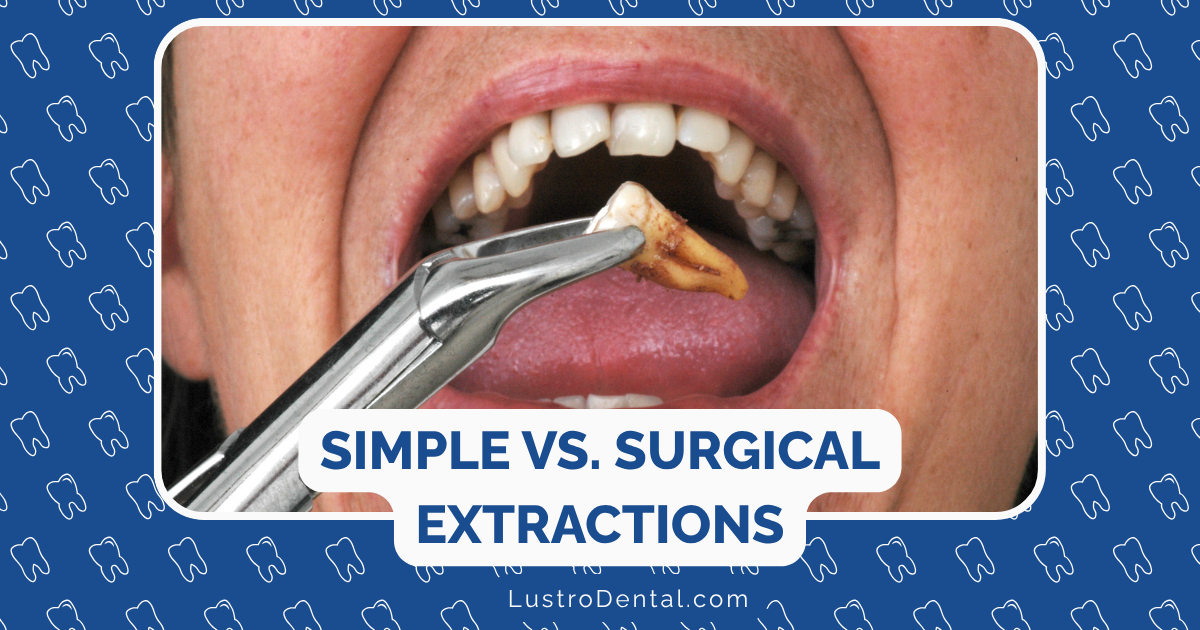
Having a tooth extracted isn’t anyone’s idea of a good time. But understanding what to expect can make the experience much less daunting. As someone who’s guided countless patients through dental procedures, I’ve seen firsthand how knowledge empowers people and reduces anxiety.
In this guide, we’ll explore the key differences between simple and surgical extractions—from the initial procedure to recovery time—so you can approach your treatment with confidence rather than fear.
The terms “simple” and “surgical” aren’t about how easy or difficult the procedure might be. Rather, they describe the specific techniques your dentist needs to use based on your tooth’s condition and position.
A simple extraction is performed on teeth that are fully visible in your mouth and can be grasped with dental instruments. These teeth typically have:
During a simple extraction, your dentist will:
The entire process often takes just minutes per tooth and can usually be performed by your general dentist.
Surgical extractions become necessary when a tooth cannot be easily accessed or removed intact. According to the American Association of Oral and Maxillofacial Surgeons, common scenarios requiring surgical extraction include:
A surgical extraction typically involves:
Surgical extractions are commonly performed by oral surgeons, though some general dentists with advanced training may perform them as well.
For both types of extractions, you’ll receive local anesthesia that numbs the immediate area. The primary difference is that surgical extractions often involve additional pain management options:
Simple Extractions:
Surgical Extractions:
The time commitment differs significantly between the two procedures:
Simple Extractions:
Surgical Extractions:
The initial recovery period is crucial for both types of extractions, but surgical extractions require more careful attention.
Simple Extraction Recovery:
Surgical Extraction Recovery:
While both procedures share some aftercare guidelines, surgical extractions typically come with more extensive instructions. According to Cleveland Clinic, these general rules apply to both:
For surgical extractions, additional instructions often include:
For both extraction types, protecting the blood clot that forms in the socket is absolutely essential. This clot serves as a natural bandage and the foundation for healing.
Disturbing this clot can lead to a painful condition called dry socket (alveolar osteitis), where the bone and nerves become exposed. According to a study published in the Journal of the American Dental Association, surgical extractions have a higher risk of dry socket, particularly with impacted wisdom teeth.
Despite best efforts, complications can occur with both types of extractions. The Dental Health Foundation recommends contacting your dentist immediately if you experience:
Surgical extractions generally have a higher risk of complications, including:
The financial aspect of tooth extractions varies significantly between the two types:
Simple Extractions:
Surgical Extractions:
Your dentist will recommend the appropriate extraction type based on your specific situation, but understanding the differences helps you prepare mentally, physically, and financially.
Some key considerations include:
Whether you’re facing a simple or surgical extraction, remember that modern dentistry has made tremendous advances in making these procedures more comfortable than ever before. Clear communication with your dental provider about your concerns, questions about recovery, and pain management needs will help ensure the best possible experience.
Most importantly, following your aftercare instructions diligently—regardless of extraction type—will significantly impact your healing time and comfort level during recovery.
Have you had a tooth extraction experience you’d like to share? Questions about an upcoming procedure? Let us know in the comments below!