🦷 General Care
✨ Treatments
👶 Family Care
💚 Wellness
💡 Resources

🦷 General Care
✨ Treatments
👶 Family Care
💚 Wellness
💡 Resources

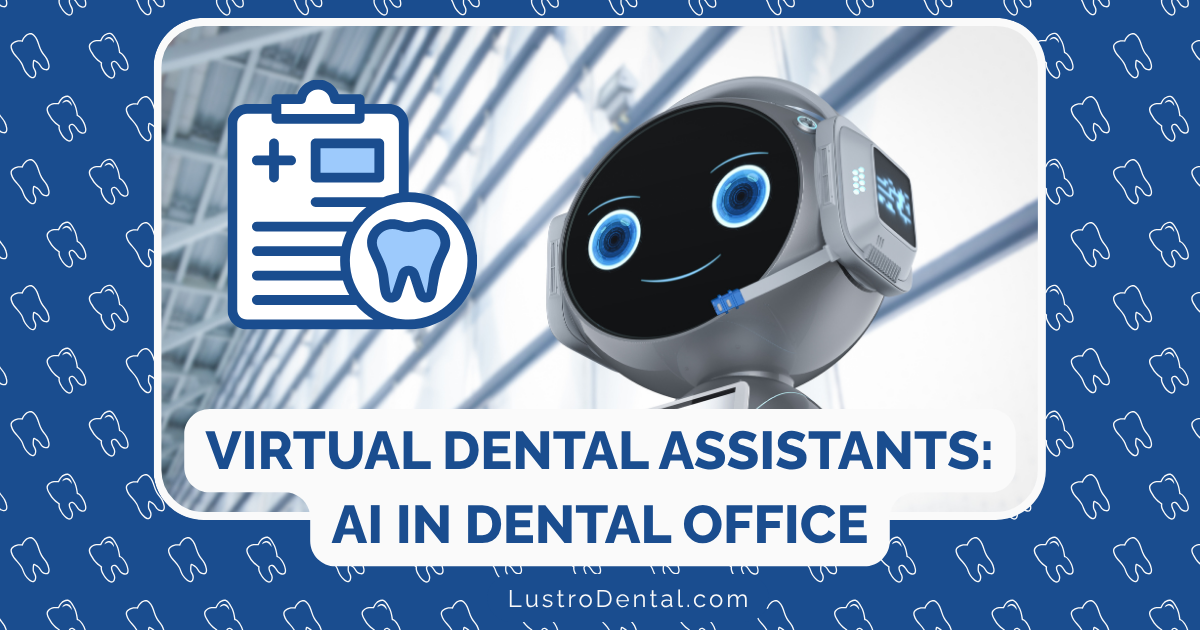
The modern dental practice faces numerous challenges: packed schedules, administrative burdens, staffing shortages, and the constant pressure to provide exceptional patient experiences while maintaining profitability. Amid these demands, a technological revolution is quietly transforming dental offices across the country. Virtual dental assistants—AI-powered solutions designed specifically for the dental industry—are changing how practices operate, allowing dental professionals to focus more on what they do best: providing quality care to patients.
Virtual dental assistants (VDAs) are sophisticated software platforms that leverage artificial intelligence to automate and enhance various aspects of dental practice management. Unlike general virtual assistants like Siri or Alexa, these specialized tools are built specifically for the dental environment, with deep understanding of dental terminology, procedures, scheduling needs, and practice workflows.
Dr. Sarah Johnson, who implemented a virtual assistant in her suburban practice last year, explains: “I initially thought of virtual assistants as just glorified scheduling tools, but modern VDAs are comprehensive practice management solutions. They handle everything from appointment scheduling to patient communications, insurance verification, and even clinical documentation support.”
These AI-powered assistants generally fall into two categories:
Administrative VDAs focus on front-office and back-office tasks, including:
Clinical VDAs support the treatment aspects of dentistry:
Many modern solutions combine both administrative and clinical features into comprehensive platforms that integrate with existing practice management software.
The impact of virtual dental assistants extends across nearly every aspect of practice operations:
Perhaps the most visible benefit comes in appointment management. According to a study by the American Dental Association, dental practices implementing AI scheduling assistants report a 27% reduction in no-shows and a 15% increase in schedule optimization.
Modern AI scheduling tools can:
Dr. Michael Chen of Brightsmile Dental Group notes: “Our virtual assistant reduced front desk calls by 62% while actually increasing our appointment volume. The system confirms appointments automatically, fills last-minute openings, and even prioritizes which patients to contact for specific schedule gaps.”
Beyond scheduling, virtual assistants are revolutionizing how practices communicate with patients:
Research published in the Journal of Dental Practice Management found that practices using AI-powered communication tools saw a 34% increase in patient satisfaction scores and a 23% improvement in treatment plan acceptance rates.
The administrative burden in dental practices has grown substantially in recent years. Virtual assistants are helping to reverse this trend:
According to the Dental Economics Annual Practice Survey, practices using AI administrative tools report saving an average of 15-20 hours of staff time per week—time that can be redirected to patient care and practice growth initiatives.
While administrative applications often receive the most attention, clinical applications of virtual dental assistants are equally transformative:
Dr. Lisa Rodriguez, a periodontist who has integrated clinical AI assistants into her practice, shares: “Having an AI assistant that can pull up relevant patient history, document my findings as I speak, and even suggest treatment options based on the latest research has transformed my clinical workflow. I’m more thorough, more efficient, and frankly, less exhausted at the end of the day.”
The adoption of virtual dental assistants is driven by tangible benefits that address the core challenges facing modern dental practices:
Practices implementing comprehensive virtual assistant solutions report significant operational improvements:
A case study published by the Dental Practice Management Association found that a mid-sized practice implementing an AI virtual assistant increased production by 18% while reducing administrative labor costs by 22%.
Today’s patients expect convenience, accessibility, and personalization—areas where virtual assistants excel:
Patient satisfaction surveys conducted by Dental Patient Success indicate that practices using AI assistants see a 29% increase in patient satisfaction scores related to practice communication and convenience.
In an era of staffing challenges, virtual assistants can significantly impact team morale and retention:
Dr. James Wilson, who implemented a virtual assistant in his three-location practice, notes: “Our staff turnover dropped dramatically after implementing our AI assistant. Team members no longer feel overwhelmed by administrative busywork, and they can focus on the aspects of dental care they actually enjoy.”
The bottom-line impact of virtual dental assistants can be substantial:
A financial analysis by Dental Economics found that the average return on investment for comprehensive virtual assistant implementation was 3.2x in the first year, with increasing returns in subsequent years as systems are optimized.
For practices considering virtual dental assistants, several key factors should guide the selection and implementation process:
The most effective virtual assistants seamlessly integrate with existing practice management systems. Before selecting a solution, practices should:
Virtual assistants become more effective as they learn your practice’s specific workflows and preferences:
Given the sensitive nature of dental information, security considerations are paramount:
The American Dental Association’s Center for Professional Success recommends that practices thoroughly review vendor security documentation and consider consulting with IT security professionals before implementing any AI solution that handles patient data.
The success of virtual assistant implementation often hinges on staff acceptance and adoption:
Dr. Emily Martinez, a practice management consultant with Dental Practice Success, advises: “The practices that see the greatest success with virtual assistants are those that approach implementation as a team journey rather than a technology purchase. When staff understand how these tools will make their jobs easier and more rewarding, adoption follows naturally.”
As AI technology continues to evolve, virtual dental assistants are becoming increasingly sophisticated:
Next-generation virtual assistants are beginning to incorporate:
The power of virtual assistants is multiplied when combined with other emerging dental technologies:
As virtual dental assistants become more prevalent, it’s important to recognize that they represent a partnership rather than a replacement. The most successful implementations augment human capabilities rather than attempting to substitute for them.
Dr. Robert Johnson, Director of the Digital Dentistry Institute, emphasizes: “The future of dentistry isn’t AI replacing dental professionals—it’s AI handling routine tasks so that dental teams can focus on the aspects of care that truly require human judgment, empathy, and expertise.”
Virtual dental assistants are transforming dental practices by automating routine tasks, enhancing communication, optimizing schedules, and supporting clinical decision-making. As these technologies continue to evolve, they promise to address many of the core challenges facing dental practices today: operational efficiency, patient experience, staff satisfaction, and financial performance.
For dental professionals navigating this technological transition, the key is to approach virtual assistants not simply as cost-cutting tools, but as practice enhancers that allow the entire team to practice at the top of their abilities—focusing more on patient care and less on administrative burdens. In this context, AI becomes not just a technology investment but a fundamental shift in how dental care is delivered and experienced.
Has your dental practice implemented any AI or virtual assistant technologies? What has your experience been? Share your thoughts in the comments below!