🦷 General Care
✨ Treatments
👶 Family Care
💚 Wellness
💡 Resources

🦷 General Care
✨ Treatments
👶 Family Care
💚 Wellness
💡 Resources

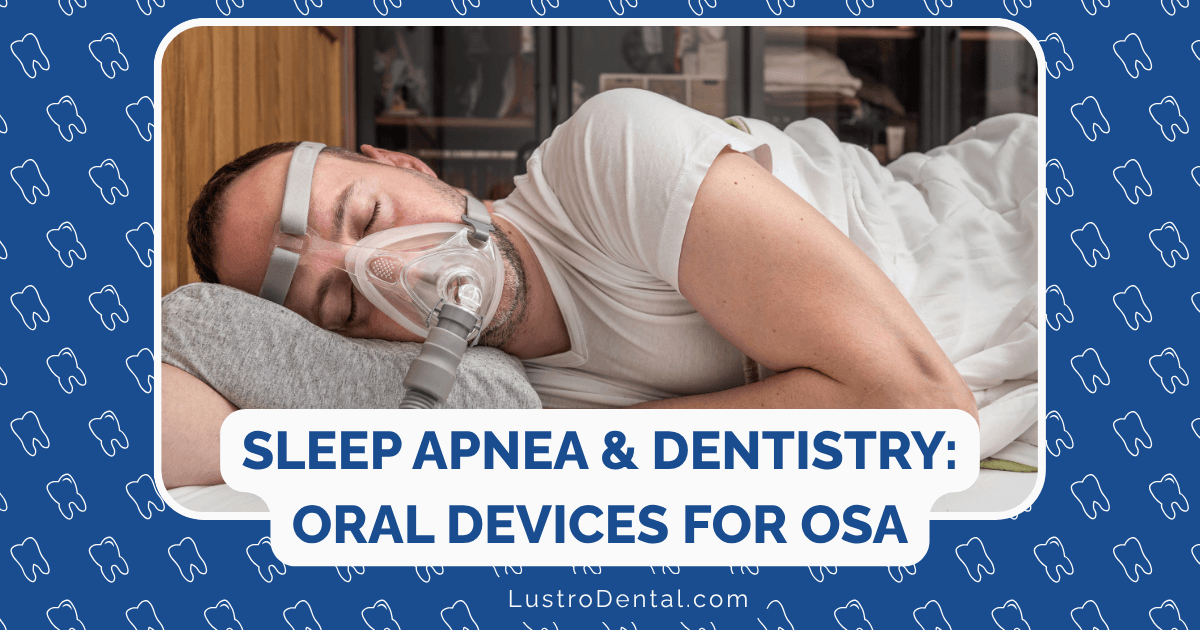
The sound of silence should be golden, especially at night. Yet for millions of people suffering from obstructive sleep apnea (OSA), nighttime brings a symphony of snoring, gasping, and breathing interruptions that disrupt not only their sleep but often their partner’s as well. Beyond the noise lies a serious health concern: repeatedly stopped breathing during sleep that can lead to significant health complications if left untreated.
As a dental health advocate, I’ve witnessed how this common sleep disorder affects not just physical health but quality of life. While Continuous Positive Airway Pressure (CPAP) therapy has long been considered the gold standard treatment, many patients struggle with its use. This is where modern dentistry offers a valuable alternative: oral appliance therapy.
In this comprehensive guide, we’ll explore how dental solutions for sleep apnea work, their effectiveness compared to other treatments, and how they might be the breathing solution you’ve been searching for.
Before diving into dental solutions, it’s important to understand exactly what we’re treating. Obstructive sleep apnea occurs when the muscles in the back of your throat relax too much during sleep, allowing soft tissue to collapse and block your airway. This blockage causes breathing to stop temporarily—from a few seconds to over a minute—before your brain signals your body to restart breathing, often with a gasp or choking sound.
These episodes can occur 5-30 times (or more) per hour throughout the night, preventing restorative deep sleep and reducing oxygen levels in your blood. The consequences extend far beyond feeling tired the next day.
Research has linked untreated sleep apnea to numerous serious health conditions:
Dr. Sarah Johnson, a sleep medicine specialist, explains: “Many patients don’t realize that their snoring, morning headaches, or daytime fatigue could indicate a serious condition. The intermittent oxygen deprivation associated with sleep apnea puts tremendous stress on virtually every system in the body.”
The relationship between dentistry and sleep breathing disorders is more significant than many realize. Certain oral and facial characteristics can predispose individuals to sleep apnea:
Dentists are uniquely positioned to identify these risk factors during routine examinations. In fact, a 2025 study published in Nature found that dental professionals can play a crucial role in both screening for and treating sleep-disordered breathing.
Oral appliance therapy involves wearing a custom-fitted device in your mouth during sleep. These devices work by repositioning oral structures to maintain an open airway throughout the night.
Depending on the specific type, oral appliances function through one or more of these mechanisms:
According to research published by the American Academy of Dental Sleep Medicine, these devices can significantly reduce the severity of sleep apnea and associated symptoms in many patients.
Several types of oral appliances are available, each with specific benefits and considerations:
The most common type of oral appliance for sleep apnea, MADs look similar to sports mouthguards but with a crucial difference: they’re designed to hold the lower jaw slightly forward. This forward positioning helps keep the airway open by preventing the tongue and soft tissues from collapsing backward.
Examples include:
These devices are typically adjustable, allowing for incremental advancement of the jaw to find the optimal position that balances comfort with effectiveness.
Rather than moving the jaw, TRDs use suction to hold the tongue forward, preventing it from falling back and blocking the airway. These devices may be preferable for:
Some newer devices combine features of oral appliances with other technologies:
A 2025 article in Sleep World Magazine highlighted Panthera Dental’s innovative CAD/CAM, 3D-printed oral appliances, which are currently being studied in a five-year multicenter trial to assess their long-term effectiveness.
The effectiveness of oral appliances for sleep apnea has been the subject of extensive research. Here’s what the latest studies tell us:
A comprehensive umbrella review published in 2023 analyzed 27 systematic reviews comparing oral appliances to CPAP therapy. The findings showed:
Dr. Michael Chen, a dental sleep medicine specialist, explains: “The most effective treatment is the one the patient will actually use. A slightly less efficient therapy that’s used consistently often yields better real-world results than a more efficient one that sits unused in a drawer.”
Research indicates that oral appliance effectiveness varies depending on the severity of sleep apnea:
However, even in severe cases where oral appliances don’t completely resolve the condition, they often significantly reduce its severity and associated symptoms.
Beyond reducing AHI scores, studies show oral appliances can improve various health metrics:
According to the 2025 Nature study, these improvements, while sometimes less dramatic than those seen with CPAP, represent meaningful clinical benefits for many patients.
While oral appliances offer an excellent alternative to CPAP for many people, they aren’t the right solution for everyone. Based on current clinical guidelines, ideal candidates include:
Certain factors may reduce the effectiveness of oral appliances or make them unsuitable:
Dr. Jennifer Williams, a prosthodontist specializing in dental sleep medicine, notes: “A thorough evaluation by both a sleep physician and a qualified dental sleep medicine practitioner is essential to determine if an oral appliance is appropriate for your specific situation.”
If you’re considering an oral appliance for sleep apnea, here’s what the process typically involves:
The journey begins with proper diagnosis:
A comprehensive dental assessment ensures you’re a good candidate:
Based on your specific needs, the dentist will:
When your appliance is ready:
Ongoing care ensures optimal results:
Successful therapy requires ongoing care:
Like any treatment, oral appliances can cause side effects, though most are mild and temporary:
Dr. Robert Thompson, a dental sleep medicine practitioner, advises: “Most side effects can be effectively managed with proper follow-up care. The key is maintaining regular communication with your dental provider about any concerns.”
The financial aspect of oral appliance therapy is an important consideration:
Coverage varies widely:
If paying without insurance:
Research suggests oral appliances can be cost-effective in the long run:
The impact of oral appliance therapy is best illustrated through patient experiences:
Michael, a 52-year-old sales executive with moderate sleep apnea, struggled with CPAP for months. “I travel frequently for work, and lugging the CPAP machine through airports was a nightmare. Plus, I could never get comfortable with the mask,” he explains.
After switching to a mandibular advancement device, Michael found relief: “It took about two weeks to adjust completely, but now I sleep through the night, my energy has returned, and my wife says the snoring is gone. The best part is I can slip it in my pocket when traveling.”
Follow-up testing showed Michael’s AHI decreased from 22 to 4 events per hour—a significant improvement that moved him from moderate to mild sleep apnea.
Jennifer, a 45-year-old teacher with mild sleep apnea, was initially hesitant about treatment. “I didn’t want anything invasive, and the thought of sleeping with a mask seemed claustrophobic,” she recalls.
Her dentist recommended a tongue-retaining device, which proved to be an excellent match: “It’s simple to use and comfortable enough that I forget it’s there. My morning headaches disappeared within the first week, and I’m no longer falling asleep during my planning period at school.”
Jennifer’s success highlights how finding the right device for each individual’s needs and preferences is crucial for treatment adherence and effectiveness.
The field of dental sleep medicine continues to evolve rapidly, with several exciting developments on the horizon:
According to the 2025 Nature study, current research is focusing on:
The dental profession‘s involvement in sleep medicine continues to grow:
Sleep apnea represents a significant health challenge for millions of people worldwide, with consequences that extend far beyond disruptive snoring. While CPAP remains the gold standard treatment, oral appliance therapy offers an effective alternative that many patients find more comfortable and convenient.
The growing body of research supports oral appliances as a legitimate treatment option, particularly for those with mild to moderate OSA or those who cannot tolerate CPAP. With proper selection, fitting, and follow-up care, these dental devices can significantly improve both sleep quality and overall health.
If you’re struggling with sleep apnea or suspect you might have it, consider discussing oral appliance therapy with your healthcare providers. The solution to better breathing—and better health—might be as close as your dental office.
Remember, the most effective treatment is one that you’ll use consistently. For many, an oral appliance represents not just a treatment but a life-changing pathway to restful sleep and improved well-being.
Have you tried oral appliance therapy for sleep apnea? What has your experience been like? Share your thoughts in the comments below.