🦷 General Care
✨ Treatments
👶 Family Care
💚 Wellness
💡 Resources

🦷 General Care
✨ Treatments
👶 Family Care
💚 Wellness
💡 Resources

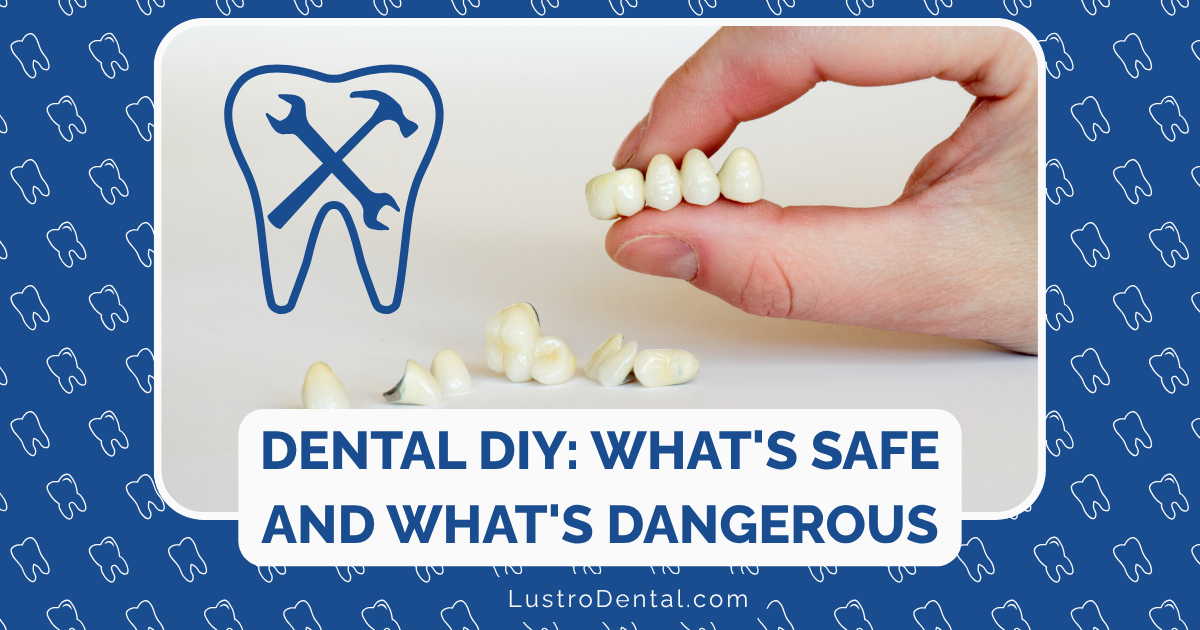
I’ve seen it countless times in my practice – that look of sheepish admission when a patient confesses they tried to fix their dental problem at home. Whether it was supergluing a broken crown, filing down a sharp edge with an emery board, or attempting to fill a cavity with temporary materials, the motivation is usually the same: pain, fear of cost, or simply not having time to schedule an appointment.
I get it. Dental emergencies rarely happen at convenient times. But as someone who’s passionate about helping people maintain their oral health, I need to have an honest conversation with you about DIY dental repairs – because some temporary solutions can help in a pinch, while others can lead to serious, sometimes irreversible damage.
Before diving into what’s safe and what’s not, let’s acknowledge why DIY dentistry has become increasingly popular:
While these reasons are understandable, they don’t change the biological and anatomical realities of dental health. Let’s explore what temporary measures might be reasonable in an emergency, and which ones should be avoided at all costs.
What they are: Products like Dentemp, available at most pharmacies, contain zinc oxide-based materials designed to temporarily fill a lost filling or small cavity.
When they’re appropriate: These can be reasonable short-term solutions when:
How to use them safely:
Dr. Michael Lee, a dentist at University Dental Research Center, notes: “Temporary filling materials can prevent food impaction and reduce sensitivity while waiting for proper treatment, but they’re not formulated to address the underlying decay or to bond permanently to tooth structure.”
What it is: Soft, pliable wax designed to cover sharp brackets or wires.
When it’s appropriate: This is a safe solution when:
How to use it safely:
What it is: A natural essential oil containing eugenol, which has mild anesthetic and anti-inflammatory properties.
When it’s appropriate: For temporary pain management when:
How to use it safely:
According to research published in the Journal of Dentistry, eugenol has documented analgesic properties, but should be used cautiously due to potential tissue irritation.
What they are: A simple solution of warm water and salt.
When they’re appropriate: These are safe for:
How to use them safely:
A study in the International Journal of Dental Hygiene confirmed that salt water rinses can help reduce bacterial counts and provide temporary relief for minor gum inflammation.
Now, let’s talk about the practices that make dental professionals wince – approaches that might seem logical but can lead to serious complications.
Why people try it: To address a sharp edge, even out teeth, or attempt cosmetic changes.
Why it’s dangerous:
Dr. Sarah Johnson of Advanced Dental Studies warns: “I’ve seen patients who filed down a ‘sharp edge’ only to end up needing a crown because they removed so much tooth structure that the tooth became vulnerable to fracture.”
Why people try it: To close gaps or straighten teeth without the cost of professional orthodontics.
Why it’s dangerous:
The American Association of Orthodontists has reported seeing a significant increase in patients requiring corrective treatment after attempting DIY teeth straightening, with some cases resulting in tooth loss.
Why people try it: To reattach crowns, veneers, or broken dentures.
Why it’s dangerous:
“Superglue contains cyanoacrylate, which releases formaldehyde as it cures – definitely not something you want in your mouth,” explains Dr. Robert Chen, toxicologist at Medical Safety Research Institute.
Why people try it: To relieve severe pain from a damaged tooth.
Why it’s dangerous:
This is perhaps the most dangerous DIY dental procedure, with Emergency Medicine Journal documenting cases of life-threatening infections following amateur extractions.
Why people try it: To whiten teeth using household items like lemons, baking soda, or hydrogen peroxide.
Why it’s dangerous:
Research published in the Journal of the American Dental Association has shown that DIY whitening methods often lead to enamel erosion, increased sensitivity, and gum irritation.
Let’s be realistic – there are situations when you might need a temporary solution before you can see a dentist. Here’s a quick guide:
| Dental Issue | Safe Temporary Solution | How Long It’s Safe | When to Seek Professional Care |
| Lost filling | OTC temporary filling material | 1-3 days | As soon as possible |
| Loose crown | Temporary dental cement (from pharmacy) | 1-2 days | Within 48 hours |
| Orthodontic wire irritation | Dental wax | Until orthodontic appointment | Your next scheduled appointment |
| Mild tooth pain | Clove oil, salt water rinse | 1-2 days | If pain persists or worsens |
| Mild gum irritation | Salt water rinses | 2-3 days | If irritation worsens or bleeding occurs |
No DIY solution is appropriate for:
Instead of resorting to potentially harmful DIY solutions, prepare for dental emergencies by creating a proper emergency kit. Include:
The American Dental Association recommends having these items on hand, particularly if you’re traveling or have a history of dental issues.
Many turn to DIY solutions to save money, but this approach often backfires financially. Consider this cost comparison:
| Dental Issue | DIY “Solution” | Potential Complication | Original Treatment Cost | Cost After DIY Complications |
| Small cavity | Temporary filling used long-term | Decay progresses to need root canal | $150-300 filling | $1,000-1,500 root canal + crown |
| Crooked teeth | DIY orthodontics | Gum recession, loose teeth | $3,000-7,000 braces/aligners | $5,000-20,000 for periodontal surgery, implants |
| Broken crown | Household glue | Decay under crown, infection | $800-1,500 new crown | $1,000-1,500 root canal + new crown |
| Sharp tooth | Filing with emery board | Fractured tooth requiring extraction | $150-300 professional smoothing | $3,000-5,000 implant to replace tooth |
Dr. Lisa Wong, dental economist at Dental Financial Institute, notes: “The most expensive dental treatment is often the one needed to fix a problem that was inappropriately treated in the first place.”
If cost concerns are driving you toward DIY solutions, consider these legitimate alternatives:
As someone who’s worked with patients across all demographics, I understand the complex feelings around dental care. Fear, embarrassment, financial worry, and past negative experiences can all drive people toward DIY solutions.
If you’re considering a DIY dental repair, ask yourself:
These are all valid concerns that deserve compassionate attention. Most dental professionals understand these barriers and want to help you overcome them rather than judge you for past dental decisions.
Remember that dentistry has evolved significantly – modern techniques prioritize comfort, prevention, and preservation of natural tooth structure. The right dental provider will focus on solutions, not shame.
Have you ever tried a DIY dental solution? What was your experience? Share in the comments below – your story might help someone else make a better decision for their dental health.