🦷 General Care
✨ Treatments
👶 Family Care
💚 Wellness
💡 Resources

🦷 General Care
✨ Treatments
👶 Family Care
💚 Wellness
💡 Resources

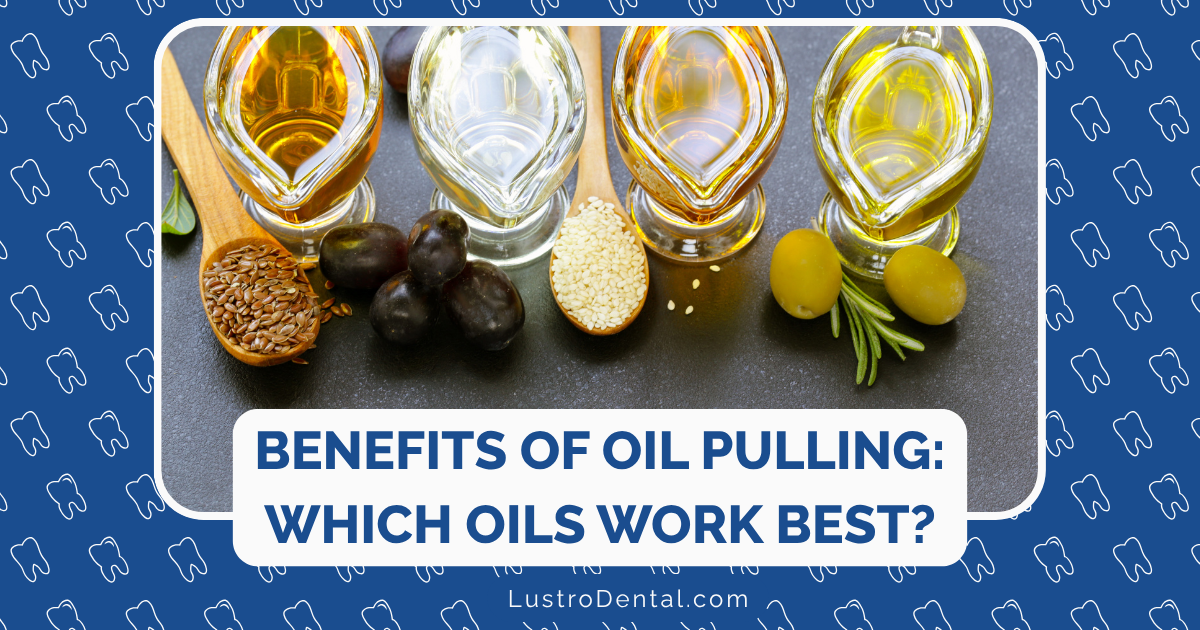
When it comes to natural dental care, coconut oil has dominated the conversation in recent years. Its popularity for oil pulling—the ancient practice of swishing oil in the mouth to improve oral health—has soared, thanks to its pleasant taste and impressive antimicrobial properties. But the world of beneficial oils extends far beyond coconut, with numerous alternatives offering unique advantages for oral health.
As a dental health advocate, I’m excited to explore these lesser-known options with you. In this comprehensive guide, we’ll venture beyond coconut oil to discover the diverse dental benefits of sesame, olive, sunflower, neem, clove, and other oils that deserve a place in your natural oral care routine.
Before diving into specific oils, let’s briefly review dental benefits of oil pulling and how it works. This Ayurvedic practice, dating back thousands of years, involves swishing oil in your mouth for 15-20 minutes to “pull” bacteria, toxins, and debris from oral tissues.
Modern research suggests several mechanisms behind its effectiveness:
A 2025 randomized-controlled clinical study published in PMC found that oil pulling with sesame oil resulted in an 18.98% reduction in plaque after eight weeks—significantly better than the 10.49% reduction achieved with distilled water. This confirms that the benefits go beyond just the mechanical action of swishing.
Now, let’s explore the unique properties and benefits of different oils for your dental health.
While coconut oil has captured modern attention, sesame oil is actually the traditional choice for oil pulling in Ayurvedic medicine. This golden oil offers several distinct advantages for oral health:
The 2025 study mentioned earlier found that sesame oil was particularly effective at reducing plaque on approximal surfaces (between teeth)—areas that are often challenging to clean with regular brushing. After four weeks, sesame oil reduced approximal plaque by 24.07%, compared to just 14.29% with distilled water.
Other studies have shown that sesame oil can:
Dr. Sarah Johnson, a dentist who specializes in integrative oral health, notes: “Sesame oil has a thinner consistency than coconut oil, which may help it reach between teeth more effectively. For patients with tight contacts between teeth or those prone to interproximal cavities, sesame oil can be an excellent choice.”
Olive oil, a staple of the Mediterranean diet, offers its own set of benefits for dental health. While less commonly used for oil pulling than coconut or sesame oils, its unique properties make it worth considering:
Research on olive oil for dental health has shown promising results:
“Olive oil is particularly beneficial for patients with gum inflammation,” explains Dr. Michael Chen, who researches natural dental remedies. “Its anti-inflammatory compounds can help soothe irritated tissues while its antimicrobial properties address the underlying bacterial causes.”
Sunflower oil offers a mild flavor and impressive nutritional profile that makes it another excellent option for oil pulling:
While less studied than coconut and sesame oils, research on sunflower oil shows:
“Sunflower oil is an excellent option for patients who don’t enjoy the taste of coconut or sesame oil,” notes dental hygienist Emily Thompson. “Its light flavor makes it more palatable, which can improve compliance with the oil pulling routine.”
Neem has been used in Ayurvedic medicine for thousands of years, earning the nickname “the village pharmacy” for its diverse medicinal properties. For dental health, neem oil offers powerful benefits:
Research published in the Journal of Clinical and Diagnostic Research found that neem-based products effectively:
Dr. Lisa Williams, who specializes in botanical dental applications, suggests: “Rather than using neem oil alone for pulling, consider adding a few drops to sesame or coconut oil. This gives you the antimicrobial benefits of neem without the overwhelming bitterness.”
Clove oil has been used for centuries to address toothaches, but its benefits extend far beyond pain relief:
Studies published in the Journal of Dentistry have shown that clove oil can:
“Clove oil is extremely potent and should be used sparingly,” cautions Dr. Robert Johnson, a holistic dentist. “I recommend adding just 1-2 drops to a tablespoon of carrier oil like sesame or coconut for oil pulling. This provides the antimicrobial benefits without irritating the oral tissues.”
While primarily known for its benefits to hair and skin, argan oil has properties that make it valuable for oral health as well:
Though research specifically on argan oil for dental applications is limited, studies on its compounds suggest:
“Argan oil is worth considering for patients with dry mouth or those who need gentle care for sensitive gums,” suggests Dr. Williams. “Its moisturizing properties and mild antimicrobial action make it suitable for those who might find other oils too harsh.”
While each oil offers unique benefits, combining them can create synergistic effects that enhance their overall impact on oral health. Here are some effective combinations to consider:
“When creating blends, start with small amounts and adjust based on your tolerance and preferences,” advises Dr. Johnson. “The goal is to create a combination that you’ll use consistently, as the benefits of oil pulling come with regular practice.”
With so many options available, how do you choose the right oil for your specific dental concerns? Here’s a simplified guide:
“Listen to your body when trying different oils,” suggests dental hygienist Thompson. “The oil that feels most comfortable and leaves your mouth feeling cleanest is often the best choice for long-term use.”
While the American Dental Association does not currently recommend oil pulling as a replacement for conventional oral hygiene practices due to limited clinical evidence, many dental professionals recognize its potential benefits as a complementary approach.
To integrate oil pulling with different oils into your routine:
Remember that individual responses vary, and what works wonderfully for one person may not be as effective for another. The best oil for you is ultimately the one that you’ll use consistently as part of your oral health routine.
By exploring options beyond coconut oil, you may discover that another oil—or a carefully crafted blend—provides even greater benefits for your unique dental health needs. The ancient wisdom of oil pulling, combined with our modern understanding of different oils’ properties, offers a natural complement to conventional dental care that’s worth exploring.
Have you tried oil pulling with oils other than coconut? What was your experience like? Share your thoughts in the comments below.