🦷 General Care
✨ Treatments
👶 Family Care
💚 Wellness
💡 Resources

🦷 General Care
✨ Treatments
👶 Family Care
💚 Wellness
💡 Resources

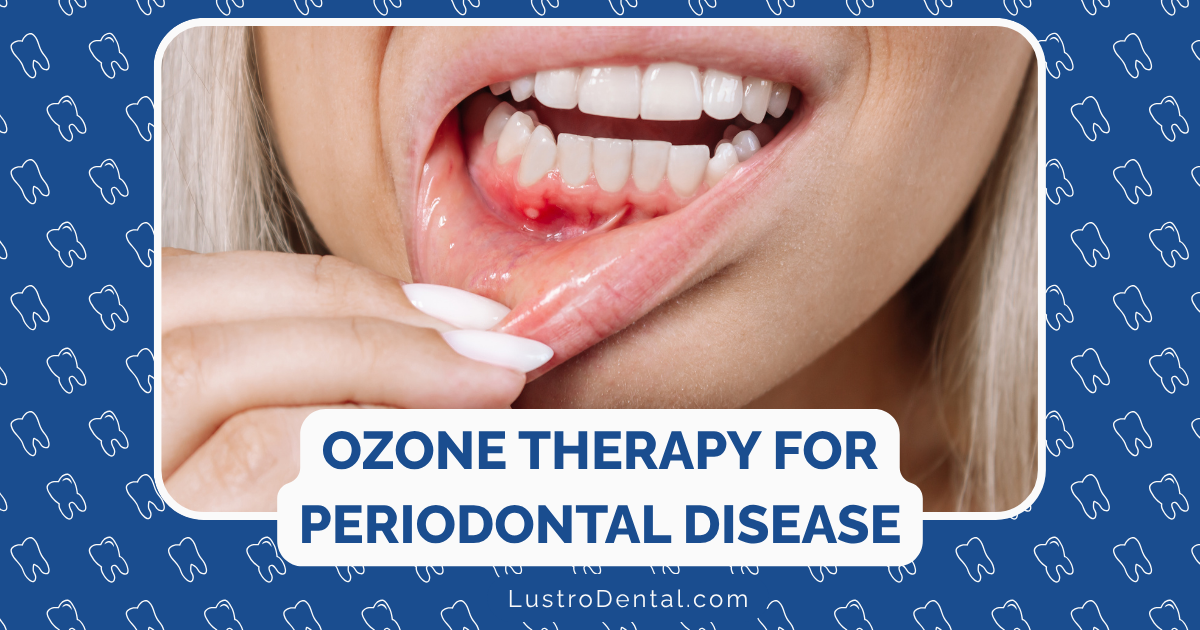
For the millions of adults suffering from periodontal (gum) disease, the prospect of surgical intervention can be daunting. The good news? Modern dentistry continues to evolve, offering innovative non-surgical approaches to managing this common condition. Among these, ozone therapy has emerged as a promising adjunctive treatment that harnesses the power of oxygen to combat infection and promote healing.
In this comprehensive guide, we’ll explore the ozone therapy for periodontal disease, examine the current scientific evidence supporting its use, and help you understand whether this approach might be right for your oral health needs.
Before diving into treatment options, it’s important to understand what periodontal disease is and why it matters. Periodontal disease affects nearly half of adults over 30 in the United States, making it one of the most prevalent chronic inflammatory conditions.
The disease begins with gingivitis—inflammation of the gums characterized by redness, swelling, and bleeding. If left untreated, it can progress to periodontitis, where the supporting structures of the teeth, including bone, begin to deteriorate. This progression can ultimately lead to tooth mobility and loss.
“What makes periodontal disease particularly concerning is its association with systemic health conditions,” explains Dr. Sarah Johnson, a periodontist who incorporates ozone therapy into her practice. “Research has linked periodontal inflammation to conditions like heart disease, diabetes, respiratory infections, and even adverse pregnancy outcomes.”
Traditional non-surgical treatment typically involves scaling and root planing (SRP)—a deep cleaning procedure that removes plaque and calculus from below the gumline and smooths the root surfaces to promote healing and reattachment of the gums to the teeth. While effective for many patients, SRP alone may not completely eliminate the bacterial infection, particularly in deep pockets or complex cases.
This is where adjunctive therapies like ozone can make a significant difference.
Ozone (O₃) is a naturally occurring molecule consisting of three oxygen atoms. While we often hear about ozone in the context of our atmosphere’s protective layer or as an air pollutant, medical-grade ozone has been used therapeutically for over a century in various medical fields.
In dentistry, ozone therapy leverages several powerful properties:
Ozone is a potent antimicrobial agent effective against bacteria, viruses, and fungi. Its mechanism of action is particularly well-suited for fighting periodontal pathogens:
“Ozone works by oxidizing the cell walls of bacteria,” explains Dr. Michael Chen, a biological dentist specializing in ozone applications. “Pathogenic bacteria have minimal antioxidant defenses in their cell membranes, making them especially vulnerable to oxidative attack from ozone.”
This oxidation process disrupts the integrity of bacterial cell membranes, leading to cell death. Research published in BMC Oral Health has demonstrated that ozone therapy can significantly reduce bacterial counts in periodontal pockets, with some studies showing complete eradication of specific periodontal pathogens like Tannerella forsythia and Tannerella denticola.
What makes ozone particularly valuable is its ability to penetrate biofilms—the protective slime layers that bacteria form to shield themselves from antibiotics and the body’s immune defenses. Traditional antimicrobials often struggle to penetrate these biofilms, but ozone can disrupt them effectively.
Beyond killing bacteria, ozone therapy helps modulate the inflammatory response that characterizes periodontal disease.
According to research published in PubMed, ozone activates important cellular signaling pathways, including Nuclear Factor Erythroid 2-Related Factor 2 (Nrf2) and Mitogen-Activated Protein Kinase (MAPK). These pathways regulate oxidative stress, inflammation, and cell survival.
The result? Reduced inflammation in the periodontal tissues, which can help alleviate symptoms like bleeding, swelling, and discomfort.
Perhaps most exciting is ozone’s ability to promote healing and tissue regeneration—critical factors in recovering from periodontal disease.
“Ozone therapy enhances blood flow and oxygen delivery to tissues,” notes Dr. Lisa Williams, who researches regenerative approaches in periodontology. “It also stimulates fibroblast activity, which is essential for producing new connective tissue.”
Studies have shown that ozone can upregulate growth factors and extracellular matrix proteins, supporting the regeneration of periodontal tissues damaged by disease.
Dental professionals utilize ozone in several forms for periodontal treatment:
Water infused with ozone gas is commonly used for irrigation of periodontal pockets. A 2025 study published in the Journal of Advanced Dental Health found that irrigation with ozonated water (10 μg concentration) led to significant improvements in periodontal parameters, including:
Remarkably, these results were superior to those achieved with 0.2% chlorhexidine, which has long been considered the gold standard antimicrobial rinse for periodontal therapy.
Delivered through specialized dental handpieces, ozone gas can be directly applied to periodontal pockets. This form allows for precise delivery and deep penetration into the periodontal tissues.
A systematic review and meta-analysis published in Nature analyzed 13 randomized controlled trials with 655 patients and found that combining gaseous ozone therapy with scaling and root planing resulted in:
While these improvements may seem modest, they represent clinically significant outcomes for periodontal health, especially considering that even small reductions in pocket depth can substantially improve long-term prognosis.
Oils (typically olive or sunflower) treated with ozone create a stable, long-lasting form that can be applied to the gums. These oils provide sustained release of ozone and can be beneficial for home care between professional treatments.
A typical ozone therapy protocol for periodontal disease might include:
Before beginning treatment, your dentist will conduct a thorough periodontal examination, including measuring pocket depths, assessing bleeding points, and potentially taking radiographs to evaluate bone levels.
Traditional scaling and root planing is typically performed first to remove calculus and plaque from the root surfaces.
Following SRP, ozone therapy is applied. This might involve:
Depending on the severity of the condition, multiple applications may be recommended over several weeks or months. A common protocol involves 3-4 sessions spaced 1-2 weeks apart.
Some protocols include home application of ozonated oils or mouth rinses to extend the benefits between professional treatments.
After completing the treatment series, your dentist will reassess your periodontal status to evaluate improvements and determine whether additional therapy is needed.
Dr. Robert Johnson, a periodontist who has incorporated ozone therapy into his practice for over a decade, emphasizes that timing is crucial: “We’ve found that applying ozone immediately after scaling and root planing maximizes its effectiveness. The freshly cleaned root surfaces and pocket environment allow for optimal penetration and action of the ozone.”
While ozone therapy shows promise, it’s important to consider what the scientific evidence tells us about its effectiveness for periodontal disease.
Recent research has demonstrated several benefits of ozone therapy as an adjunct to traditional periodontal treatment:
Despite these promising findings, there are important limitations to consider:
For many patients, the experience of receiving ozone therapy is remarkably comfortable compared to other dental procedures.
“The application is virtually painless,” explains dental hygienist Emily Thompson, who assists with ozone therapy procedures. “Most patients report a slight tingling sensation or a faint chlorine-like smell, but no pain or discomfort.”
Treatment sessions typically last 15-30 minutes, depending on the extent of the periodontal disease and the specific protocol used. Many patients appreciate that ozone therapy:
“What I’ve observed in my patients is not just improvement in clinical measurements,” notes Dr. Johnson, “but also in their subjective experience—less bleeding when brushing, reduced bad breath, and an overall sense that their mouth feels healthier.”
While ozone therapy offers exciting possibilities for periodontal treatment, it’s not appropriate for every situation. You might be a good candidate if:
However, ozone therapy may not be suitable if:
“The ideal approach is often a balanced one,” advises Dr. Williams. “We use ozone therapy as an adjunct to evidence-based conventional treatments, not as a replacement for them. This integrated approach gives patients the best of both worlds.”
If you’re interested in exploring ozone therapy for periodontal disease, here are some tips for finding a qualified provider:
As research continues to evolve, we can expect to see further refinements in ozone therapy protocols for periodontal disease. Key areas of development include:
“What excites me about the future of ozone in periodontal therapy is the potential to develop truly personalized protocols,” says Dr. Chen. “As we better understand the mechanisms of action and individual patient factors, we can tailor treatments to achieve optimal results for each person’s unique situation.”
Ozone therapy represents a valuable addition to the non-surgical management of periodontal disease. While not a magic bullet, the growing body of evidence suggests that when used as an adjunct to traditional scaling and root planing, ozone can enhance outcomes by reducing bacterial load, decreasing inflammation, and promoting tissue healing.
As with any dental treatment, the decision to incorporate ozone therapy should be made in partnership with your dental care provider, considering your specific periodontal condition, overall health status, and treatment goals. By combining the best of conventional and innovative approaches, we can develop more effective strategies for managing periodontal disease and preserving oral health for the long term.
Have you experienced ozone therapy for periodontal disease? What was your experience like? Share your thoughts in the comments below.