🦷 General Care
✨ Treatments
👶 Family Care
💚 Wellness
💡 Resources

🦷 General Care
✨ Treatments
👶 Family Care
💚 Wellness
💡 Resources

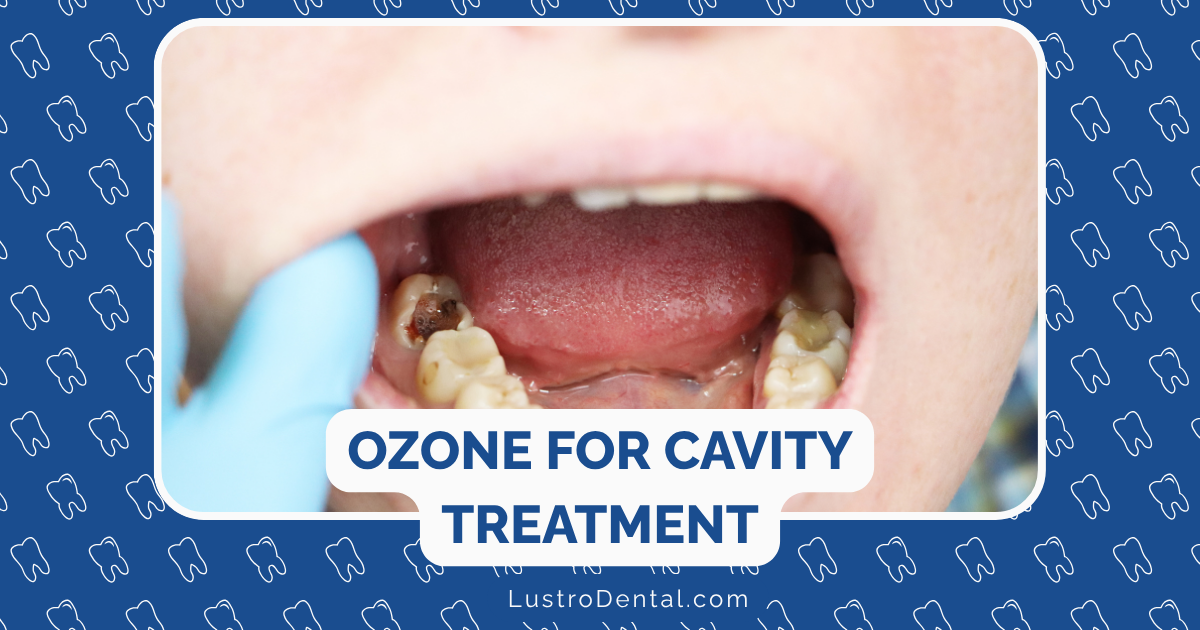
Have you ever wished there was a way to treat cavities without the drill? For many people, the sound of a dental drill triggers immediate anxiety. The good news is that modern dentistry continues to evolve, offering more comfortable and minimally invasive options. One such innovation gaining traction is ozone therapy—a natural approach that harnesses the power of ozone gas to combat the bacteria responsible for tooth decay.
As a dental health advocate, I’m excited to share how this treatment works and what the current research tells us about its effectiveness. Let’s explore the science behind ozone therapy and how it might change the way we approach cavity treatment.
Before diving into ozone therapy, it’s important to understand what causes cavities in the first place. Dental caries (the clinical term for cavities) develop when bacteria in your mouth produce acids that gradually erode tooth enamel. The primary culprits are acid-producing bacteria like Streptococcus mutans and Lactobacillus, which thrive in the biofilm (plaque) that forms on teeth.
These bacteria feed on the sugars and carbohydrates in your diet, producing acids as a byproduct. Over time, this acid attack demineralizes the tooth structure, creating the holes or cavities we’re all familiar with.
Traditional cavity treatment typically involves removing the decayed portion of the tooth with a drill and filling the space with a restorative material. While effective, this approach can be uncomfortable for patients and removes both diseased and healthy tooth structure.
Ozone (O₃) is a molecule consisting of three oxygen atoms. It occurs naturally in our atmosphere and has been used for over a century as a powerful disinfectant in various medical and industrial applications.
In dentistry, ozone therapy involves applying ozone gas, ozonated water, or ozonated oil to infected areas of the tooth. But how exactly does this colorless gas combat cavity-causing bacteria?
Ozone’s bacteria-killing power comes from its unique oxidative properties. Here’s how it works:
Bacteria, including those that cause cavities, have cell membranes composed of lipids (fats), proteins, and other organic molecules. Ozone is a potent oxidizer that attacks these components through a process called “oxidative stress.”
“Ozone targets the unsaturated fatty acids in bacterial cell membranes,” explains Dr. Sarah Johnson, a biological dentist who uses ozone therapy in her practice. “These fatty acids have double bonds that are particularly vulnerable to oxidation.”
When ozone encounters these double bonds, it triggers a reaction called lipid peroxidation. This process essentially “rusts” the cell membrane, creating holes that compromise the bacterium’s structural integrity.
Bacteria rely on specific enzymes to carry out their metabolic functions. Ozone oxidizes the sulfhydryl groups in these enzymes, rendering them inactive. Without functioning enzymes, bacteria cannot metabolize nutrients, reproduce, or maintain their cellular functions.
Perhaps most devastating to bacteria, ozone can damage their DNA through oxidation of nucleic acids. This prevents bacteria from reproducing and ultimately leads to their death.
What makes ozone particularly effective is that pathogenic bacteria have minimal antioxidant defenses in their cell membranes. According to research published in BMC Oral Health, this makes them especially vulnerable to oxidative attack while leaving healthy human cells relatively unharmed.
Dental professionals use several methods to deliver ozone for cavity treatment:
Applied directly to the cavity using specialized dental handpieces, gaseous ozone can penetrate the porous structure of a tooth, reaching bacteria that hide in tiny tubules and fissures. This is particularly effective for treating early-stage cavities.
Water infused with ozone can be used as an irrigation solution during dental procedures. It’s particularly useful for cleaning cavity preparations before placing fillings.
Olive or sunflower oils treated with ozone create a stable, long-lasting form that can be applied to teeth. These oils release ozone slowly over time, providing extended antimicrobial action.
If you’re receiving ozone therapy for cavity treatment, here’s what you might experience:
“What makes ozone therapy particularly appealing is its minimally invasive nature,” notes Dr. Michael Chen, who incorporates ozone into his practice. “For early-stage cavities, we can often avoid drilling altogether, preserving healthy tooth structure while still effectively addressing the infection.”
While ozone therapy for cavity treatment shows promise, it’s important to consider what the scientific evidence tells us about its effectiveness.
Recent research has demonstrated several benefits of ozone therapy:
According to a study published in Dimensions of Dental Hygiene, ozone therapy has shown effectiveness against both Gram-positive and Gram-negative oral microorganisms, including the primary cavity-causing bacteria.
Despite these promising findings, there are important limitations to consider:
Beyond its bacteria-killing properties, ozone therapy offers several additional benefits for dental patients:
After killing bacteria, ozone creates an environment that favors remineralization—the natural process of rebuilding tooth structure. It does this by:
Many patients report decreased tooth sensitivity following ozone treatment. This may be due to ozone’s ability to:
Unlike traditional drilling, which removes both infected and healthy tooth structure, ozone therapy is highly selective, targeting only the bacteria while preserving the maximum amount of natural tooth material.
While ozone therapy offers exciting possibilities, it’s not appropriate for every situation. You might be a good candidate if:
However, ozone therapy may not be suitable if:
“The ideal approach is often a balanced one,” advises Dr. Lisa Williams, who practices integrative dentistry. “We use ozone therapy when appropriate, but we don’t hesitate to recommend traditional treatments when they’re the best option for the patient’s specific situation.”
If you’re interested in exploring ozone therapy for cavity treatment, here are some tips for finding a qualified provider:
As research continues and technology advances, ozone therapy represents one of several emerging approaches that may transform how we treat dental cavities. The ideal future of dentistry likely involves a personalized approach that combines the best of traditional methods with innovative techniques like ozone therapy.
By understanding how treatments like ozone work at the microscopic level—targeting the bacteria that cause decay while preserving healthy tooth structure—we gain greater appreciation for the evolving science of dental care.
The next time you’re facing a cavity, consider discussing with your dentist whether ozone therapy might be an appropriate option for your specific situation. While it may not completely replace the dental drill in all cases, it offers a promising addition to the dental toolkit that aligns with the growing emphasis on minimally invasive, patient-friendly approaches to oral health care.
Have you experienced ozone therapy for cavity treatment? What was your experience like? Share your thoughts in the comments below.