🦷 General Care
✨ Treatments
👶 Family Care
💚 Wellness
💡 Resources

🦷 General Care
✨ Treatments
👶 Family Care
💚 Wellness
💡 Resources

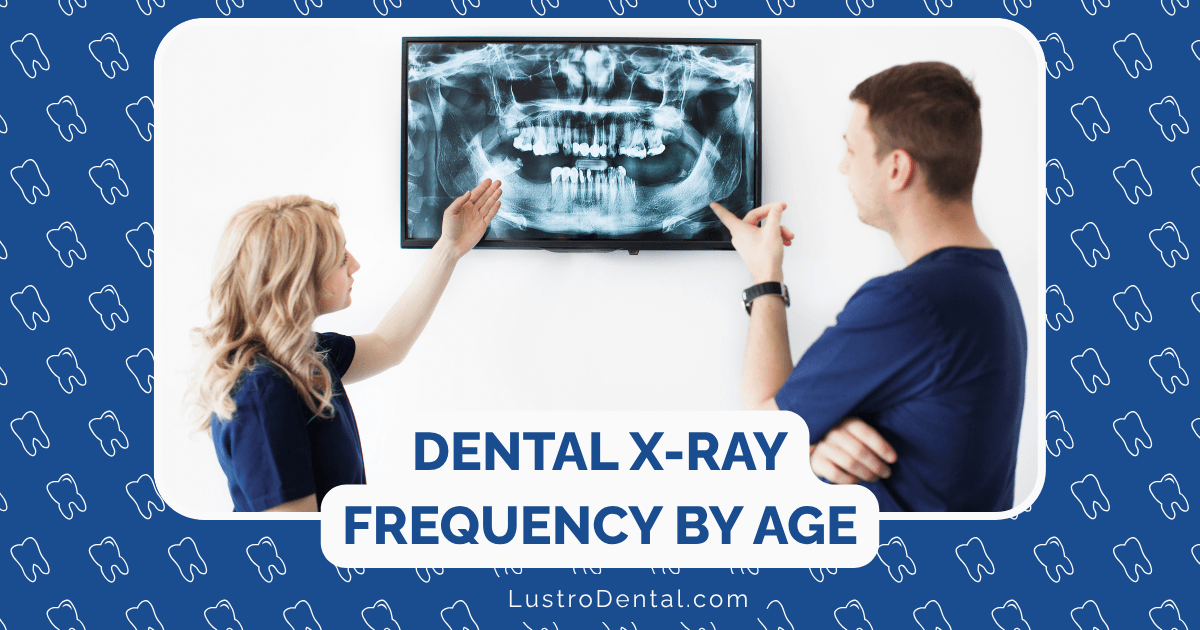
“Do I really need X-rays today?” This is one of the most common questions I hear from patients in the dental chair. It’s a fair question—after all, most people are naturally concerned about radiation exposure and want to ensure any diagnostic procedure is truly necessary.
The answer isn’t as simple as you might think. Despite what many believe, there’s no one-size-fits-all schedule for dental X-rays. The American Dental Association (ADA) emphasizes that X-rays should be prescribed based on individual patient needs rather than arbitrary timelines.
In this evidence-based guide, I’ll break down the current recommendations for dental X-ray frequency by age group, explain the risk factors that might increase or decrease your need for X-rays, and address common concerns about radiation exposure.
Before diving into frequency guidelines, it’s important to understand what dental X-rays reveal that a visual examination cannot:
According to the University of Michigan School of Dentistry, these insights are crucial for early detection and treatment of conditions that might otherwise go unnoticed until they become serious problems.
While individual factors ultimately determine X-ray frequency, age-based guidelines provide a useful starting point. Here’s what current research and professional organizations recommend:
Children’s dental X-ray needs change rapidly as they grow and their dentition develops.
For very young children, X-rays are typically not needed unless there’s a specific concern. According to Delta Dental, X-rays generally aren’t recommended until teeth begin touching each other—usually around age 4-6.
Typical recommendation: X-rays only when clinically indicated by visual examination.
As children’s baby teeth come into contact with each other, the risk of interproximal cavities increases.
Typical recommendation for low-risk children: Bitewing X-rays every 12-24 months. Typical recommendation for high-risk children: Bitewing X-rays every 6-12 months.
This is a critical period when baby teeth are being replaced by permanent teeth. X-rays help monitor this process and check for developmental issues.
Typical recommendation for low-risk children: Bitewing X-rays every 12-24 months; panoramic X-ray around age 7 to assess development. Typical recommendation for high-risk children: Bitewing X-rays every 6 months; additional X-rays as indicated.
Research published in PMC notes that the most common indication for X-rays in children is trauma (28.7%), followed by caries diagnostics (22.7%). The study also found that boys received nearly 60% of all intraoral radiographs, particularly for trauma cases.
Teenagers face unique oral health challenges, including a higher risk of decay due to dietary habits and sometimes less-than-ideal oral hygiene.
Typical recommendation for low-risk adolescents: Bitewing X-rays every 18-36 months. Typical recommendation for high-risk adolescents: Bitewing X-rays every 6-12 months.
Additionally, many adolescents need orthodontic evaluations, which typically include panoramic and cephalometric X-rays. According to the ADA, these specialized X-rays are usually taken once during orthodontic planning rather than on a recurring schedule.
For adults, X-ray frequency depends heavily on oral health status and risk factors.
Typical recommendation for low-risk adults: Bitewing X-rays every 24-36 months; full mouth series every 5 years. Typical recommendation for high-risk adults: Bitewing X-rays every 6-18 months; full mouth series every 3 years.
According to CDEPA Dental Group, healthy adults generally require bitewing X-rays every 12-18 months, with a full mouth series recommended every 3-5 years.
Older adults often face unique oral health challenges that may necessitate more frequent monitoring.
Typical recommendation for low-risk seniors: Bitewing X-rays every 24-36 months; full mouth series every 5 years. Typical recommendation for high-risk seniors: Bitewing X-rays every 6-12 months; full mouth series every 3 years.
According to TerraBella Senior Living, seniors with good oral health and no significant risk factors may only need dental X-rays every 18-24 months. However, many seniors require more frequent imaging due to increased risk of root decay, bone loss, and other age-related oral health issues.
The frequency recommendations above depend on whether a patient is considered “high risk” or “low risk.” But what exactly determines this classification?
According to the ADA and clinical research, the following factors may place you in a higher risk category:
Conversely, you might be considered low-risk if you have:
Beyond the basic frequency guidelines, certain age-specific considerations influence X-ray recommendations:
Children are more sensitive to radiation than adults due to:
According to research published in PMC, the risk of cancer development from low-dose radiation exposure is estimated to be higher in female children compared to males. This is why the Image Gently Alliance promotes “child-size” radiographic examinations to minimize radiation exposure in pediatric patients.
For children, dentists should:
Adolescence brings specific challenges:
X-rays during this period often focus on monitoring third molar (wisdom tooth) development and checking for decay in hard-to-see areas.
For adults, life circumstances can significantly impact X-ray needs:
Older adults face unique challenges that may necessitate more frequent imaging:
Many patients’ concerns about X-ray frequency stem from radiation exposure fears. However, modern dental X-ray technology has dramatically reduced radiation doses.
According to Brookhaven Dental Associates, digital X-rays reduce radiation exposure by up to 90% compared to traditional film X-rays. The Cleveland Clinic confirms that digital dental X-rays use 80% to 90% less radiation compared to traditional dental X-ray machines.
To put dental X-ray radiation in context, consider these comparisons from the University of Michigan School of Dentistry:
By comparison, a cross-country flight exposes you to about 40 µSv of cosmic radiation—more than a full set of digital dental X-rays.
The ADA emphasizes the importance of the dentist-patient discussion in determining appropriate X-ray frequency. Here are questions to ask your dental provider:
While age-based guidelines provide a useful framework, the most appropriate X-ray frequency for you depends on your individual risk factors, oral health history, and current dental status. The goal is always to maximize diagnostic benefit while minimizing radiation exposure—a principle known as ALARA (As Low As Reasonably Achievable).
By understanding the guidelines and having informed conversations with your dental provider, you can ensure you’re receiving the right level of care—not too many X-rays, but not too few either. Remember that early detection through appropriate imaging can save you from more extensive and expensive dental work down the road.
Your dentist should be able to clearly explain why specific X-rays are being recommended and how they’ll benefit your oral health. If you have concerns about X-ray frequency, don’t hesitate to ask questions—a good dental provider will welcome the opportunity to discuss your care plan and address your concerns.