🦷 General Care
✨ Treatments
👶 Family Care
💚 Wellness
💡 Resources

🦷 General Care
✨ Treatments
👶 Family Care
💚 Wellness
💡 Resources

The sound of a dental drill. The sight of needles. The unfamiliar sensations and tastes. For many children, these elements transform routine dental visits into anxiety-inducing experiences that can shape their perception of oral healthcare for years to come. In fact, according to the American Academy of Pediatric Dentistry, dental anxiety affects approximately 9% of children, with many more experiencing at least some level of apprehension about dental visits.
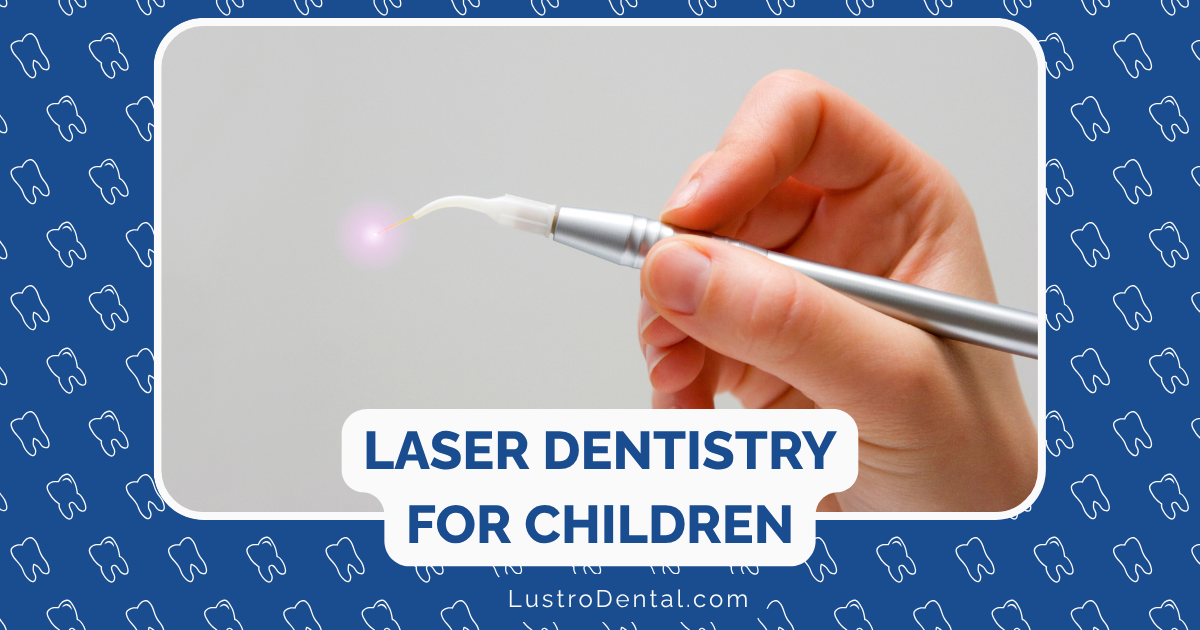
Fortunately, modern dentistry has evolved to address these concerns. One of the most significant advancements—laser dentistry—is revolutionizing the pediatric dental experience by eliminating many of the fear-triggering aspects of traditional treatment. Let’s explore how this gentle technology is transforming dental visits for our youngest patients.
When parents first hear about laser dentistry, they often picture science fiction scenarios rather than gentle dental care. In reality, dental lasers are simply highly focused light beams that can replace traditional tools for many common procedures.
Dr. Sarah Johnson, a pediatric dentist and fellow of the Academy of Laser Dentistry, explains: “Dental lasers allow us to perform many procedures without the drill noise, vibration, or need for injections that typically trigger anxiety in children. It’s not just about reducing physical discomfort—it’s about creating a psychologically comfortable experience.”
Dental lasers emit concentrated light energy that can precisely interact with different oral tissues:
The key difference from traditional methods is that lasers can be extremely selective—targeting only the tissue that needs treatment while preserving healthy surrounding structures.
Children aren’t simply “small adults” when it comes to dental care. Their unique needs and developmental stages require special consideration, which is precisely where laser dentistry shines.
Traditional dentistry involves several elements that commonly trigger anxiety in children:
Laser dentistry eliminates or significantly reduces all of these triggers. Research published in the Journal of Pediatric Dental Care found that children treated with dental lasers showed significantly lower anxiety scores compared to those receiving traditional treatment.
Perhaps the most anxiety-inducing aspect of dental treatment for many children is “the shot.” Laser dentistry often allows dentists to perform procedures with minimal or no local anesthesia.
A study in the International Journal of Pediatric Dentistry found that approximately 68% of cavity preparations using Er:YAG lasers could be completed without any anesthesia, and another 20% required only topical numbing gel.
For children with needle phobia or sensory processing concerns, this benefit alone can transform the dental experience from terrifying to tolerable.
Children’s teeth have thinner enamel and larger pulp chambers compared to adult teeth, making conservative treatment particularly important. Laser technology allows for incredibly precise removal of decay while preserving maximum healthy tooth structure.
Dr. Michael Chen, director of the Center for Pediatric Dental Health, notes: “With traditional drills, we often remove some healthy tooth structure along with decay. Lasers allow us to be much more conservative, which is especially valuable for developing teeth.”
Children’s busy lives don’t pause for dental recovery. Laser procedures offer significant advantages in recovery time and post-operative comfort:
These benefits mean children can return to school, sports, and normal eating more quickly after dental procedures.
Laser dentistry isn’t limited to a narrow range of treatments—it can enhance many common pediatric dental procedures:
Traditional cavity treatment involves drilling, which often requires anesthesia and can remove healthy tooth structure along with decay. Laser cavity treatment:
Many children have restricted tongue or lip movement due to tight frenula (the tissue that connects the tongue to the floor of the mouth or the lips to the gums). Traditional correction involves cutting with scissors or a scalpel, but laser frenectomies offer:
Research from the American Academy of Pediatric Dentistry indicates that laser frenectomies result in fewer complications and better healing compared to traditional methods.
Children sometimes need gum tissue management for issues like eruption problems, gingival hyperplasia (overgrown gums), or cosmetic concerns. Laser gum procedures provide:
When decay or trauma affects the nerve tissue inside a tooth, pulp therapy may be necessary. Laser pulp therapy offers:
For parents considering laser dentistry for their children, understanding the experience can help prepare both themselves and their child:
Eight-year-old Emma’s mother shares: “After her previous anxiety-filled dental experiences, I was amazed to see Emma actually relaxed during her laser filling. No tears, no white-knuckle grip on my hand—just a calm child who was curious about the ‘special light’ fixing her tooth. The difference was night and day.”
Not all pediatric dental practices offer laser treatment, and training and experience with this technology vary widely. When seeking laser dentistry for your child, consider:
The American Board of Pediatric Dentistry and the Academy of Laser Dentistry can help parents locate qualified providers who combine pediatric expertise with laser technology.
While laser dentistry offers significant benefits, it’s important to understand that it may not be appropriate for every situation:
A consultation with a pediatric dentist experienced in laser techniques can help determine the most appropriate approach for your child’s specific situation.
Perhaps the most significant benefit of laser dentistry for children isn’t just the immediate comfort—it’s the potential long-term impact on their relationship with dental care. Research from the Journal of Dental Child Psychology shows that positive early dental experiences significantly reduce the likelihood of dental anxiety in adulthood.
By removing the fear-inducing aspects of traditional dentistry, laser technology helps children develop healthy attitudes toward oral healthcare—attitudes they’ll carry with them for life.
Laser dentistry represents a significant advancement in our ability to provide gentle, effective dental care for children. By eliminating many of the aspects that traditionally trigger anxiety—drills, needles, discomfort—this technology is transforming the pediatric dental experience.
For parents who have witnessed their child’s dental anxiety or experienced it themselves as children, laser dentistry offers hope for a different experience—one where dental visits become routine healthcare rather than dreaded ordeals. And that transformation may be the most valuable benefit of all.
Has your child experienced laser dentistry? Share your experience in the comments below!