🦷 General Care
✨ Treatments
👶 Family Care
💚 Wellness
💡 Resources

🦷 General Care
✨ Treatments
👶 Family Care
💚 Wellness
💡 Resources

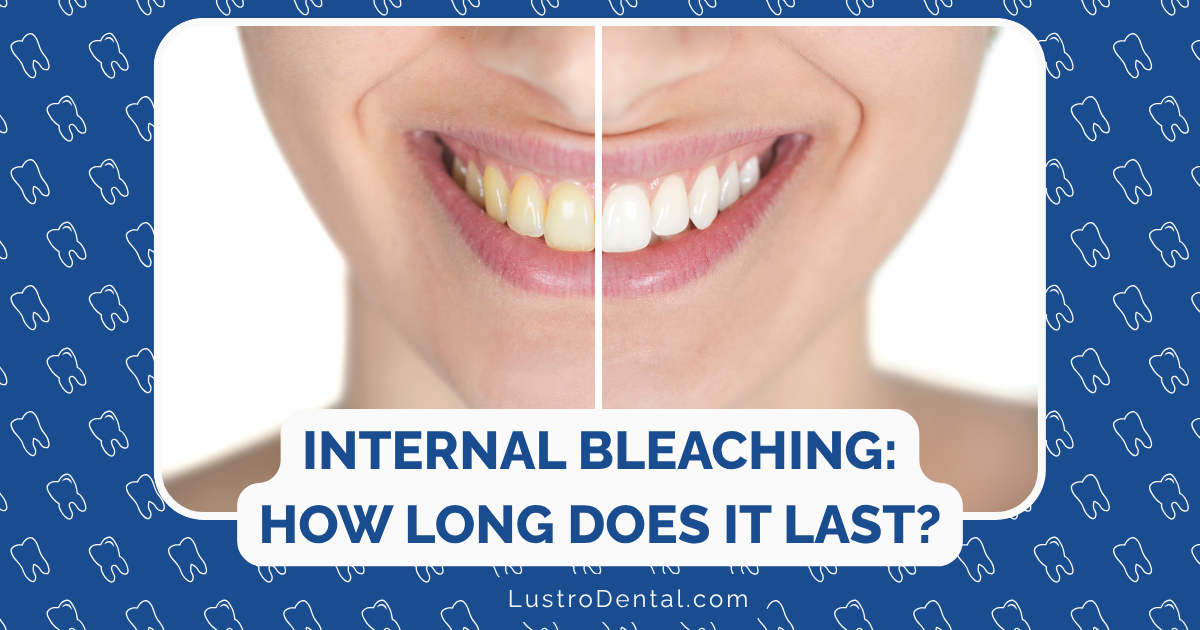
If you’ve recently undergone internal bleaching or are considering the procedure to brighten a discolored tooth, you’re likely wondering about the long-term results. How long will the whitening effect last? Will the tooth stay bright for years, or will the discoloration eventually return?
As someone who’s guided many patients through this journey and followed their outcomes over time, I can tell you that understanding the long-term expectations of internal bleaching is crucial for making informed decisions about your dental health.
In this comprehensive guide, we’ll explore what research and clinical experience tell us about the long-term outcomes of internal bleaching, potential complications to be aware of, and strategies to maintain your results for as long as possible.
When evaluating the internal bleaching longevity, it’s important to consider both clinical studies and real-world experience. Here’s what the research tells us:
The immediate success rate for internal bleaching is impressive:
Dr. Sarah Johnson, endodontist at University Dental Institute, notes: “The initial transformation can be dramatic, especially for teeth darkened by trauma or pulp necrosis. Patients are often thrilled with the immediate results.”
As we move beyond the initial treatment period, success rates begin to vary:
A 2022 systematic review found that teeth bleached with modern techniques and materials (sodium perborate with water instead of high-concentration hydrogen peroxide) showed better long-term color stability.
The longer-term picture shows more variability:
Dr. Michael Chen of Advanced Dental Specialists explains: “Internal bleaching isn’t always a one-and-done procedure. Some patients may need touch-up treatments years later, particularly if the original discoloration was severe or if they consume a lot of staining foods and beverages.”
Not all internally bleached teeth have the same long-term prognosis. Several key factors influence how well the results will hold up over time:
The original reason for the tooth discoloration significantly impacts long-term success:
The specific approach used during treatment matters:
The restoration that seals the access cavity plays a crucial role:
Individual habits and characteristics also influence longevity:
While internal bleaching is generally safe, there are some potential long-term complications to be aware of:
The most significant potential complication is external cervical resorption—a condition where the tooth structure begins to break down at the gumline.
Dr. Lisa Wong, endodontist at City Dental Center, emphasizes: “The risk of cervical resorption is one reason why the technique and materials used for internal bleaching matter so much. Modern approaches with proper protective barriers and milder bleaching agents have dramatically reduced this risk.”
Some studies have reported an increased risk of crown fractures in internally bleached teeth:
The most common long-term issue is color regression—the gradual return of discoloration:
While some factors affecting long-term outcomes are beyond your control, there are several strategies to help maintain your results for as long as possible:
Smoking and tobacco use significantly increase the risk of new staining and can compromise long-term results.
Despite best efforts, some internally bleached teeth may require re-treatment years later. Signs that re-treatment might be beneficial include:
The good news is that re-treatment is usually possible and often successful. The procedure typically involves:
If internal bleaching doesn’t provide lasting results or isn’t appropriate for your situation, several alternative options exist:
Dr. Johnson advises: “I always discuss these alternatives with patients, especially if their case has factors that might compromise the long-term success of internal bleaching. Sometimes a combined approach—internal bleaching followed by a veneer years later if needed—provides the best long-term solution.”
To illustrate the range of long-term outcomes, consider these experiences from actual patients:
Case 1: Maria, 42
Treatment: Internal bleaching of a traumatized upper central incisor
Initial result: Excellent, matching adjacent teeth perfectly
5-year outcome: Maintained 95% of improvement, barely perceptible difference from adjacent teeth
10-year outcome: Slight darkening but still acceptable; opted for touch-up treatment at 12 years
Case 2: James, 35
Treatment: Internal bleaching of a discolored lateral incisor after root canal
Initial result: Good improvement, slight difference from adjacent teeth
3-year outcome: Moderate regression of color, more noticeable contrast with adjacent teeth
5-year outcome: Decided to place a porcelain veneer for more predictable long-term esthetics
Case 3: Sarah, 28
Treatment: Internal bleaching of a darkened premolar
Initial result: Excellent match with adjacent teeth
7-year outcome: Maintained results with minimal change
Current status (15 years later): Still satisfied with the appearance, no re-treatment needed
These cases illustrate the variability in long-term outcomes and the importance of personalized treatment planning.
Internal bleaching offers a conservative, effective approach to treating discolored teeth, but it’s important to approach it with realistic expectations about long-term outcomes.
While some patients enjoy results that last a decade or more, others may experience color regression within a few years. Understanding the factors that influence long-term success can help you make informed decisions about your dental care and take steps to maximize the longevity of your results.
Remember that dental technology continues to advance, and today’s techniques and materials offer better long-term outcomes than those used in earlier studies. Working with an experienced dental professional who uses current, evidence-based approaches will give you the best chance for lasting results.
Have you experienced internal bleaching? How have your results held up over time? Share your experience in the comments below to help others on their dental journey.