🦷 General Care
✨ Treatments
👶 Family Care
💚 Wellness
💡 Resources

🦷 General Care
✨ Treatments
👶 Family Care
💚 Wellness
💡 Resources

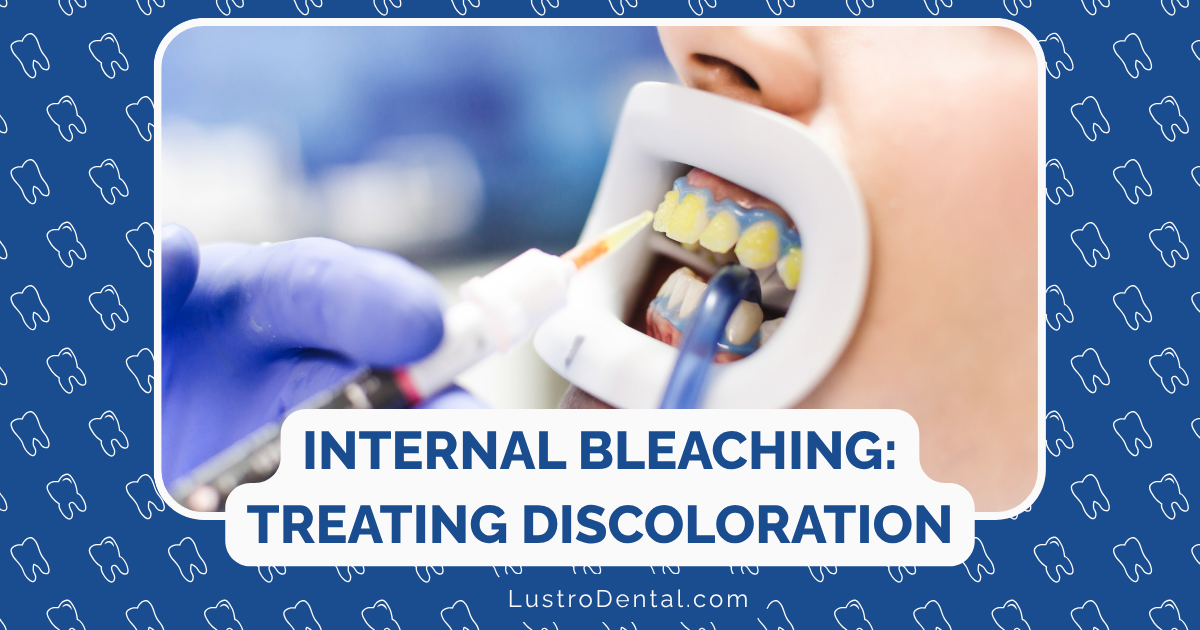
If you’ve ever noticed a single darkened tooth in your smile—perhaps gray, brown, or yellowish compared to your other teeth—you’re looking at a candidate for internal bleaching. Unlike traditional whitening that works on the outer surface of teeth, internal bleaching targets discoloration from within, offering hope for teeth that don’t respond to conventional whitening methods.
As someone who’s guided many patients through this process, I’ve seen the remarkable transformation internal bleaching can provide, often restoring confidence along with a brighter smile. Let’s explore how this specialized procedure works, who it’s right for, and what you can expect if you’re considering it.
Before diving into the treatment, it’s important to understand why some teeth become discolored from the inside.
Most tooth discoloration occurs on the outer surface (enamel) from:
These external stains respond well to traditional whitening methods like professional bleaching, whitening strips, or toothpastes.
Internal (or intrinsic) discoloration occurs within the tooth structure itself and may result from:
Dr. Sarah Johnson, endodontist at University Dental Institute, explains: “Internal staining happens deep within the tooth structure, in the dentin layer. Traditional whitening methods simply can’t penetrate deeply enough to address this type of discoloration. That’s where internal bleaching comes in.”
Internal bleaching (also called “non-vital bleaching” or “walking bleach technique”) is a dental procedure specifically designed to whiten teeth from the inside out. It’s typically performed on teeth that have undergone root canal treatment and have become discolored.
The procedure uses powerful oxidizing agents placed directly inside the tooth to break down the compounds causing discoloration. As these agents work, they lighten the dentin layer, improving the tooth’s overall appearance.
Internal bleaching is most appropriate for:
Dr. Michael Chen of Advanced Dental Specialists notes, “Internal bleaching offers a minimally invasive option for patients with discolored teeth. Before considering more aggressive treatments like crowns, which require removing healthy tooth structure, internal bleaching can provide excellent results while preserving the natural tooth.”
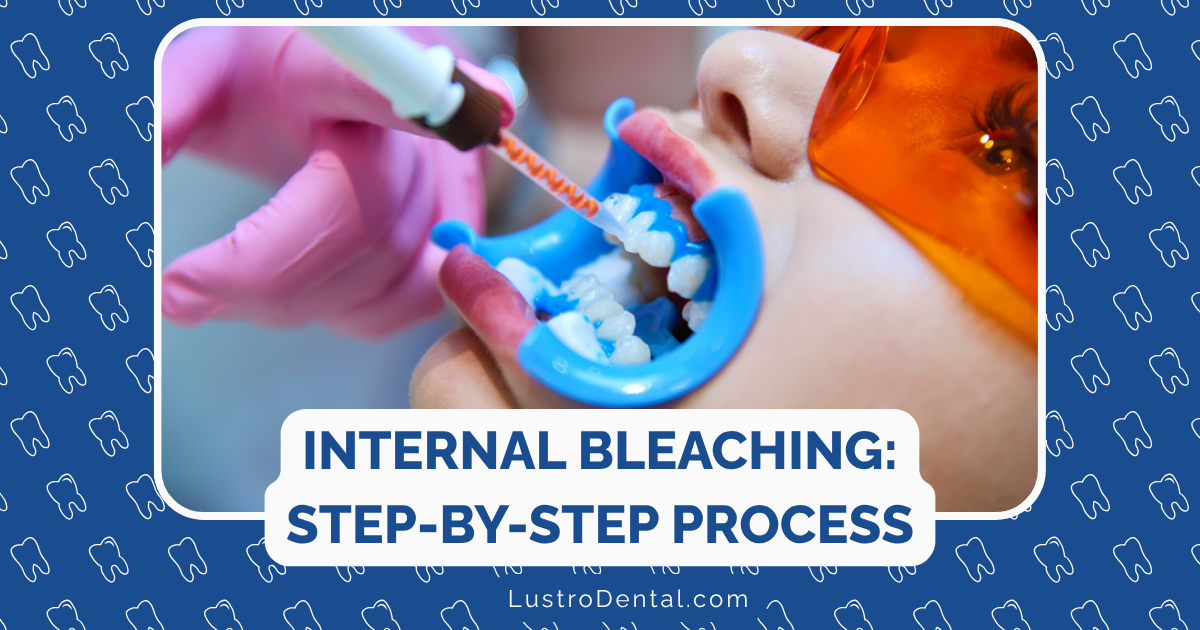
The most common approach to internal bleaching is the “walking bleach technique,” named because the bleaching agent “walks” or works while you go about your daily activities. Here’s what happens during the procedure:
Your dentist will:
Under local anesthesia (though often unnecessary since the tooth has no nerve):
This critical step helps prevent complications:
The active whitening begins:
Dr. Lisa Wong, cosmetic dentist at City Dental Center, explains: “The bleaching agent works by releasing oxygen molecules that penetrate the dentinal tubules, breaking down the colored compounds into simpler, colorless molecules. This process gradually lightens the tooth from within.”
Unlike external whitening that shows immediate results:
After the initial treatment:
Once the desired shade is achieved:
Internal bleaching can provide dramatic improvements, but it’s important to have realistic expectations.
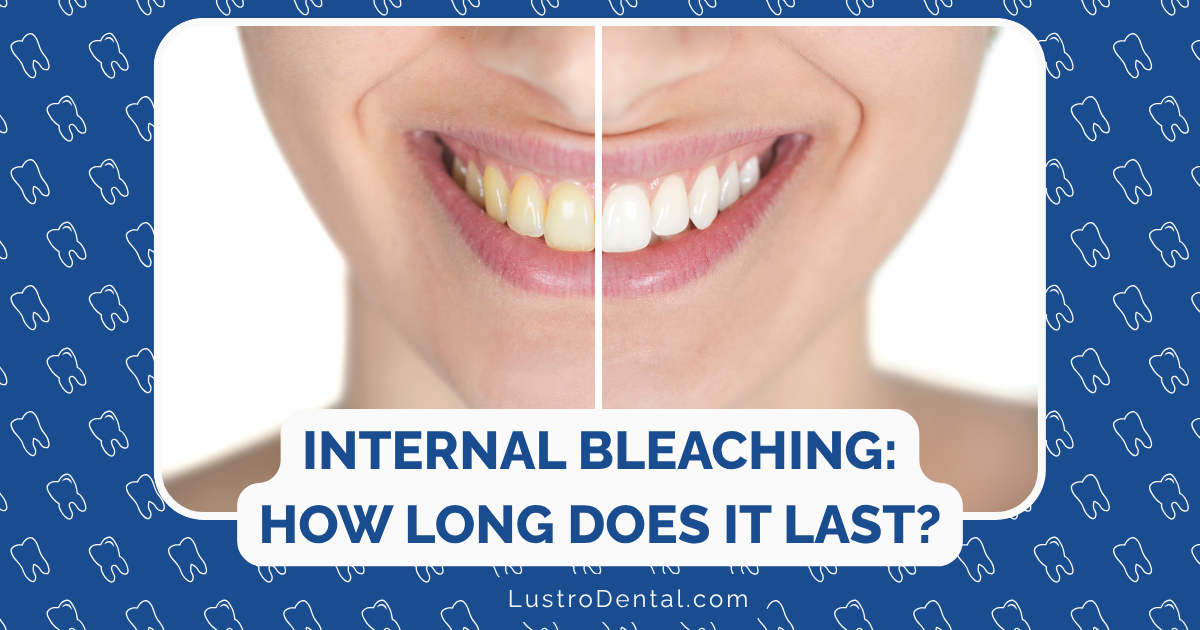
Most patients see significant improvement after just one or two applications. Research shows that the success rate for achieving an acceptable color improvement is around 87-91% in the short term.
The longevity of results varies:
Dr. Johnson notes, “While some teeth may darken slightly over time, the results are generally stable for several years. If regression occurs, the procedure can often be repeated safely.”
Internal bleaching is generally safe when performed by a qualified dentist, but there are some risks to be aware of:
The most significant potential complication is external cervical resorption—a condition where the tooth structure begins to break down at the gumline.
Compared to alternative treatments for discolored teeth, internal bleaching offers several benefits:
| Treatment Option | Invasiveness | Cost | Longevity | Advantages | Disadvantages |
| Internal Bleaching | Minimal | $ | 1-5+ years | Preserves tooth structure, natural appearance | Only works for certain types of discoloration, may need repeating |
| Dental Crown | High | $$$ | 10-15+ years | Comprehensive solution, highly durable | Requires significant tooth reduction, more expensive |
| Porcelain Veneer | Moderate | $$$ | 10-15+ years | Excellent aesthetics, stain resistant | Requires some tooth reduction, higher cost |
| External Bleaching | None | $ | 6 months-2 years | Non-invasive, works on multiple teeth | Ineffective for internal staining, temporary results |
Internal bleaching may be an excellent option if:
Dr. Chen advises, “The best way to determine if you’re a candidate for internal bleaching is to consult with an endodontist or a dentist experienced in the procedure. They can evaluate your specific situation and recommend the most appropriate treatment approach.”
To maintain your results for as long as possible:
Internal bleaching represents one of dentistry’s most elegant solutions—addressing a specific aesthetic problem with a targeted, minimally invasive approach. For many patients with discolored teeth, it offers renewed confidence without resorting to more aggressive treatments.
If you have a discolored tooth that affects your willingness to smile, consider discussing internal bleaching with your dentist. This specialized whitening approach might just be the conservative solution you’ve been looking for.
Have you experienced internal bleaching? We’d love to hear about your experience in the comments below.