🦷 General Care
✨ Treatments
👶 Family Care
💚 Wellness
💡 Resources

🦷 General Care
✨ Treatments
👶 Family Care
💚 Wellness
💡 Resources

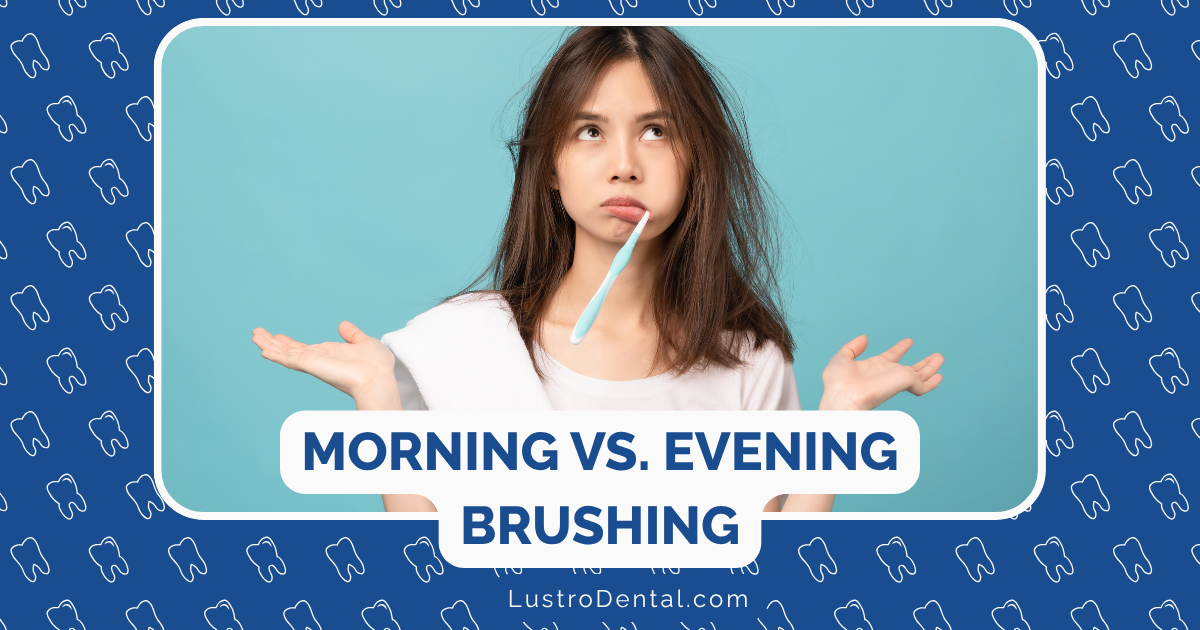
It’s a question that has sparked debates in bathrooms around the world: if you could only brush your teeth once a day, should it be in the morning or at night? While dental professionals unanimously recommend brushing twice daily, understanding the distinct benefits of morning and evening brushing can help you optimize your oral hygiene routine and make informed decisions about your dental health.
In this comprehensive guide, we’ll explore the science behind brushing timing, the unique benefits of morning and evening brushing, and settle the debate once and for all.
To understand the importance of brushing timing, we first need to understand what happens in your mouth throughout a 24-hour cycle.
Dr. Sarah Chen, a periodontist at Columbia University, explains: “Your mouth is a dynamic ecosystem with bacterial populations that fluctuate throughout the day and night. These fluctuations are influenced by eating, drinking, saliva production, and your cleaning habits.”
While you sleep, several important changes occur in your mouth:
A 2022 study published in Scientific Reports found that bacterial counts in saliva are highest upon awakening, with a significant increase in species associated with periodontal disease, such as Prevotella and Fusobacterium.
“This overnight bacterial surge is why many people experience ‘morning breath,'” notes dental hygienist Jennifer Marsh. “Without saliva’s natural cleansing action, volatile sulfur compounds produced by bacteria accumulate, causing that characteristic morning odor.”
During the day, your mouth faces different challenges:
“Each time you eat or drink something containing carbohydrates, the bacteria in your mouth feast on these sugars and produce acids,” explains Dr. Michael Rodriguez, DDS. “These acids can attack your tooth enamel for up to 20 minutes after you finish eating.”
Brushing in the morning serves several important functions:
That bacterial population that exploded overnight? Morning brushing significantly reduces it, removing the biofilm that formed while you slept.
“Morning brushing essentially resets your oral microbiome after the overnight bacterial growth phase,” says Dr. Chen. “Without this reset, you’re starting your day with an already elevated bacterial load.”
Bad breath in the morning isn’t just a social concern—it’s a sign of active bacterial metabolism in your mouth.
Research from the American Dental Association shows that morning brushing reduces volatile sulfur compounds by up to 85%, significantly improving breath freshness throughout the morning hours.
Brushing stimulates saliva flow, which is crucial for oral health.
“Saliva is your body’s natural defense against cavities,” notes Dr. Rodriguez. “It contains calcium and phosphate ions that help remineralize enamel, antimicrobial compounds that fight bacteria, and buffering agents that neutralize acids.”
Morning brushing with fluoride toothpaste leaves a protective coating on your teeth that helps strengthen enamel throughout the day.
“Think of morning brushing as applying a shield to your teeth,” suggests dental hygienist Marsh. “This fluoride shield helps your teeth resist the acid attacks that occur every time you eat or drink.”
While morning brushing is important, evening brushing serves equally crucial—and some would argue even more essential—functions:
Throughout the day, your teeth collect food particles, sugars, and acids from everything you consume.
“By evening, your teeth have been exposed to multiple acid attacks and have accumulated significant plaque,” explains Dr. Lisa Warren, a prosthodontist. “Evening brushing removes this buildup before it has a chance to do overnight damage.”
Without evening brushing, acids from food and bacterial metabolism remain in contact with your teeth all night.
A study in the Journal of Clinical Periodontology found that participants who skipped evening brushing had significantly higher acid levels in their mouth throughout the night, increasing their risk of enamel erosion and cavities.
Bacteria thrive on the food particles left in your mouth. Evening brushing removes this food supply.
“When you skip evening brushing, you’re essentially providing an all-night buffet for bacteria,” notes Dr. Rodriguez. “They’ll multiply much more rapidly when they have a steady food supply.”
The fluoride from evening brushing provides crucial protection during the hours when your natural defenses are at their lowest.
“Nighttime is when your teeth are most vulnerable due to decreased saliva flow,” explains Dr. Chen. “The fluoride from evening brushing helps compensate for this vulnerability by strengthening enamel and inhibiting bacterial metabolism.”
While twice-daily brushing remains the gold standard recommended by dental professionals worldwide, research and clinical experience suggest that if you absolutely had to choose just one brushing session, evening would be more beneficial for most people.
“If I had to choose between a patient brushing only in the morning or only in the evening, I’d recommend evening brushing,” states Dr. Warren. “The protection it provides during those vulnerable overnight hours is simply too important to skip.”
This recommendation is supported by research. A longitudinal study published in the Journal of Dental Research followed participants over five years and found that those who consistently brushed before bed had 37% fewer cavities than those who only brushed in the morning.
However, this doesn’t mean morning brushing isn’t important. Dental hygienist Marsh emphasizes: “The ideal remains brushing both morning and night. Each serves distinct purposes in your oral health, and together they provide comprehensive protection.”
To get the maximum benefit from your brushing routine, consider these evidence-based recommendations:
The question of whether to brush before or after breakfast has generated considerable debate. Here’s what the science says:
“For patients who enjoy acidic beverages like coffee or orange juice with breakfast, I recommend brushing first thing in the morning, then rinsing with water after eating,” advises Dr. Rodriguez. “This gives you the benefits of morning brushing without risking enamel damage.”
For evening brushing, timing is more straightforward:
“The goal of evening brushing is to leave your mouth as clean as possible before sleep,” explains Dr. Chen. “Any food or drink after brushing essentially undoes the benefits.”
While the morning vs. evening brushing debate is important, a comprehensive oral care routine includes more than just brushing:
Dental professionals recommend flossing at least once daily, ideally in the evening before brushing.
“Flossing before your evening brushing removes interdental plaque and food particles that your toothbrush can’t reach,” notes dental hygienist Marsh. “This allows your toothpaste’s fluoride to access these areas during brushing.”
Cleaning your tongue helps remove bacteria that contribute to bad breath and can recolonize your teeth.
“For most patients, I recommend tongue cleaning in the morning to address overnight bacterial buildup,” suggests Dr. Warren. “However, cleaning both morning and evening provides optimal results, especially for those prone to bad breath.”
If you use mouthwash, timing it correctly maximizes benefits:
“Many people use mouthwash incorrectly,” cautions Dr. Rodriguez. “Using fluoride mouthwash immediately after brushing and then rinsing with water dilutes the benefits. Instead, use it at a different time of day to get an extra dose of fluoride protection.”
The morning vs. evening brushing question may have different answers depending on individual circumstances:
If you have a history of cavities, evening brushing becomes even more crucial.
“Patients with high cavity risk absolutely must prioritize nighttime brushing,” emphasizes Dr. Chen. “The extended protection during low-saliva hours is essential for preventing decay.”
Patients with gingivitis or periodontitis benefit most from twice-daily brushing with special attention to technique.
“For my periodontal patients, I stress the importance of both morning and evening brushing, with particular focus on the gumline,” notes Dr. Warren. “The bacterial species associated with gum disease proliferate overnight, making morning removal critical, while evening brushing prevents new accumulation.”
People with xerostomia (dry mouth) face higher risks during nighttime hours and need additional protection.
“Patients with dry mouth essentially experience ‘nighttime conditions’ all day long,” explains dental hygienist Marsh. “For these individuals, I recommend brushing more frequently—potentially three times daily—with a high-fluoride toothpaste prescribed by their dentist.”
While the science suggests evening brushing may have a slight edge if forced to choose, the most important factor is consistency.
“The best brushing schedule is one you’ll actually follow,” concludes Dr. Rodriguez. “Consistent, thorough brushing twice daily, combined with regular dental checkups, remains the cornerstone of good oral health.”
By understanding the unique benefits of both morning and evening brushing, you can make informed decisions about your oral hygiene routine and ensure your smile stays healthy for years to come.