🦷 General Care
✨ Treatments
👶 Family Care
💚 Wellness
💡 Resources

🦷 General Care
✨ Treatments
👶 Family Care
💚 Wellness
💡 Resources

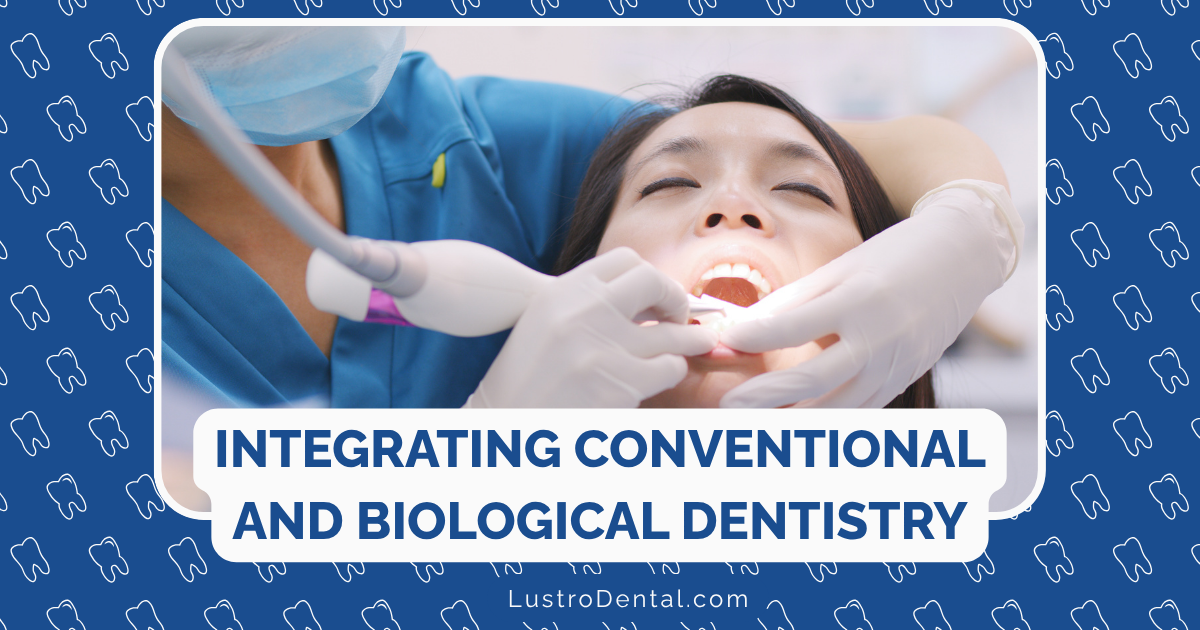
When it comes to dental care, many patients feel caught between two seemingly opposing worlds: conventional dentistry with its established protocols and cutting-edge technology, and biological dentistry with its whole-body approach and focus on biocompatible materials. But what if the best dental care isn’t about choosing one over the other, but rather finding the sweet spot where these approaches complement each other?
As a dental health advocate, I’ve seen firsthand how integrating the strengths of both conventional and biological dentistry can lead to better outcomes and more satisfied patients. Let’s explore how these two approaches can work together to provide truly comprehensive care.
Before we can discuss integration, it’s important to understand what sets these approaches apart.
Conventional dentistry is what most of us grew up with. It’s grounded in established scientific research and standardized procedures that have been refined over decades. Its strengths include:
“Conventional dentistry provides a solid foundation of scientifically validated treatments that have helped millions of people maintain their oral health,” explains Dr. Robert Chen, who practices integrative dentistry. “Its standardized approaches ensure consistent care across the profession.”
Biological dentistry (also called holistic or integrative dentistry) takes a different approach, viewing oral health as inseparable from overall health. Its distinguishing features include:
According to the International Academy of Biological Dentistry and Medicine, this approach “considers the impact of dental materials, procedures, and infections on a patient’s overall health.”
The differences between conventional and biological dentistry become most apparent in several key areas:
Conventional approach: Prioritizes durability, functionality, and cost-effectiveness. May use amalgam fillings (which contain mercury), metal crowns, or other materials chosen primarily for their physical properties.
Biological approach: Prioritizes biocompatibility and non-toxicity. Avoids mercury, fluoride, and certain metals, opting instead for materials like composite resins, ceramic, or zirconia that are tested for individual compatibility.
Conventional approach: Views root canals as a safe, effective way to save teeth that would otherwise require extraction.
Biological approach: Often expresses concern about potential bacterial reservoirs in root canal-treated teeth and may recommend extraction and replacement with ceramic implants or bridges in certain cases.
Conventional approach: Focuses on professional cleanings, fluoride treatments, and addressing issues as they arise.
Biological approach: Emphasizes nutritional counseling, pH balance, lifestyle factors, and treating the causes of dental problems rather than just the symptoms.
Despite these differences, the two approaches share a fundamental goal: helping patients achieve optimal oral health. And increasingly, forward-thinking practitioners are finding ways to integrate the best aspects of both.
“The future of dentistry isn’t about choosing sides,” says Dr. Sarah Johnson, who has practiced both conventional and biological dentistry over her 20-year career. “It’s about creating a new paradigm that honors the scientific rigor of conventional dentistry while embracing the holistic wisdom of biological approaches.”
This integration is already happening. The American Dental Association, traditionally aligned with conventional approaches, is hosting a symposium titled “Dentistry’s Role in Complete Health 2025” that explores the relationship between oral health and overall systemic health—a core tenet of biological dentistry.
An integrated approach might include:
Rather than focusing solely on teeth and gums, an integrated assessment would include:
This broader perspective helps identify connections between oral issues and systemic health concerns.
Instead of automatically using conventional materials or rejecting them outright, an integrated approach would:
“When it comes to materials, it’s not one-size-fits-all,” explains Dr. Michael Williams, who practices integrative dentistry. “The best choice depends on the specific situation, the location in the mouth, the patient’s overall health, and their personal values.”
Both approaches are increasingly embracing minimally invasive dentistry, which aims to preserve natural tooth structure whenever possible. This might include:
An integrated approach recognizes that dental health doesn’t exist in isolation. This might involve:
Patients who experience integrated dental care often report several advantages:
By drawing from both approaches, practitioners can truly customize care to each patient’s unique situation rather than applying a one-size-fits-all protocol.
Instead of being limited to either conventional or biological treatments, patients can access a full spectrum of possibilities.
Patients benefit from both the scientific rigor of conventional dentistry and the whole-body awareness of biological approaches.
Integrated practitioners tend to spend more time explaining options, discussing the reasoning behind recommendations, and involving patients in decision-making.
If you’re interested in experiencing this balanced approach to dental care, here are some tips for finding a provider:
Search for dentists who describe themselves as “integrative,” “comprehensive,” or “patient-centered.” These terms often indicate a practitioner who draws from multiple approaches.
During an initial consultation, ask how they view the relationship between conventional and biological dentistry. Do they see value in both approaches? How do they decide which treatments to recommend?
A truly integrated provider will present multiple treatment options when appropriate, explaining the pros and cons of each rather than pushing a single solution.
Look for dentists who have training in both conventional and biological approaches. They might have conventional dental degrees plus additional certifications from organizations like the International Academy of Oral Medicine and Toxicology or the Holistic Dental Association.
The trend toward integration is likely to continue as more research emerges on the oral-systemic connection and as patients increasingly seek comprehensive care. According to a patient care revolution report, by 2025, patients will increasingly seek personalized and holistic care options, with technology enhancing these experiences.
The 8th Edition of the International Conference on Traditional Medicine in June 2025 will explore how holistic dentistry can be integrated with conventional approaches, signaling growing interest in this balanced perspective.
As with any healthcare decision, the best approach to dental care depends on your individual needs, values, and health status. Here are some considerations to help you navigate your options:
The divide between conventional and biological dentistry is gradually narrowing as more practitioners recognize that true excellence in dental care comes from integrating the strengths of both approaches. This balanced perspective offers patients the best of both worlds: scientifically validated treatments delivered with attention to whole-body health and individual needs.
As Dr. Lisa Thompson, an integrative dentist with over 25 years of experience, puts it: “The mouth is part of the body, and the body is part of the person. The best dental care honors all these dimensions—the mechanical aspects of teeth and gums, the biological connections to overall health, and the unique preferences and values of each individual.”
By seeking out this integrated approach, you can find dental care that not only addresses your immediate oral health needs but also supports your long-term wellbeing and aligns with your personal health philosophy.
Have you experienced either conventional or biological dental care, or perhaps an integrated approach? What was your experience like? Share your thoughts in the comments below.