🦷 General Care
✨ Treatments
👶 Family Care
💚 Wellness
💡 Resources

🦷 General Care
✨ Treatments
👶 Family Care
💚 Wellness
💡 Resources

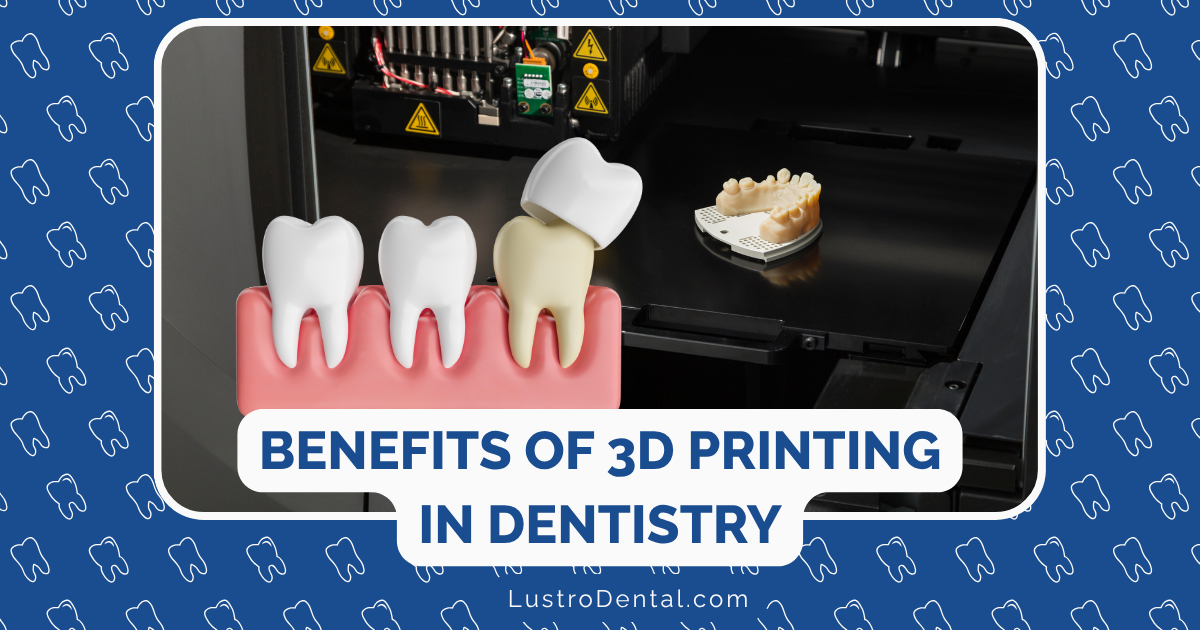
When you think about environmental sustainability, dentistry might not be the first industry that comes to mind. Yet, dental practices traditionally generate significant waste—from impression materials and stone models to packaging and single-use items. The good news? Modern technology is changing this narrative, with 3D printing leading the charge toward more eco-friendly dental care.
Before diving into solutions, let’s acknowledge the problem. The dental industry has historically been resource-intensive. According to the Eco-Dentistry Association, a typical dental practice can produce substantial waste, including:
Much of this waste ends up in landfills, contributing to our growing environmental crisis. But there’s hope on the horizon.
The sustainability journey begins with the shift from physical to digital impressions. Instead of using traditional impression materials that often require multiple attempts and generate waste, intraoral scanners capture precise digital images of a patient’s mouth.
These digital files can be modified, shared, and stored without consuming physical resources. No more pouring stone models that might need to be remade if they’re not perfect—just clean, efficient digital data.
Traditional manufacturing methods are subtractive—they start with a block of material and cut away excess until the desired shape remains. This approach inherently creates waste.
3D printing, by contrast, is additive. It builds objects layer by layer, using only the material necessary for the final product. Research from the Journal of Cleaner Production suggests that additive manufacturing can reduce material waste by up to 90% compared to traditional methods.
For dental applications like crowns, bridges, and surgical guides, this efficiency translates to:
Sustainability isn’t just about reducing immediate waste—it’s also about creating solutions that last. 3D printing’s precision contributes to sustainability in several ways:
Dr. Sarah Johnson, a sustainable dentistry advocate, notes: “When we create dental appliances that fit perfectly the first time, we’re not just saving the patient time and discomfort—we’re also eliminating the waste associated with remakes and adjustments.”
The clear aligner industry demonstrates the environmental benefits of 3D printing beautifully. Traditional orthodontic treatment involves metal brackets, wires, bands, and numerous in-office adjustments.
Clear aligner therapy, powered by 3D printing, works differently:
The American Journal of Orthodontics and Dentofacial Orthopedics reports that this process generates significantly less waste than conventional orthodontics while often requiring fewer office visits—reducing the carbon footprint associated with patient travel.
Dental implant placement has been revolutionized by 3D-printed surgical guides. These custom templates ensure implants are placed at the exact angle and depth planned digitally.
The environmental benefits include:
Traditional denture fabrication involves multiple appointments, physical impressions, wax try-ins, and significant material waste. The 3D printing workflow streamlines this process:
This approach not only reduces waste but can also extend the life of the prosthetic through better fit and function.
The intersection of 3D printing and dental care continues to evolve. Emerging technologies promise even greater sustainability benefits:
For dental professionals considering the move toward 3D printing, several factors come into play:
The dental industry’s adoption of 3D printing technology represents more than just a technological advancement—it’s a significant step toward environmental responsibility. By reducing material waste, increasing efficiency, and creating longer-lasting dental solutions, 3D printing is helping dental professionals align their practices with broader sustainability goals.
As patients, we can support this shift by seeking out dental providers who embrace these eco-friendly technologies. After all, a healthy smile shouldn’t come at the expense of a healthy planet.
Have you experienced 3D printing technology in your dental care? Share your thoughts in the comments below!