🦷 General Care
✨ Treatments
👶 Family Care
💚 Wellness
💡 Resources

🦷 General Care
✨ Treatments
👶 Family Care
💚 Wellness
💡 Resources

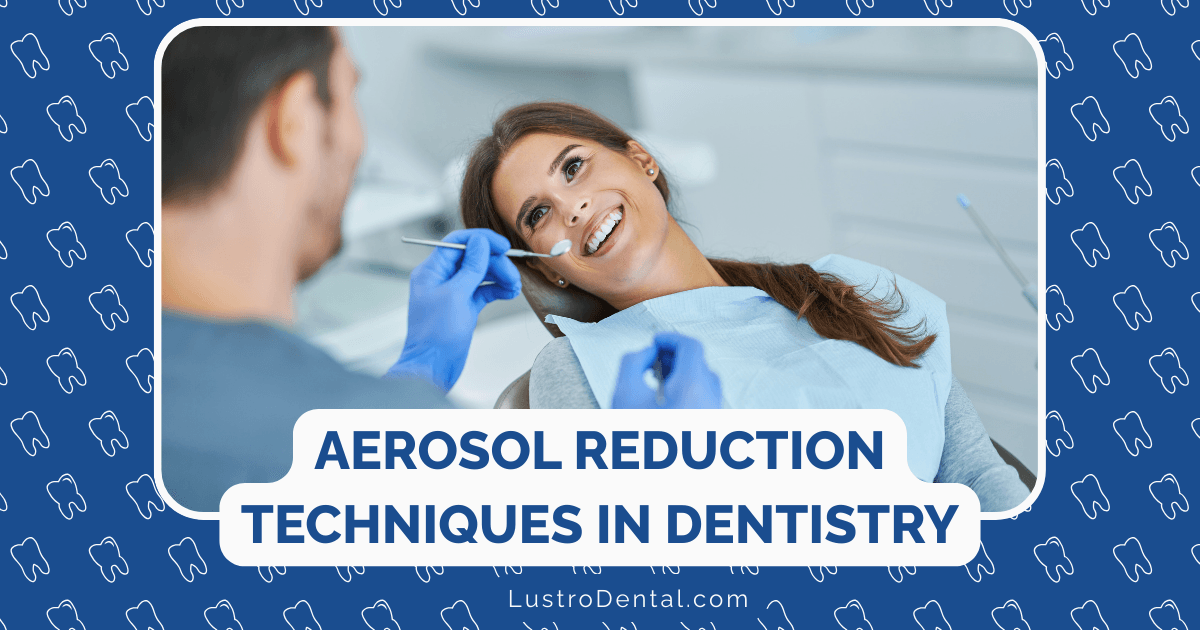
The landscape of dental practice underwent a seismic shift when the COVID-19 pandemic forced practitioners worldwide to reevaluate one of the most fundamental aspects of dental care: aerosol management. What was once considered a routine byproduct of dental procedures suddenly became recognized as a potential vector for disease transmission. This watershed moment catalyzed unprecedented innovation in aerosol reduction techniques—advancements that continue to reshape dental practice today.
Before exploring the innovations in aerosol reduction, it’s essential to understand what dental aerosols are and why they present such a significant challenge.
Dental aerosols are microscopic particles suspended in the air, generated during procedures that involve high-speed handpieces, ultrasonic scalers, air-water syringes, and air polishers. These particles can range dramatically in size:
The smallest particles—droplet nuclei—pose the greatest concern, as they can remain airborne for extended periods and travel considerable distances from their source. Research has shown that dental aerosols can contain a complex mixture of water, saliva, blood, microorganisms, and dental materials.
“What makes dental aerosols particularly concerning is their ability to harbor potentially pathogenic microorganisms,” explains Dr. Sarah Chen, infection control specialist at the University of California. “These can include bacteria associated with respiratory infections, viruses like SARS-CoV-2, and even bloodborne pathogens in certain circumstances.”
When COVID-19 emerged, dental professionals found themselves at what the Occupational Safety and Health Administration (OSHA) classified as “very high risk” for exposure. This classification stemmed from dentistry’s unique combination of close patient proximity and aerosol-generating procedures.
In March 2020, dental practices across the globe temporarily closed or limited services to emergency care only. When they reopened, it was with transformed protocols and heightened awareness of aerosol management. What had previously been considered adequate—standard suction and basic personal protective equipment—was no longer sufficient.
This crisis became the catalyst for rapid innovation and adoption of advanced aerosol reduction technologies. Five years later, these innovations have become standard elements of modern dental practice, fundamentally changing how care is delivered.
Today’s approach to aerosol management in dentistry involves multiple complementary strategies, creating layers of protection for both patients and practitioners.
High-Volume Evacuation (HVE) has evolved significantly since 2020, with innovations addressing both effectiveness and ergonomics.
Modern HVE systems can reduce aerosols by up to 90% when positioned within 2 cm of an aerosol-generating instrument. The latest developments include:
According to a 2024 study published in the Journal of Dental Research, “The positioning of HVE remains the single most critical factor in aerosol reduction, with optimal placement achieving up to 93% reduction in airborne particulates.”
Perhaps the most visible change in dental operatories since the pandemic has been the widespread adoption of extraoral suction systems. These standalone units are specifically designed to capture aerosols that escape intraoral suction.
The effectiveness of these systems is remarkable. A 2023 clinical study demonstrated that properly positioned extraoral suction can capture up to 99.5% of aerosols that escape intraoral suction, essentially creating a virtually aerosol-free environment.
One of the most exciting recent innovations comes in the form of specialized solutions designed to reduce aerosol formation at the source.
In July 2024, Ivoclar introduced the VivaDent Aerosol Reduction Gel, a breakthrough product that can reduce aerosols from ultrasonic scaling by up to 99%. This water-soluble gel alters the physical properties of irrigation water, dramatically reducing its tendency to aerosolize during procedures.
“The gel works by increasing the surface tension and viscosity of the irrigation solution,” explains Dr. Michael Wong, a dental materials researcher. “This creates larger, heavier droplets that fall quickly rather than becoming suspended in the air as aerosols.”
Key benefits of these new formulations include:
These solutions represent a significant advancement because they address aerosol reduction at the source rather than attempting to capture aerosols after they’re formed.
Beyond technological solutions, the pandemic prompted a fundamental reconsideration of procedural techniques to minimize aerosol generation.
Many practices have seen a resurgence in hand instrumentation techniques where appropriate. Modern hand instruments feature ergonomic designs and advanced metallurgy that make them more effective and comfortable to use than their pre-pandemic counterparts.
“We’ve seen a notable shift in curriculum emphasis,” notes Dr. Rebecca Martinez, director of a dental hygiene program. “While we still teach ultrasonic instrumentation comprehensively, we now place equal emphasis on developing proficiency with hand instruments as part of our aerosol reduction strategy.”
When power instrumentation is necessary, modified techniques can significantly reduce aerosol generation:
Dental practices have implemented significant environmental modifications to address aerosols that escape immediate capture:
Modern dental air purification systems have evolved far beyond basic HEPA filtration:
Some practices have installed negative pressure ventilation systems in treatment rooms where high-volume aerosol-generating procedures are performed. These systems ensure that air flows from outside the room inward, preventing aerosols from escaping into common areas.
“While negative pressure rooms were once limited to hospital settings, simplified and more affordable systems are now available for dental practices,” notes John Davidson, a dental office design specialist. “These can be installed in existing practices without major structural modifications.”
Even the most advanced technologies are only effective when properly implemented. The pandemic highlighted the critical importance of comprehensive training and consistent protocol adherence.
Many practices now require specialized certification in aerosol reduction techniques. Organizations like the Organization for Safety, Asepsis and Prevention (OSAP) have developed comprehensive training programs specific to dental aerosol management.
Standardized protocols for different procedure types ensure consistent implementation of aerosol reduction strategies. These typically include:
The innovation pipeline for dental aerosol management continues to expand, with several promising technologies on the horizon:
Researchers are developing surfaces with embedded antimicrobial properties that can be incorporated into dental equipment and operatory surfaces. These materials actively kill microorganisms that land on them, reducing the risk from settled aerosols.
A 2024 systematic review found that antimicrobial agents such as silver and zinc oxide nanoparticles significantly reduce microbial contamination on dental surfaces, with a pooled effect size of 1.62 (95% CI: 1.41-1.82).
Cold atmospheric plasma technology generates reactive oxygen and nitrogen species that destroy microbial cells without damaging dental instruments or tissues. This technology is being incorporated into both instrument sterilization systems and air purification units.
Emerging sensor technologies can detect aerosol levels in real-time, automatically adjusting suction power and alerting practitioners when additional measures are needed. These systems provide objective data on aerosol management effectiveness, allowing for continuous protocol optimization.
Innovative mouthpiece designs that combine treatment delivery with aerosol capture at the source are in development. These devices create a seal around the treatment area, preventing aerosols from escaping into the ambient air.
The visibility of aerosol reduction equipment has created new opportunities for patient education and reassurance.
Many practices now proactively discuss their aerosol management protocols with patients, highlighting these measures as evidence of their commitment to safety.
“We’ve found that patients are not only accepting of these visible safety measures but actively look for them,” reports Dr. James Wilson, a general dentist in Seattle. “They’ve become a tangible sign of a practice’s commitment to patient protection.”
Beyond safety, many aerosol reduction innovations have improved patient comfort:
The implementation of comprehensive aerosol reduction systems represents a significant investment for dental practices. Current market prices range from:
However, practices report several economic benefits that offset these costs:
The regulatory framework surrounding dental aerosol management continues to evolve:
The dental profession‘s response to the aerosol challenge represents one of the most significant adaptations in its history. What began as an emergency response to a global pandemic has evolved into a fundamental transformation of how dental care is delivered.
The innovations in aerosol reduction techniques have not only made dental care safer but have also improved efficiency, comfort, and communication. They represent a remarkable example of how crisis can drive positive change and innovation.
As Dr. Lakshmi Patel, president of the International Dental Infection Control Association, observed: “The pandemic forced us to confront the reality of dental aerosols in ways we had previously avoided. Five years later, we can confidently say that dentistry is safer than ever before because of the innovations that emerged from that challenging time.”
For dental professionals and patients alike, these advancements offer reassurance that even in procedures that generate aerosols, multiple layers of protection now exist to ensure safety without compromising care quality.