🦷 General Care
✨ Treatments
👶 Family Care
💚 Wellness
💡 Resources

🦷 General Care
✨ Treatments
👶 Family Care
💚 Wellness
💡 Resources

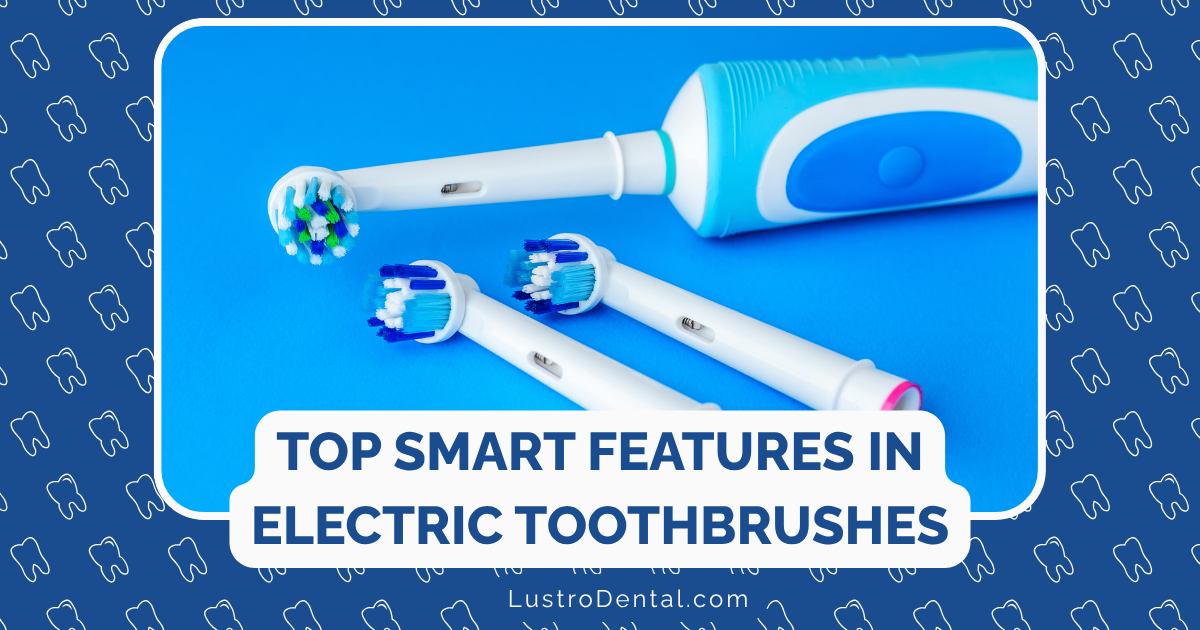
If you’ve browsed the dental care aisle lately, you’ve probably noticed that electric toothbrushes have evolved from simple vibrating tools to sophisticated gadgets packed with technology. The latest models boast everything from AI-powered brushing analysis to gamified apps that track your every brushing move. But here’s the million-dollar question: which of these fancy features actually make a difference to your oral health, and which are just expensive gimmicks?
In this comprehensive guide, we’ll cut through the marketing hype and focus on the smart features that dentists and research show genuinely improve your oral health. Let’s separate the essential from the extravagant.
Electric toothbrushes have come a long way since the first models hit the market in the 1950s. Those early versions were bulky, corded devices that simply vibrated. Fast forward to 2025, and we’re now seeing toothbrushes that can:
This rapid evolution has been driven by advances in sensor technology, miniaturization, and artificial intelligence. But as a study published in the Journal of Clinical Periodontology found, not all technological advancements translate to better oral health outcomes.
One of the most valuable innovations in modern electric toothbrushes is the pressure sensor. According to the American Dental Association (ADA), brushing too hard can damage gum tissue and wear away tooth enamel, potentially leading to sensitivity and recession.
Dr. Sarah Chen, a periodontist at Columbia University, explains: “Many patients are surprised to learn they’ve been brushing too aggressively for years. Pressure sensors provide immediate feedback that helps correct this harmful habit.”
High-quality pressure sensors work in different ways:
The Oral-B iO Series and Philips Sonicare Prestige 9900 have particularly effective pressure sensors, according to independent testing. These sensors have been shown to reduce brushing pressure by an average of 35% after just two weeks of use.
The ADA recommends brushing for two minutes, spending 30 seconds on each quadrant of your mouth. Yet research shows the average person brushes for only 45 seconds. That’s where timers and quadrant pacers come in.
A 2023 study published in the Journal of Dental Research found that users with timer-equipped toothbrushes brushed for an average of 1 minute and 52 seconds—more than twice as long as those using brushes without timers.
Effective timer implementations include:
“The quadrant pacer is particularly valuable,” notes Dr. Michael Rodriguez, DDS. “Most people naturally spend more time on the front teeth and neglect the molars and inner surfaces. The pacer helps distribute brushing time more evenly.”
Even with proper timing, many people consistently miss the same areas of their mouth. Advanced position detection technology uses gyroscopes and accelerometers to track the brush’s location in your mouth.
The Oral-B iO and Philips Sonicare 9900 Prestige offer sophisticated position detection that works with smartphone apps to create a “map” of your mouth, highlighting missed spots in real-time.
A clinical study by the Oral Health Foundation found that users with position detection technology reduced missed areas by 27% compared to those using standard electric toothbrushes.
“Position detection is especially helpful for patients with crowded teeth or dental work like bridges and implants,” says dental hygienist Jennifer Marsh. “These areas require special attention and are often undertreated.”
Not all mouths have the same needs. Modern electric toothbrushes offer multiple brushing modes designed for specific conditions:
The key question is whether these modes actually provide clinical benefits or are just fancy extras. According to Dr. Lisa Warren, a prosthodontist, “The sensitive and gum care modes do show measurable benefits for patients with specific conditions. The whitening mode, however, shows minimal advantage over standard cleaning modes in controlled studies.”
The most valuable aspect of brushing modes is personalization based on actual oral health needs, not just preference. The best smart toothbrushes now use AI to recommend mode changes based on your brushing data and reported sensitivity.
While connecting your toothbrush to your phone might seem excessive, these features can provide valuable insights into your brushing habits over time. However, the key question is whether you’ll actually use them consistently.
“App fatigue is real,” says Dr. Rodriguez. “We see patients who are enthusiastic about their brushing app for the first month, but usage drops significantly after that.”
The most useful app features include:
If you’re the type who enjoys tracking health metrics and responds well to digital coaching, these features might be worth it. For everyone else, they’re likely to go unused after the novelty wears off.
Several high-end toothbrushes now come with UV sanitizing cases or cleaning systems. These claim to kill bacteria on brush heads between uses.
While laboratory studies confirm that UV light can reduce bacterial load on toothbrush bristles, research from the American Dental Association suggests the real-world benefits may be minimal. Simply rinsing your brush thoroughly and allowing it to dry completely achieves similar results for most users.
“There’s little evidence that UV sanitizers significantly reduce oral disease risk,” explains Dr. Chen. “They’re a nice-to-have feature, but not something that justifies a significant price increase.”
The most advanced toothbrushes now incorporate artificial intelligence to analyze your brushing technique and provide personalized recommendations. While impressive technologically, the clinical benefits are still being established.
Early research is promising, with a 2024 study in the International Journal of Dental Hygiene showing that AI coaching improved brushing technique in 78% of participants. However, similar improvements were seen with simpler guidance from dental professionals.
“AI analysis works best for tech-savvy patients who respond well to data-driven feedback,” notes dental hygienist Marsh. “For others, simpler features like timers and pressure sensors provide most of the benefit at a lower cost.”
The debate between sonic technology (like Philips Sonicare) and oscillating-rotating technology (like Oral-B) has been ongoing for years. Both claim superiority, but what does the research say?
A comprehensive meta-analysis published in the Journal of Dentistry examined 62 clinical trials and found that both technologies remove plaque effectively, with only minor differences between them. The oscillating-rotating technology showed a slight edge in some metrics, but not enough to definitively declare it superior for all users.
“The technology matters less than consistent, proper use,” explains Dr. Warren. “Find the one that feels comfortable and encourages you to brush regularly and thoroughly.”
Some manufacturers boast about extremely high vibration frequencies (up to 96,000 movements per minute), suggesting that higher is always better. However, clinical evidence doesn’t support this claim.
“Beyond a certain threshold—around 30,000-40,000 movements per minute—additional vibrations don’t translate to better cleaning,” says Dr. Rodriguez. “It’s like comparing a car that goes 200 mph to one that goes 300 mph when the speed limit is 65.”
While some customization is valuable, toothbrushes advertising 10+ brushing modes are typically offering diminishing returns. Most dental professionals agree that 3-5 well-designed modes cover all necessary bases.
“The difference between ‘Super Clean’ and ‘Ultra Clean’ modes is often negligible,” notes Dr. Chen. “These extra modes mainly serve marketing purposes rather than clinical needs.”
Based on clinical evidence and expert recommendations, here are the features worth prioritizing when shopping for an electric toothbrush in 2025:
The Oral-B iO Series 5 hits the sweet spot of essential features without unnecessary extras. It offers excellent pressure sensing, effective cleaning, and enough smart features to improve your technique without overwhelming you with options.
Key features:
For those with sensitive teeth and gums, the Philips Sonicare 4100 provides gentle yet effective cleaning with a pressure sensor that helps prevent aggressive brushing.
Key features:
If you want the full smart experience and are willing to pay for it, the Philips Sonicare 9900 Prestige offers the most comprehensive package of genuinely useful technology.
Key features:
The Oral-B Pro 1000 proves you don’t need to spend a fortune to get the features that actually matter for oral health.
Key features:
The best electric toothbrush isn’t necessarily the one with the most features—it’s the one you’ll use consistently and correctly. As Dr. Warren puts it, “I’d rather see a patient using a basic electric toothbrush properly twice a day than sporadically using the most advanced model.”
Remember that even the smartest toothbrush can’t replace regular dental checkups and professional cleanings. According to the American Dental Association, visiting your dentist at least twice a year remains an essential part of maintaining optimal oral health.
By focusing on the features that genuinely improve brushing effectiveness—pressure sensors, timers, and perhaps position detection—you can make a smart investment in your oral health without paying for bells and whistles that look impressive in commercials but deliver minimal real-world benefits.
Have you found a particular smart feature especially helpful for your oral health routine? Share your experience in the comments below!